SOLDES
Jusqu'à -70% sur une sélection d'articles*

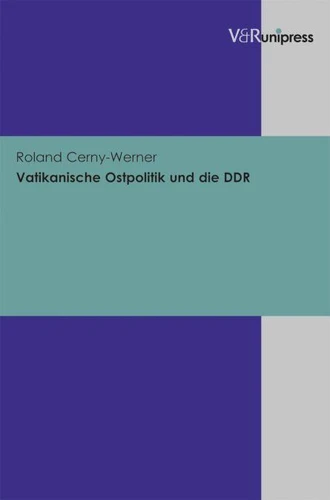
Vatikanische Ostpolitik und die DDR
Par :Formats :
Disponible dans votre compte client Decitre ou Furet du Nord dès validation de votre commande. Le format PDF est :
- Compatible avec une lecture sur My Vivlio (smartphone, tablette, ordinateur)
- Compatible avec une lecture sur liseuses Vivlio
- Pour les liseuses autres que Vivlio, vous devez utiliser le logiciel Adobe Digital Edition. Non compatible avec la lecture sur les liseuses Kindle, Remarkable et Sony
 , qui est-ce ?
Notre partenaire de plateforme de lecture numérique où vous retrouverez l'ensemble de vos ebooks gratuitement
Pour en savoir plus sur nos ebooks, consultez notre aide en ligne ici
C'est si simple ! Lisez votre ebook avec l'app Vivlio sur votre tablette, mobile ou ordinateur :

- Nombre de pages379
- FormatPDF
- ISBN978-3-86234-875-6
- EAN9783862348756
- Date de parution06/10/2011
- Protection num.pas de protection
- Taille3 Mo
- Infos supplémentairespdf
- ÉditeurV&R Unipress
Résumé
The harsh critique on the private audience for the Adschubeys - daughter and son in law of Nikita Khrushchev - on 7th March 1963 was met by John XXIII with a simple, but explosive phrase: "Such a little blessing doesn't do any harm". At that time, Msg. Agostino Casaroli, the so-called architect of the Vatican Ostpolitik, was in Vienna. During an UN-conference about diplomatic relationships he met with a number of with East-European representatives.
John's XXIII private audience and Casarolis open behavior in front of the Eastern diplomats during the conference, were a noticable change in the relationship with the countries behind the iron curtain - Wasn't it Pope Roncalli who wanted to open the window to let fresh air into the catholic church?These two events mark the beginning of the New Vatican Ostpolitik. Even if the GDR played an extraordinary role in this diplomatic and political constellation, even through these external determinants ("Deutsche Frage" and after WWII-Borders etc.) the symptomatical character of the New Vatican Ostpolitik can be discovered - the attempt not to take side, but hold one's own values.
During the pontificates of John XXIII and Paul VI the Vatican established itselfas a fair-minded international protagonist. An important event for this after-II Vaticanum turn was the participation as full member at the CSEC.
John's XXIII private audience and Casarolis open behavior in front of the Eastern diplomats during the conference, were a noticable change in the relationship with the countries behind the iron curtain - Wasn't it Pope Roncalli who wanted to open the window to let fresh air into the catholic church?These two events mark the beginning of the New Vatican Ostpolitik. Even if the GDR played an extraordinary role in this diplomatic and political constellation, even through these external determinants ("Deutsche Frage" and after WWII-Borders etc.) the symptomatical character of the New Vatican Ostpolitik can be discovered - the attempt not to take side, but hold one's own values.
During the pontificates of John XXIII and Paul VI the Vatican established itselfas a fair-minded international protagonist. An important event for this after-II Vaticanum turn was the participation as full member at the CSEC.