Raphael Foshay is the program director of the Master of Arts in Integrated Studies program at Athabasca University. His research interests include literary and cultural theory and continental philosophy.
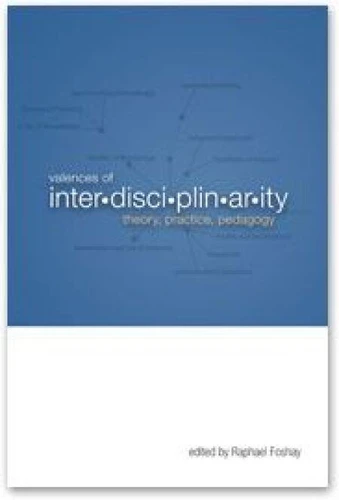
Valences of Interdisciplinarity. Theory, Practice, Pedagogy
Par :Formats :
Disponible dans votre compte client Decitre ou Furet du Nord dès validation de votre commande. Le format ePub est :
- Compatible avec une lecture sur My Vivlio (smartphone, tablette, ordinateur)
- Compatible avec une lecture sur liseuses Vivlio
- Pour les liseuses autres que Vivlio, vous devez utiliser le logiciel Adobe Digital Edition. Non compatible avec la lecture sur les liseuses Kindle, Remarkable et Sony
 , qui est-ce ?
Notre partenaire de plateforme de lecture numérique où vous retrouverez l'ensemble de vos ebooks gratuitement
Pour en savoir plus sur nos ebooks, consultez notre aide en ligne ici
C'est si simple ! Lisez votre ebook avec l'app Vivlio sur votre tablette, mobile ou ordinateur :

- Nombre de pages406
- FormatePub
- ISBN978-1-926836-48-5
- EAN9781926836485
- Date de parution01/03/2012
- Protection num.Digital Watermarking
- Taille3 Mo
- Infos supplémentairesepub
- ÉditeurAU Press
Résumé
The modern university can trace its roots to Kant's call for enlightened self-determination, with education aiming to produce an informed and responsible body of citizens. As the university evolved, specialized areas of investigation emerged, enabling ever more precise research and increasingly nuanced arguments. In recent decades, however, challenges to the hegemony of disciplines have arisen, partly in response to a perceived need for the university to focus greater energy on its public vocation-teaching and the dissemination of knowledge.
Valences of Interdisciplinarity presents essays by an international array of scholars committed to enhancing our understanding of the theoretical underpinnings and the practical realities of interdisciplinary teaching and research.
What is, and what should be, motivating our reflections on (and practice of) approaches that transcend the conventional boundaries of discipline? And in adopting such transdisciplinary approaches, how do we safeguard critical methods and academic rigour? Reflecting on the obstacles they have encountered both as thinkers and as educators, the authors map out innovative new directions for the interdisciplinary project.
Together, the essays promise to set the standards of the debate about interdisciplinarity for years to come.
What is, and what should be, motivating our reflections on (and practice of) approaches that transcend the conventional boundaries of discipline? And in adopting such transdisciplinary approaches, how do we safeguard critical methods and academic rigour? Reflecting on the obstacles they have encountered both as thinkers and as educators, the authors map out innovative new directions for the interdisciplinary project.
Together, the essays promise to set the standards of the debate about interdisciplinarity for years to come.