Raphael Foshay is the program director of the Master of Arts in Integrated Studies program at Athabasca University. His research interests include literary and cultural theory and continental philosophy.
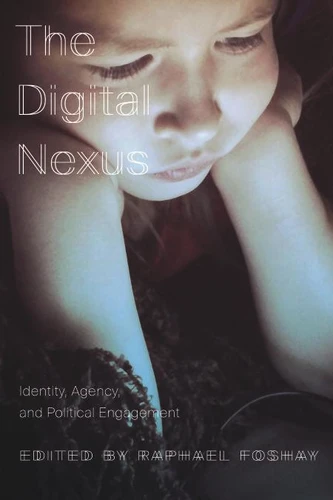
The Digital Nexus. Identity, Agency, and Political Engagement
Par :Formats :
Disponible dans votre compte client Decitre ou Furet du Nord dès validation de votre commande. Le format ePub est :
- Compatible avec une lecture sur My Vivlio (smartphone, tablette, ordinateur)
- Compatible avec une lecture sur liseuses Vivlio
- Pour les liseuses autres que Vivlio, vous devez utiliser le logiciel Adobe Digital Edition. Non compatible avec la lecture sur les liseuses Kindle, Remarkable et Sony
 , qui est-ce ?
Notre partenaire de plateforme de lecture numérique où vous retrouverez l'ensemble de vos ebooks gratuitement
Pour en savoir plus sur nos ebooks, consultez notre aide en ligne ici
C'est si simple ! Lisez votre ebook avec l'app Vivlio sur votre tablette, mobile ou ordinateur :

- Nombre de pages352
- FormatePub
- ISBN978-1-77199-131-5
- EAN9781771991315
- Date de parution28/02/2016
- Protection num.Digital Watermarking
- Taille778 Ko
- Infos supplémentairesepub
- ÉditeurAU Press
Résumé
Over half a century ago, in The Gutenberg Galaxy (1962), Marshall McLuhan noted that the overlap of traditional print and new electronic media like radio and television produced widespread upheaval in personal and public life:
Even without collision, such co-existence of technologies and awareness brings trauma and tension to every living person. Our most ordinary and conventional attitudes seem suddenly twisted into gargoyles and grotesques.
Familiar institutions and associations seem at times menacing and malignant. These multiple transformations, which are the normal consequence of introducing new media into any society whatever, need special study. The trauma and tension in the daily lives of citizens as described here by McLuhan was only intensified by the arrival of digital media and the Web in the following decades. The rapidly evolving digital realm held a powerful promise for creative and constructive good-a promise so alluring that much of the inquiry into this new environment focused on its potential rather than its profound impact on every sphere of civic, commercial, and private life.
The totalizing scope of the combined effects of computerization and the worldwide network are the subject of the essays in The Digital Nexus, a volume that responds to McLuhan's request for a "special study" of the tsunami-like transformation of the communication landscape. These critical excursions provide analysis of and insight into the way new media technologies change the workings of social engagement for personal expression, social interaction, and political engagement.
The contributors investigate the terms and conditions under which our digital society is unfolding and provide compelling arguments for the need to develop an accurate grasp of the architecture of the Web and the challenges that ubiquitous connectivity undoubtedly delivers to both public and private life. With contributions by Ian Angus, Maria Bakardjieva, Daryl Campbell, Sharone Daniel, Andrew Feenberg, Raphael Foshay, Carolyn Guertin, David J.
Gunkel, Bob Hanke, Leslie Lindballe, Mark McCutcheon, Roman Onufrijchuk, Josipa G. Petrunic, Peter J. Smith, Lorna Stefanick, and Karen Wall.
Familiar institutions and associations seem at times menacing and malignant. These multiple transformations, which are the normal consequence of introducing new media into any society whatever, need special study. The trauma and tension in the daily lives of citizens as described here by McLuhan was only intensified by the arrival of digital media and the Web in the following decades. The rapidly evolving digital realm held a powerful promise for creative and constructive good-a promise so alluring that much of the inquiry into this new environment focused on its potential rather than its profound impact on every sphere of civic, commercial, and private life.
The totalizing scope of the combined effects of computerization and the worldwide network are the subject of the essays in The Digital Nexus, a volume that responds to McLuhan's request for a "special study" of the tsunami-like transformation of the communication landscape. These critical excursions provide analysis of and insight into the way new media technologies change the workings of social engagement for personal expression, social interaction, and political engagement.
The contributors investigate the terms and conditions under which our digital society is unfolding and provide compelling arguments for the need to develop an accurate grasp of the architecture of the Web and the challenges that ubiquitous connectivity undoubtedly delivers to both public and private life. With contributions by Ian Angus, Maria Bakardjieva, Daryl Campbell, Sharone Daniel, Andrew Feenberg, Raphael Foshay, Carolyn Guertin, David J.
Gunkel, Bob Hanke, Leslie Lindballe, Mark McCutcheon, Roman Onufrijchuk, Josipa G. Petrunic, Peter J. Smith, Lorna Stefanick, and Karen Wall.