SOLDES
Jusqu'à -70% sur une sélection d'articles*

Nouveauté
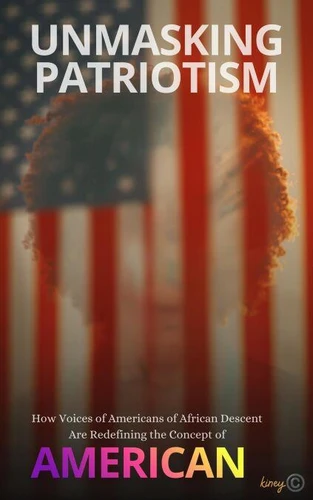
Unmasking Patriotism How Voices of Americans of African Descent Are Redefining the Concept of American. The African American Experience, #2
Par :Formats :
Disponible dans votre compte client Decitre ou Furet du Nord dès validation de votre commande. Le format ePub est :
- Compatible avec une lecture sur My Vivlio (smartphone, tablette, ordinateur)
- Compatible avec une lecture sur liseuses Vivlio
- Pour les liseuses autres que Vivlio, vous devez utiliser le logiciel Adobe Digital Edition. Non compatible avec la lecture sur les liseuses Kindle, Remarkable et Sony
 , qui est-ce ?
Notre partenaire de plateforme de lecture numérique où vous retrouverez l'ensemble de vos ebooks gratuitement
Pour en savoir plus sur nos ebooks, consultez notre aide en ligne ici
C'est si simple ! Lisez votre ebook avec l'app Vivlio sur votre tablette, mobile ou ordinateur :

- FormatePub
- ISBN8233401411
- EAN9798233401411
- Date de parution19/06/2026
- Protection num.pas de protection
- Infos supplémentairesepub
- ÉditeurLinda Balsamo
Résumé
This is the story of a people who were never meant to survive the world that was built around them. Before the United States became a symbol of liberty, it was a land enriched by bondage. Before its promises of justice and equality were spoken with conviction, millions of Africans and their descendants had already paid the price of its rise with their labor, their suffering, and their lives. To be African American is to inherit that history-not as distant memory, but as living truth.
It is a history written in contradiction. A nation founded on freedom denied freedom to those whose hands helped build it. A democracy spoke of equality while enforcing segregation, racial terror, exclusion, and silence. Generation after generation, Black Americans were asked to believe in the dream of a country that too often refused to believe in them. And yet, this is not only a story of oppression.
It is also a story of endurance. Of creation. Of an unyielding determination to transform suffering into something no system of power could contain. Out of captivity came culture. Out of displacement came identity. Out of injustice came movements, music, language, faith, brilliance, and beauty that would shape not only America, but the world. To name this people has never been simple. African American.
Black. American. Each term carries its own history, its own politics, its own claim to belonging. Some names reach back to ancestry. Others speak to solidarity, resistance, and pride. Some reject division altogether, insisting on a citizenship that should never have required qualification in the first place. But names alone cannot erase the realities that made them necessary. Because the African American experience has never existed outside the reach of history.
It lives in the memory of slavery and Jim Crow. In the shadow of lynching and segregation. In the persistence of profiling, inequality, and institutional suspicion. It lives in the daily negotiation between how Black people see themselves and how they are seen by the nation around them. Even language becomes part of the struggle. Words have been used to degrade, to divide, to define, and, at times, to reclaim.
Some are spoken within the community as expressions of familiarity or resistance. The same words, spoken from outside it, can carry the full weight of violence and contempt. In America, even identity is contested terrain. And still, the story continues. To be African American is to stand in the presence of pain and possibility at once. It is to come from a people who endured the unimaginable and still created joy, meaning, excellence, and future in the face of it.
It is to belong to a history that is not separate from the American story, but essential to it. This is not a side note to the nation's history. This is the heart of it.
It is a history written in contradiction. A nation founded on freedom denied freedom to those whose hands helped build it. A democracy spoke of equality while enforcing segregation, racial terror, exclusion, and silence. Generation after generation, Black Americans were asked to believe in the dream of a country that too often refused to believe in them. And yet, this is not only a story of oppression.
It is also a story of endurance. Of creation. Of an unyielding determination to transform suffering into something no system of power could contain. Out of captivity came culture. Out of displacement came identity. Out of injustice came movements, music, language, faith, brilliance, and beauty that would shape not only America, but the world. To name this people has never been simple. African American.
Black. American. Each term carries its own history, its own politics, its own claim to belonging. Some names reach back to ancestry. Others speak to solidarity, resistance, and pride. Some reject division altogether, insisting on a citizenship that should never have required qualification in the first place. But names alone cannot erase the realities that made them necessary. Because the African American experience has never existed outside the reach of history.
It lives in the memory of slavery and Jim Crow. In the shadow of lynching and segregation. In the persistence of profiling, inequality, and institutional suspicion. It lives in the daily negotiation between how Black people see themselves and how they are seen by the nation around them. Even language becomes part of the struggle. Words have been used to degrade, to divide, to define, and, at times, to reclaim.
Some are spoken within the community as expressions of familiarity or resistance. The same words, spoken from outside it, can carry the full weight of violence and contempt. In America, even identity is contested terrain. And still, the story continues. To be African American is to stand in the presence of pain and possibility at once. It is to come from a people who endured the unimaginable and still created joy, meaning, excellence, and future in the face of it.
It is to belong to a history that is not separate from the American story, but essential to it. This is not a side note to the nation's history. This is the heart of it.
A propos de kiney









7,99 €