SOLDES
Jusqu'à -70% sur une sélection d'articles*

Nouveauté
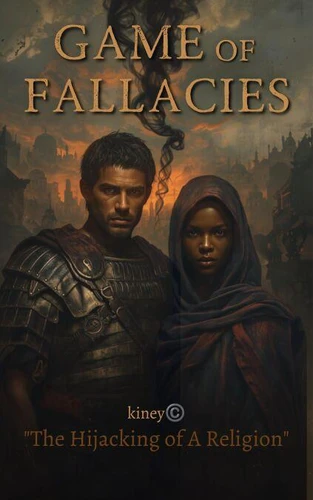
Game of Fallacies -The Hijacking of a Religion. Tales From The Darker Side, #5
Par :Formats :
Disponible dans votre compte client Decitre ou Furet du Nord dès validation de votre commande. Le format ePub est :
- Compatible avec une lecture sur My Vivlio (smartphone, tablette, ordinateur)
- Compatible avec une lecture sur liseuses Vivlio
- Pour les liseuses autres que Vivlio, vous devez utiliser le logiciel Adobe Digital Edition. Non compatible avec la lecture sur les liseuses Kindle, Remarkable et Sony
 , qui est-ce ?
Notre partenaire de plateforme de lecture numérique où vous retrouverez l'ensemble de vos ebooks gratuitement
Pour en savoir plus sur nos ebooks, consultez notre aide en ligne ici
C'est si simple ! Lisez votre ebook avec l'app Vivlio sur votre tablette, mobile ou ordinateur :

- FormatePub
- ISBN8235979802
- EAN9798235979802
- Date de parution19/06/2026
- Protection num.pas de protection
- Infos supplémentairesepub
- ÉditeurIoakim Ioakim
Résumé
The Game of Fallacies is a story of faith undone, of hope surrendered in increments, and of the long, bruising journey toward self-knowledge. At its center stands Centurion Marcus Valerius, a man divided against himself-driven by hunger, shadowed by duty, and bound to the dying wishes of his father: serve your nation, secure your name, and rise into the world clothed in honor, rank, and wealth. What begins as ambition hardens into pursuit.
What begins as service bends slowly toward complicity. And with the aid of men whose loyalties are as uncertain as their morals, Marcus moves toward a destiny stained by history: a deception so vast it would outlive empires, a seizure not merely of power, but of belief itself. A religion, once born in spirit and sacrifice, is taken captive and remade in the image of men. Across the ages, human beings have wrestled in silence with the things they claim to believe.
Beneath doctrine, beneath ritual, beneath the inherited language of certainty, there is often a wound of doubt. It belongs not to the faithless alone, but to anyone who has ever searched the dark for meaning and found only the echo of their own questions. To examine one's convictions is no small act. It is a kind of undoing. It strips away comfort. It unsettles the stories by which we have learned to live.
And always, somewhere in the private chambers of the mind, one question waits with terrible patience: What if the thing I have trusted most is founded on a lie?It is the sort of thought that arrives uninvited in the stillness of night. It does not shout. It lingers. It presses. It stains peace with suspicion. Most people turn from it before it can fully take shape, before it can drag into the light the structures that hold their world together.
For if one sacred truth begins to crack, what else might collapse with it?This story walks willingly into that darkness. It dares to imagine that faith, in its passage through the hands of empire, ambition, and fear, may have been altered beyond recognition. That what was once tender, radical, and holy may have been seized, disciplined, and made useful. That the language of salvation may have been taught to kneel before conquest.
That beneath the gold, the incense, and the sanctified performance of righteousness, something older and more violent was at work-reshaping belief into an instrument of rule. From such corruption flow the familiar agonies of human history: racism draped in moral certainty, violence justified as divine will, slavery baptized as order, abuse hidden behind sacred authority, betrayal disguised as obedience.
These are not aberrations standing apart from the story. They are among its darkest inheritances. They are the evidence of what happens when the soul of a thing is hollowed out and its body left standing. Yet this is not merely an indictment of religion. It is a meditation on all corrupted systems of belief. Every ideology begins with a promise. Every institution claims a moral center. And yet, over time, even the purest vision can be consumed by power, deformed by fear, and guarded by those who profit from silence.
What people call truth is often only the version that survived. At its heart, The Game of Fallacies is a reimagined Christian horror story-one told not through spectacle alone, but through erosion: of certainty, of innocence, of the comforting boundaries between devotion and domination. It is a story meant to disturb. To grieve. To question. To follow the trembling line between reverence and manipulation until it disappears entirely.
So enter carefully. What awaits is not simply a tale, but a reckoning. Welcome to The Game of Fallacies.
What begins as service bends slowly toward complicity. And with the aid of men whose loyalties are as uncertain as their morals, Marcus moves toward a destiny stained by history: a deception so vast it would outlive empires, a seizure not merely of power, but of belief itself. A religion, once born in spirit and sacrifice, is taken captive and remade in the image of men. Across the ages, human beings have wrestled in silence with the things they claim to believe.
Beneath doctrine, beneath ritual, beneath the inherited language of certainty, there is often a wound of doubt. It belongs not to the faithless alone, but to anyone who has ever searched the dark for meaning and found only the echo of their own questions. To examine one's convictions is no small act. It is a kind of undoing. It strips away comfort. It unsettles the stories by which we have learned to live.
And always, somewhere in the private chambers of the mind, one question waits with terrible patience: What if the thing I have trusted most is founded on a lie?It is the sort of thought that arrives uninvited in the stillness of night. It does not shout. It lingers. It presses. It stains peace with suspicion. Most people turn from it before it can fully take shape, before it can drag into the light the structures that hold their world together.
For if one sacred truth begins to crack, what else might collapse with it?This story walks willingly into that darkness. It dares to imagine that faith, in its passage through the hands of empire, ambition, and fear, may have been altered beyond recognition. That what was once tender, radical, and holy may have been seized, disciplined, and made useful. That the language of salvation may have been taught to kneel before conquest.
That beneath the gold, the incense, and the sanctified performance of righteousness, something older and more violent was at work-reshaping belief into an instrument of rule. From such corruption flow the familiar agonies of human history: racism draped in moral certainty, violence justified as divine will, slavery baptized as order, abuse hidden behind sacred authority, betrayal disguised as obedience.
These are not aberrations standing apart from the story. They are among its darkest inheritances. They are the evidence of what happens when the soul of a thing is hollowed out and its body left standing. Yet this is not merely an indictment of religion. It is a meditation on all corrupted systems of belief. Every ideology begins with a promise. Every institution claims a moral center. And yet, over time, even the purest vision can be consumed by power, deformed by fear, and guarded by those who profit from silence.
What people call truth is often only the version that survived. At its heart, The Game of Fallacies is a reimagined Christian horror story-one told not through spectacle alone, but through erosion: of certainty, of innocence, of the comforting boundaries between devotion and domination. It is a story meant to disturb. To grieve. To question. To follow the trembling line between reverence and manipulation until it disappears entirely.
So enter carefully. What awaits is not simply a tale, but a reckoning. Welcome to The Game of Fallacies.
A propos de kiney




7,99 €