
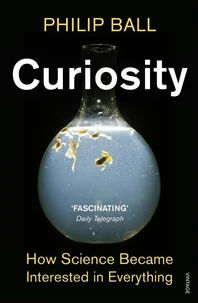
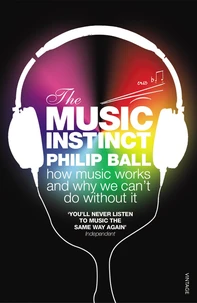
Philip Ball writes regularly in the scientific and popular media and worked for many years as an editor for physical sciences at Nature. His books cover a wide range of scientific and cultural phenomena, and include Critical Mass: How One Thing Leads To Another (winner of the 2005 Aventis Prize for Science Books), The Music Instinct, Curiosity: How Science Became Interested in Everything, Serving The Reich: The Struggle for the Soul of Science Under Hitler and Invisible: The History of the Unseen from Plato to Particle Physics.
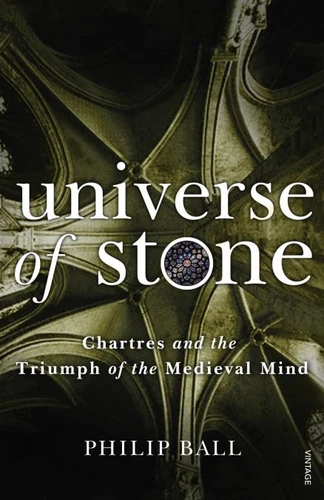
Universe of Stone
Par :Formats :
Disponible dans votre compte client Decitre ou Furet du Nord dès validation de votre commande. Le format ePub protégé est :
- Compatible avec une lecture sur My Vivlio (smartphone, tablette, ordinateur)
- Compatible avec une lecture sur liseuses Vivlio
- Pour les liseuses autres que Vivlio, vous devez utiliser le logiciel Adobe Digital Edition. Non compatible avec la lecture sur les liseuses Kindle, Remarkable et Sony
- Non compatible avec un achat hors France métropolitaine
 , qui est-ce ?
Notre partenaire de plateforme de lecture numérique où vous retrouverez l'ensemble de vos ebooks gratuitement
Pour en savoir plus sur nos ebooks, consultez notre aide en ligne ici
C'est si simple ! Lisez votre ebook avec l'app Vivlio sur votre tablette, mobile ou ordinateur :

- Nombre de pages336
- FormatePub
- ISBN978-1-4464-9975-7
- EAN9781446499757
- Date de parution31/08/2011
- Protection num.Adobe DRM
- Infos supplémentairesepub
- ÉditeurVintage Digital
Résumé
In the twelfth century, Christians in Europe began to build a completely new kind of church - soaring, spacious monuments flooded with light from immense windows. These were the first Gothic churches, the crowning example of which was the cathedral of Chartres: a revolution in thought embodied in stone and glass, and a bridge between the ancient and modern worlds. In Universe of Stone, Philip Ball explains the genesis and development of the Gothic style.
He argues that it signified a profound change in the social, intellectual and theological climate of Western Christendom. As the church represented nothing less than a vision of heaven on earth, this shift in architectural style marked the beginning of the argument between faith and reason which continues today, and of a scientific view of the world that threatened to dispense with God altogether.
He argues that it signified a profound change in the social, intellectual and theological climate of Western Christendom. As the church represented nothing less than a vision of heaven on earth, this shift in architectural style marked the beginning of the argument between faith and reason which continues today, and of a scientific view of the world that threatened to dispense with God altogether.
A propos de Philip Ball
17,99 €

39,24 €

Quantique : au-delà de l'étrange
Grand Format
25,00 €

Beyond Weird
E-book
8,99 €

The Water Kingdom
E-book
9,49 €
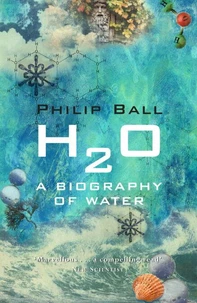
3,99 €
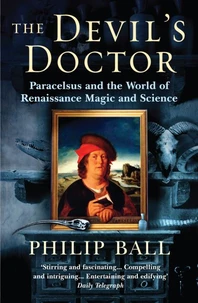
The Devil's Doctor
E-book
12,99 €
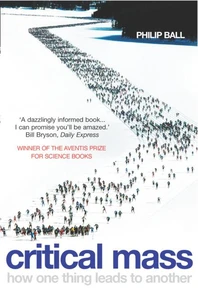
Critical Mass
E-book
9,49 €

9,49 €

Serving the Reich
E-book
12,99 €
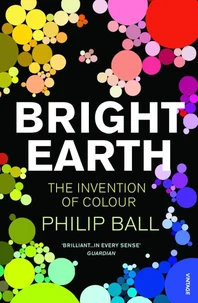
12,99 €
9,49 €

14,99 €