
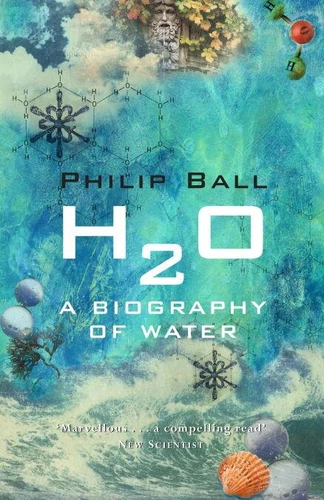
Philip Ball is Associate Editor for the Physical Sciences with Nature. His first book was described by the TLS as 'a tour de force of popular science writing'. His second was described by the New Scientist as 'outstanding...beautifully written. If you buy no other science book this year, I suggest you buy this one.'
H2O : A Biography of Water
Par :Formats :
Disponible dans votre compte client Decitre ou Furet du Nord dès validation de votre commande. Le format ePub protégé est :
- Compatible avec une lecture sur My Vivlio (smartphone, tablette, ordinateur)
- Compatible avec une lecture sur liseuses Vivlio
- Pour les liseuses autres que Vivlio, vous devez utiliser le logiciel Adobe Digital Edition. Non compatible avec la lecture sur les liseuses Kindle, Remarkable et Sony
- Non compatible avec un achat hors France métropolitaine
 , qui est-ce ?
Notre partenaire de plateforme de lecture numérique où vous retrouverez l'ensemble de vos ebooks gratuitement
Pour en savoir plus sur nos ebooks, consultez notre aide en ligne ici
C'est si simple ! Lisez votre ebook avec l'app Vivlio sur votre tablette, mobile ou ordinateur :

- Nombre de pages400
- FormatePub
- ISBN978-1-78022-749-8
- EAN9781780227498
- Date de parution29/04/2015
- Protection num.Adobe DRM
- Infos supplémentairesepub
- ÉditeurWeidenfeld & Nicolson
Résumé
The brilliantly told and gripping story of the most familiar - yet, amazingly, still poorly understood - substance in the universe: Water. The extent to which water remains a scientific mystery is extraordinary, despite its prevalence and central importance on Earth. Whether one considers its role in biology, its place in the physical world (where it refuses to obey the usual rules of liquids) or its deceptively simple structure, there is still no complete answer to the question: what is water? Philip Ball's book explains what, exactly, we do and do not know about the strange character of this most essential and ubiquitous of substances.
H20 begins by transporting its readers back to the Big Bang and the formation of galaxies to witness the birth of water's constituent elements: hydrogen and oxygen. It then explains how the primeval oceans were formed four billion years ago; where water is to be found on other planets; why ice floats when most solids sink; why, despite being highly corrosive, water is good for us; why there are at least fifteen kinds of ice and perhaps two kinds of liquid water; how scientists have consistently misunderstood water for centuries; and why wars have been waged over it.
Philip Ball's gloriously offbeat and intelligent book conducts us on a journey through the history of science, folklore, the wilder scientific fringes, cutting-edge physics, biology and ecology, to give a fascinating new perspective on life and the substance that sustains it. After reading this book, drinking a glass of water will never be the same again.
H20 begins by transporting its readers back to the Big Bang and the formation of galaxies to witness the birth of water's constituent elements: hydrogen and oxygen. It then explains how the primeval oceans were formed four billion years ago; where water is to be found on other planets; why ice floats when most solids sink; why, despite being highly corrosive, water is good for us; why there are at least fifteen kinds of ice and perhaps two kinds of liquid water; how scientists have consistently misunderstood water for centuries; and why wars have been waged over it.
Philip Ball's gloriously offbeat and intelligent book conducts us on a journey through the history of science, folklore, the wilder scientific fringes, cutting-edge physics, biology and ecology, to give a fascinating new perspective on life and the substance that sustains it. After reading this book, drinking a glass of water will never be the same again.
A propos de Philip Ball
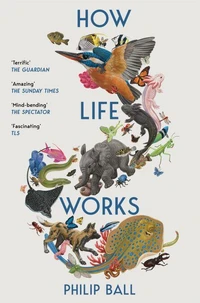
17,99 €
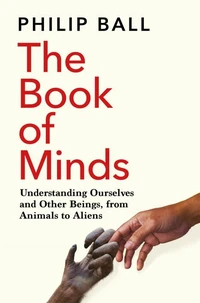
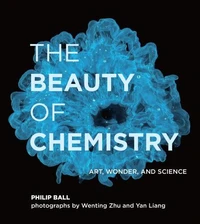
39,24 €
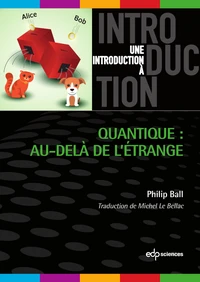
Quantique : au-delà de l'étrange
Grand Format
25,00 €
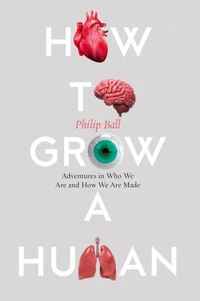
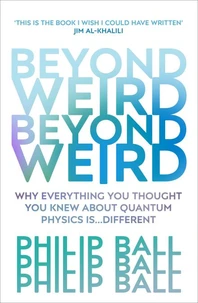
Beyond Weird
E-book
8,99 €

The Water Kingdom
E-book
9,49 €
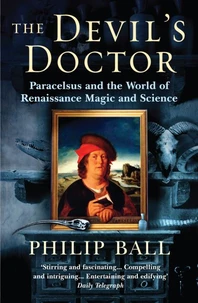
The Devil's Doctor
E-book
12,99 €
9,49 €
Critical Mass
E-book
9,49 €
Serving the Reich
E-book
12,99 €
12,99 €
Universe of Stone
E-book
11,99 €
9,49 €
14,99 €