SOLDES
Jusqu'à -70% sur une sélection d'articles*

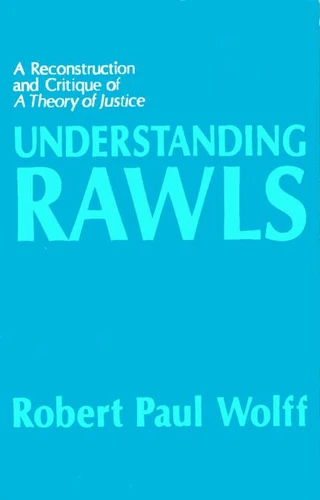
Understanding Rawls: A Reconstruction and Critique of A Theory of Justice
Par :Formats :
Disponible dans votre compte client Decitre ou Furet du Nord dès validation de votre commande. Le format ePub est :
- Compatible avec une lecture sur My Vivlio (smartphone, tablette, ordinateur)
- Compatible avec une lecture sur liseuses Vivlio
- Pour les liseuses autres que Vivlio, vous devez utiliser le logiciel Adobe Digital Edition. Non compatible avec la lecture sur les liseuses Kindle, Remarkable et Sony
 , qui est-ce ?
Notre partenaire de plateforme de lecture numérique où vous retrouverez l'ensemble de vos ebooks gratuitement
Pour en savoir plus sur nos ebooks, consultez notre aide en ligne ici
C'est si simple ! Lisez votre ebook avec l'app Vivlio sur votre tablette, mobile ou ordinateur :

- FormatePub
- ISBN978-1-301-64389-9
- EAN9781301643899
- Date de parution02/03/2013
- Protection num.pas de protection
- Infos supplémentairesepub
- ÉditeurBluewater
Résumé
Since its publication in 1971, John Rawls' A Theory of Justice has been the subject of a lively debate among philosophers, economists, and political scientists. In this book, Robert Paul Wolff provides an interpretation and critique of Rawls' theory that both clarifies it and reveals its basic flaws. According to Professor Wolff, Rawls' device of a bargaining game among self-interested parties is designed to solve Kant's problem of deriving substantive moral and political principles from purely formal criteria of rationality.
This book traces the ever-greater complications introduced by Rawls into his theory to overcome weaknesses and respond to critics. Once he has reconstructed Rawls' theory to exhibit its underlying structure, Professor Wolff subjects it to a series of fundamental criticisms and shows where it fails by appealing to economic, psychological, and sociological considerations, as well as to those of philosophy.
Understanding Rawls contends that Rawls' approach to social philosophy - by way of formal models of game theory and welfare economics - is fundamentally misguided. The bargaining "theorem" sketched by Rawls is shown to be invalid, and the author suggests that a different mode of analysis, owing more to the legacies of Marx and Freud, would be more fruitful in the search for a usable conception of social justice.
This book traces the ever-greater complications introduced by Rawls into his theory to overcome weaknesses and respond to critics. Once he has reconstructed Rawls' theory to exhibit its underlying structure, Professor Wolff subjects it to a series of fundamental criticisms and shows where it fails by appealing to economic, psychological, and sociological considerations, as well as to those of philosophy.
Understanding Rawls contends that Rawls' approach to social philosophy - by way of formal models of game theory and welfare economics - is fundamentally misguided. The bargaining "theorem" sketched by Rawls is shown to be invalid, and the author suggests that a different mode of analysis, owing more to the legacies of Marx and Freud, would be more fruitful in the search for a usable conception of social justice.