SOLDES
Jusqu'à -70% sur une sélection d'articles*

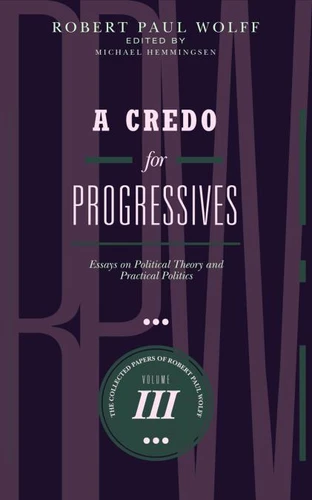
A Credo for Progressives: Essays on Political Theory and Practical Politics. The Collected Papers of Robert Paul Wolff, #3
Par :Formats :
Disponible dans votre compte client Decitre ou Furet du Nord dès validation de votre commande. Le format ePub est :
- Compatible avec une lecture sur My Vivlio (smartphone, tablette, ordinateur)
- Compatible avec une lecture sur liseuses Vivlio
- Pour les liseuses autres que Vivlio, vous devez utiliser le logiciel Adobe Digital Edition. Non compatible avec la lecture sur les liseuses Kindle, Remarkable et Sony
 , qui est-ce ?
Notre partenaire de plateforme de lecture numérique où vous retrouverez l'ensemble de vos ebooks gratuitement
Pour en savoir plus sur nos ebooks, consultez notre aide en ligne ici
C'est si simple ! Lisez votre ebook avec l'app Vivlio sur votre tablette, mobile ou ordinateur :

- FormatePub
- ISBN978-1-301-62465-2
- EAN9781301624652
- Date de parution25/08/2013
- Protection num.pas de protection
- Infos supplémentairesepub
- ÉditeurBluewater
Résumé
For fifty-five years, Robert Paul Wolff has been reflecting on the theory of modern political society and engaging actively in a number of progressive political movements, including the Campaign for Nuclear Disarmament, the protest against the Viet Nam War, and the world-wide effort to end the apartheid regime in South Africa. This volume brings together a wide-ranging selection of the writings that have flowed from his pen, his typewriter, and his word processor.
The volume opens with a brief Credo for Progressives, in which Wolff forthrightly states the moral and political commitment that has shaped his life and writings. The first section of the volume consists of seven selections of a general theoretical nature, including the essay "On Violence" that foreshadowed Wolff's classic work, In Defense of Anarchism. Three of these: "The Concept of Community, " "The Indexing Problem, " and "Who Owns Our National Story" have until now not been available in print.
The second section of the volume contains ten pieces written about specific people or for specific occasions. These include Wolff's important refutation of the first version of John Rawls' theory of justice, a touching personal reminiscence of his departed friend, Herbert Marcuse, a sharp critique of the reaction of the University of Massachusetts to the arrival on campus of Minister Louis Farrakhan, and several memoranda written for a graduate seminar Wolff taught on ideological critique.
The third section contains a selection of writings of an immediate practical nature on issues with which Wolff has been deeply involved. The volume closes with a photocopy of a handwritten document in which we see Wolff working out, first hand, an issue of great importance for those who continue to hope for a socialist transformation of capitalism.
The volume opens with a brief Credo for Progressives, in which Wolff forthrightly states the moral and political commitment that has shaped his life and writings. The first section of the volume consists of seven selections of a general theoretical nature, including the essay "On Violence" that foreshadowed Wolff's classic work, In Defense of Anarchism. Three of these: "The Concept of Community, " "The Indexing Problem, " and "Who Owns Our National Story" have until now not been available in print.
The second section of the volume contains ten pieces written about specific people or for specific occasions. These include Wolff's important refutation of the first version of John Rawls' theory of justice, a touching personal reminiscence of his departed friend, Herbert Marcuse, a sharp critique of the reaction of the University of Massachusetts to the arrival on campus of Minister Louis Farrakhan, and several memoranda written for a graduate seminar Wolff taught on ideological critique.
The third section contains a selection of writings of an immediate practical nature on issues with which Wolff has been deeply involved. The volume closes with a photocopy of a handwritten document in which we see Wolff working out, first hand, an issue of great importance for those who continue to hope for a socialist transformation of capitalism.