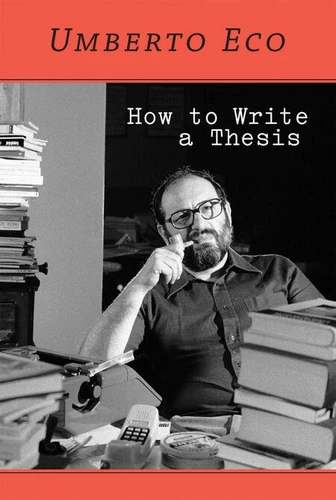
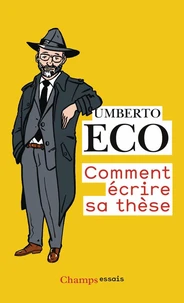
The wise and witty guide to researching and writing a thesis, by the bestselling author of The Name of the Rose-now published in English for the first time. Learn the art of the thesis from a giant of Italian literature and philosophy-from choosing a topic to organizing a work schedule to writing the final draft. By the time Umberto Eco published his best-selling novel The Name of the Rose, he was one of Italy's most celebrated intellectuals, a distinguished academic, and the author of influential works on semiotics.
Some years before that, Eco published a little book for his students, in which he offered useful advice on all the steps involved in researching and writing a thesis. Since then, it has been translated into 17 languages-and is now for the first time presented in English. Eco's approach is anything but dry and academic. He not only offers practical advice but also considers larger questions about the value of the thesis-writing exercise in six different parts: .
The Definition and Purpose of a Thesis . Choosing the Topic . Conducting the Research . The Work Plan and the Index Cards . Writing the Thesis . The Final Draft Eco advises students how to avoid "thesis neurosis" and he answers the important question "Must You Read Books?" He reminds students "You are not Proust" and "Write everything that comes into your head, but only in the first draft." Of course, there was no Internet in 1977, but Eco's index card research system offers important lessons about critical thinking and information curating for students of today who may be burdened by Big Data.
Irreverent and often hilarious, How to Write a Thesis is unlike any other writing manual and belongs on the bookshelves of students, teachers, writers, and Eco fans everywhere.
The wise and witty guide to researching and writing a thesis, by the bestselling author of The Name of the Rose-now published in English for the first time. Learn the art of the thesis from a giant of Italian literature and philosophy-from choosing a topic to organizing a work schedule to writing the final draft. By the time Umberto Eco published his best-selling novel The Name of the Rose, he was one of Italy's most celebrated intellectuals, a distinguished academic, and the author of influential works on semiotics.
Some years before that, Eco published a little book for his students, in which he offered useful advice on all the steps involved in researching and writing a thesis. Since then, it has been translated into 17 languages-and is now for the first time presented in English. Eco's approach is anything but dry and academic. He not only offers practical advice but also considers larger questions about the value of the thesis-writing exercise in six different parts: .
The Definition and Purpose of a Thesis . Choosing the Topic . Conducting the Research . The Work Plan and the Index Cards . Writing the Thesis . The Final Draft Eco advises students how to avoid "thesis neurosis" and he answers the important question "Must You Read Books?" He reminds students "You are not Proust" and "Write everything that comes into your head, but only in the first draft." Of course, there was no Internet in 1977, but Eco's index card research system offers important lessons about critical thinking and information curating for students of today who may be burdened by Big Data.
Irreverent and often hilarious, How to Write a Thesis is unlike any other writing manual and belongs on the bookshelves of students, teachers, writers, and Eco fans everywhere.