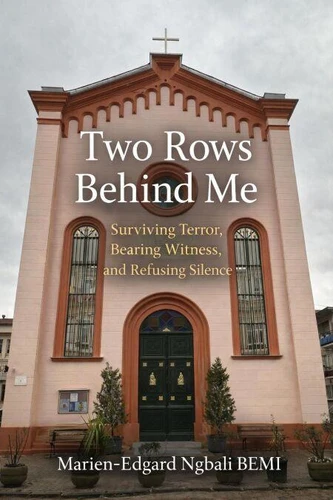
Two Rows Behind Me is not a book about terror as spectacle. It is a book about proximity, memory, and moral responsibility. On 28 January 2024, during Sunday Mass at Santa Maria Church in Istanbul, a terrorist attack shattered the ordinary rhythm of prayer. Two rows behind the author, a man was killed. The author survived. That simple, unbearable asymmetry-life continuing beside life extinguished-becomes the quiet centre of this powerful work.
Written in restrained, lucid prose, Two Rows Behind Me is a testimony rather than a memoir, an ethical reflection rather than a chronicle of violence. Marien-Edgard Ngbali BEMI refuses sensationalism and instead asks the deeper questions terror leaves behind: What happens when violence enters a place of refuge? How does fear reshape memory? Why is indifference the final victory of terror? And what responsibility remains for those who walk away alive?Moving beyond the moment of attack, the book explores faith under threat, the politics of fear, the erosion of attention in the news cycle, and the danger of "normalised horror." It restores the humanity of the victim, challenges the silence that follows violence, and insists that remembrance is not sentiment, but resistance.
This is a book written for the secondary anniversary of terror-when the world has moved on, but the ethical demand has not. It speaks to believers and non-believers, educators and citizens, leaders and witnesses. Above all, it speaks to anyone who understands that terror never remains isolated, and that what happens "two rows behind" one person ultimately concerns us all. Quiet, uncompromising, and deeply human, Two Rows Behind Me is a refusal to forget-and an invitation to choose memory over fear.
Two Rows Behind Me is not a book about terror as spectacle. It is a book about proximity, memory, and moral responsibility. On 28 January 2024, during Sunday Mass at Santa Maria Church in Istanbul, a terrorist attack shattered the ordinary rhythm of prayer. Two rows behind the author, a man was killed. The author survived. That simple, unbearable asymmetry-life continuing beside life extinguished-becomes the quiet centre of this powerful work.
Written in restrained, lucid prose, Two Rows Behind Me is a testimony rather than a memoir, an ethical reflection rather than a chronicle of violence. Marien-Edgard Ngbali BEMI refuses sensationalism and instead asks the deeper questions terror leaves behind: What happens when violence enters a place of refuge? How does fear reshape memory? Why is indifference the final victory of terror? And what responsibility remains for those who walk away alive?Moving beyond the moment of attack, the book explores faith under threat, the politics of fear, the erosion of attention in the news cycle, and the danger of "normalised horror." It restores the humanity of the victim, challenges the silence that follows violence, and insists that remembrance is not sentiment, but resistance.
This is a book written for the secondary anniversary of terror-when the world has moved on, but the ethical demand has not. It speaks to believers and non-believers, educators and citizens, leaders and witnesses. Above all, it speaks to anyone who understands that terror never remains isolated, and that what happens "two rows behind" one person ultimately concerns us all. Quiet, uncompromising, and deeply human, Two Rows Behind Me is a refusal to forget-and an invitation to choose memory over fear.


 , qui est-ce ?