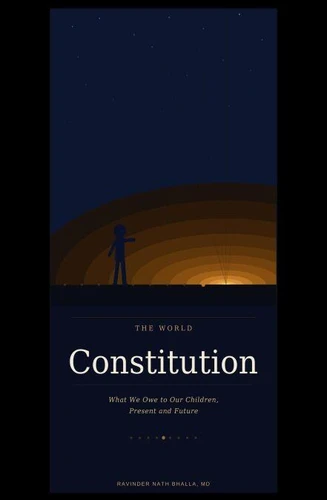
A nine-year-old in Chicago put it precisely: I don't think that is just how it is. I think somebody decided that is how it is. She is right. Somebody always decides. This book is the argument for deciding differently. The World Constitution: What We Owe to Our Children, Present and Future is a work of constitutional philosophy, psychological diagnosis, and civilizational urgency. It examines nine of history's most consequential constitutional moments - Philadelphia 1787, Paris 1789, Bonn 1949, Tokyo 1947, New Delhi 1950, Cape Town 1996, Beijing 1982, Moscow 1993, and the Universal Declaration of Human Rights - asking what each civilization believed was most inviolable about the human person, what the historical crucible of their moment forced them to protect, and what they could not see.
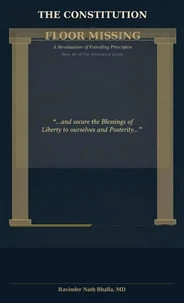
Every constitution in this book proclaimed the floor. Not one fully built it. The pattern is not accidental. Through five documented psychological mechanisms - kin selection, Terror Management Theory, compassion fade, the posterity problem, and moral licensing - voluntary human psychology will never maintain a universal floor. It must be structural, funded, enforceable, and permanent. But the deeper failure is older.
The framers of every democratic constitution inherited three thousand years of monarchical psychology. Citizens who had never expected positive action from a king could not demand it from the governments that replaced him. The floor kept becoming a favor. The favor kept becoming a bargaining chip. The game of thrones persisted inside the constitutional language that claimed to abolish it. Now, at the threshold of technologies that can either deliver the floor to every child on earth or weaponize the scarcity that keeps them from it, the window for a world constitution is open.
It will not stay open long. This book proposes the architecture: the duty framework, the ethics of power, the renunciation of war, the accountability of every institution to the child with nothing between her and what the system does. And the first article - not as aspiration, but as the recognition of what was always already true. The framers of the world constitution are alive right now. They may not know they are framers yet.
The World Constitution completes a three-scale argument that runs through Ravinder Nath Bhalla's entire body of work: the individual life, the national floor, and now the civilizational architecture the species needs.
A nine-year-old in Chicago put it precisely: I don't think that is just how it is. I think somebody decided that is how it is. She is right. Somebody always decides. This book is the argument for deciding differently. The World Constitution: What We Owe to Our Children, Present and Future is a work of constitutional philosophy, psychological diagnosis, and civilizational urgency. It examines nine of history's most consequential constitutional moments - Philadelphia 1787, Paris 1789, Bonn 1949, Tokyo 1947, New Delhi 1950, Cape Town 1996, Beijing 1982, Moscow 1993, and the Universal Declaration of Human Rights - asking what each civilization believed was most inviolable about the human person, what the historical crucible of their moment forced them to protect, and what they could not see.
Every constitution in this book proclaimed the floor. Not one fully built it. The pattern is not accidental. Through five documented psychological mechanisms - kin selection, Terror Management Theory, compassion fade, the posterity problem, and moral licensing - voluntary human psychology will never maintain a universal floor. It must be structural, funded, enforceable, and permanent. But the deeper failure is older.
The framers of every democratic constitution inherited three thousand years of monarchical psychology. Citizens who had never expected positive action from a king could not demand it from the governments that replaced him. The floor kept becoming a favor. The favor kept becoming a bargaining chip. The game of thrones persisted inside the constitutional language that claimed to abolish it. Now, at the threshold of technologies that can either deliver the floor to every child on earth or weaponize the scarcity that keeps them from it, the window for a world constitution is open.
It will not stay open long. This book proposes the architecture: the duty framework, the ethics of power, the renunciation of war, the accountability of every institution to the child with nothing between her and what the system does. And the first article - not as aspiration, but as the recognition of what was always already true. The framers of the world constitution are alive right now. They may not know they are framers yet.
The World Constitution completes a three-scale argument that runs through Ravinder Nath Bhalla's entire body of work: the individual life, the national floor, and now the civilizational architecture the species needs.

 , qui est-ce ?