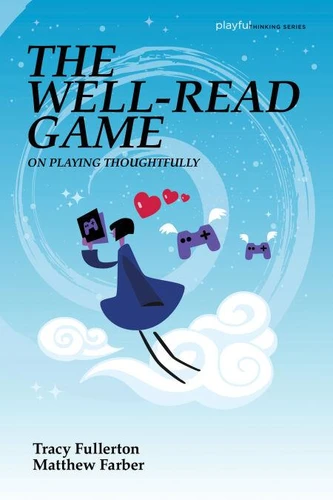
The Well-Read Game. On Playing Thoughtfully
Par : ,Formats :
Disponible dans votre compte client Decitre ou Furet du Nord dès validation de votre commande. Le format ePub protégé est :
- Compatible avec une lecture sur My Vivlio (smartphone, tablette, ordinateur)
- Compatible avec une lecture sur liseuses Vivlio
- Pour les liseuses autres que Vivlio, vous devez utiliser le logiciel Adobe Digital Edition. Non compatible avec la lecture sur les liseuses Kindle, Remarkable et Sony
- Non compatible avec un achat hors France métropolitaine
 , qui est-ce ?
Notre partenaire de plateforme de lecture numérique où vous retrouverez l'ensemble de vos ebooks gratuitement
Pour en savoir plus sur nos ebooks, consultez notre aide en ligne ici
C'est si simple ! Lisez votre ebook avec l'app Vivlio sur votre tablette, mobile ou ordinateur :

- Nombre de pages244
- FormatePub
- ISBN978-0-262-38291-5
- EAN9780262382915
- Date de parution25/03/2025
- Protection num.Adobe DRM
- Taille37 Mo
- Infos supplémentairesepub
- ÉditeurThe MIT Press
Résumé
How players evoke personal and subjective meanings through a new theory of player response. In The Well-Read Game, Tracy Fullerton and Matthew Farber explore the experiences we have when we play games: not the outcomes of play or the aesthetics of formal game structures but the ephemeral and emotional experiences of being in play. These are the private stories we tell ourselves as we play, the questions we ask, and our reactions to the game's intent.
These experiences are called "readings" because they involve so many of the aspects of engaging with literary, cinematic, and other expressive texts. A game that is experienced in such a way can be called "well-read, " rather than, or as well as, "well-played, " because of the personal, interpretive nature of that experience and the way in which it relates to our reading of texts of all kinds. The concept of the "well-read game" exists at the convergence of literary, media, and play theories-specifically, the works of Louise Rosenblatt's reader-response theory, Brian Upton's situational game theory, Tracy Fullerton's playcentric design theory, and Bernie DeKoven's well-played game philosophy.
Each of these theories, from their own perspective, challenges notions of a separate, objective, or authorial meaning in a text and underscores the richness that arises from the varied responses of readers, who coauthor the meaning of each text through their active engagement with it. When taken together, these theories point to a richer understanding of what a game is and how we might better value our experiences with games to become more thoughtful readers of their essential meanings.
These experiences are called "readings" because they involve so many of the aspects of engaging with literary, cinematic, and other expressive texts. A game that is experienced in such a way can be called "well-read, " rather than, or as well as, "well-played, " because of the personal, interpretive nature of that experience and the way in which it relates to our reading of texts of all kinds. The concept of the "well-read game" exists at the convergence of literary, media, and play theories-specifically, the works of Louise Rosenblatt's reader-response theory, Brian Upton's situational game theory, Tracy Fullerton's playcentric design theory, and Bernie DeKoven's well-played game philosophy.
Each of these theories, from their own perspective, challenges notions of a separate, objective, or authorial meaning in a text and underscores the richness that arises from the varied responses of readers, who coauthor the meaning of each text through their active engagement with it. When taken together, these theories point to a richer understanding of what a game is and how we might better value our experiences with games to become more thoughtful readers of their essential meanings.