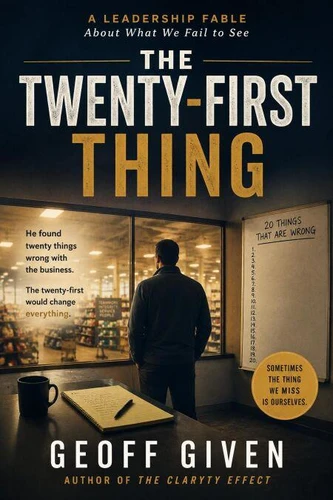
Jake Isley can walk into a struggling operation and tell you twenty things that are wrong before most people finish their coffee. He's built a successful career doing exactly that. Jake knows operations. He knows numbers. He knows standards. And when he's sent to help turn around Store 21, it doesn't take long for him to fill a yellow legal pad with everything that needs to change. Twenty things. The problem?There's a twenty-first.
And Jake can't see it. As Store 21 begins to change, Jake encounters people who challenge more than his assessment of the business. There's Destiny, a manager who has learned to wait for someone else to give her the answer. Dexter, a quiet employee with more leadership potential than Jake initially recognizes. Tammy, a skeptical veteran who has seen leaders come and go. And Murph, a maintenance guy who seems far more interested in asking Jake questions than answering them.
Then there's Jake himself. His ambition. His obsession with results. His need to be needed. The pressure he puts on others. The opportunities he chases. And the uncomfortable realization that being physically present for the people who matter most doesn't always mean he's actually there. The more Jake learns about the people around him, the more one question follows him:What are you not seeing?The Twenty-First Thing is a leadership fable about the blind spots that experience, ambition, success, and certainty can create-and the humility required to see beyond them.
Through the people and problems of Store 21, Geoff Given explores what it means to hold people accountable without forgetting the person, develop leaders instead of creating followers, understand the story behind the numbers, pursue success without losing sight of what matters, and recognize when the way we see a problem may be part of the problem itself. Because great leaders notice what others miss.
But the best leaders are willing to consider something harder:What if what I see is right-but it isn't the whole picture?For anyone who leads people, develops managers, builds teams, or has ever been absolutely certain they understood the problem, The Twenty-First Thing offers a simple challenge:Look again.
Jake Isley can walk into a struggling operation and tell you twenty things that are wrong before most people finish their coffee. He's built a successful career doing exactly that. Jake knows operations. He knows numbers. He knows standards. And when he's sent to help turn around Store 21, it doesn't take long for him to fill a yellow legal pad with everything that needs to change. Twenty things. The problem?There's a twenty-first.
And Jake can't see it. As Store 21 begins to change, Jake encounters people who challenge more than his assessment of the business. There's Destiny, a manager who has learned to wait for someone else to give her the answer. Dexter, a quiet employee with more leadership potential than Jake initially recognizes. Tammy, a skeptical veteran who has seen leaders come and go. And Murph, a maintenance guy who seems far more interested in asking Jake questions than answering them.
Then there's Jake himself. His ambition. His obsession with results. His need to be needed. The pressure he puts on others. The opportunities he chases. And the uncomfortable realization that being physically present for the people who matter most doesn't always mean he's actually there. The more Jake learns about the people around him, the more one question follows him:What are you not seeing?The Twenty-First Thing is a leadership fable about the blind spots that experience, ambition, success, and certainty can create-and the humility required to see beyond them.
Through the people and problems of Store 21, Geoff Given explores what it means to hold people accountable without forgetting the person, develop leaders instead of creating followers, understand the story behind the numbers, pursue success without losing sight of what matters, and recognize when the way we see a problem may be part of the problem itself. Because great leaders notice what others miss.
But the best leaders are willing to consider something harder:What if what I see is right-but it isn't the whole picture?For anyone who leads people, develops managers, builds teams, or has ever been absolutely certain they understood the problem, The Twenty-First Thing offers a simple challenge:Look again.


 , qui est-ce ?