
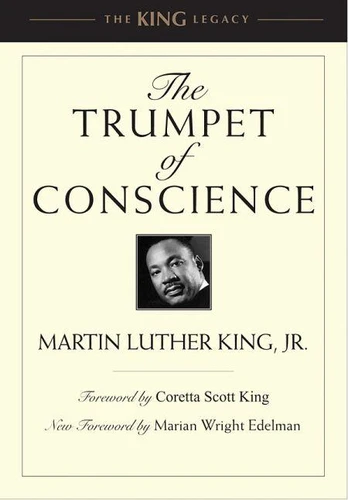
Prix Nobel de la Paix
The Trumpet of Conscience
Par :Formats :
Disponible dans votre compte client Decitre ou Furet du Nord dès validation de votre commande. Le format ePub protégé est :
- Compatible avec une lecture sur My Vivlio (smartphone, tablette, ordinateur)
- Compatible avec une lecture sur liseuses Vivlio
- Pour les liseuses autres que Vivlio, vous devez utiliser le logiciel Adobe Digital Edition. Non compatible avec la lecture sur les liseuses Kindle, Remarkable et Sony
- Non compatible avec un achat hors France métropolitaine
 , qui est-ce ?
Notre partenaire de plateforme de lecture numérique où vous retrouverez l'ensemble de vos ebooks gratuitement
Pour en savoir plus sur nos ebooks, consultez notre aide en ligne ici
C'est si simple ! Lisez votre ebook avec l'app Vivlio sur votre tablette, mobile ou ordinateur :

- Nombre de pages96
- FormatePub
- ISBN978-0-8070-0072-4
- EAN9780807000724
- Date de parution13/10/2010
- Protection num.Adobe DRM
- Taille2 Mo
- Infos supplémentairesepub
- ÉditeurBeacon Press
Résumé
In November and December 1967, Dr. Martin Luther King, Jr., delivered five lectures for the renowned Massey Lecture Series of the Canadian Broadcasting Corporation. The collection was immediately released as a book under the title Conscience for Change, but after King's assassination in 1968, it was republished as The Trumpet of Conscience. The collection sums up his lasting creed and is his final testament on racism, poverty, and war.
Each oration in this volume encompasses a distinct theme and speaks prophetically to today's perils, addressing issues of equality, conscience and war, the mobilization of young people, and nonviolence. Collectively, they reveal some of King's most introspective reflections and final impressions of the movement while illustrating how he never lost sight of our shared goals for justice. The book concludes with "A Christmas Sermon on Peace"-a powerful lecture that was broadcast live from Ebenezer Baptist Church on Christmas Eve in 1967.
In it King articulates his long-term vision of nonviolence as a path to world peace.
Each oration in this volume encompasses a distinct theme and speaks prophetically to today's perils, addressing issues of equality, conscience and war, the mobilization of young people, and nonviolence. Collectively, they reveal some of King's most introspective reflections and final impressions of the movement while illustrating how he never lost sight of our shared goals for justice. The book concludes with "A Christmas Sermon on Peace"-a powerful lecture that was broadcast live from Ebenezer Baptist Church on Christmas Eve in 1967.
In it King articulates his long-term vision of nonviolence as a path to world peace.
A propos de Martin Luther King
3,50 €
5/5
Nous, les Nègres
Poche
9,50 €

6,50 €
I Have A Dream - Occasion
Grand Format
9,90 €
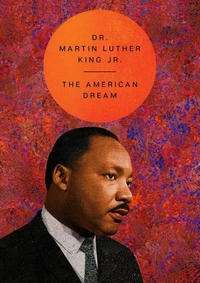
The American Dream
E-book
13,87 €

The Other America
E-book
13,87 €
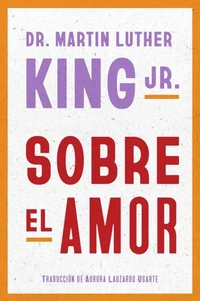
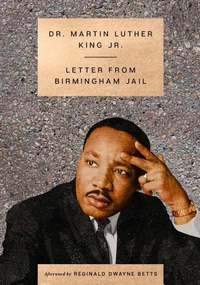
10,85 €
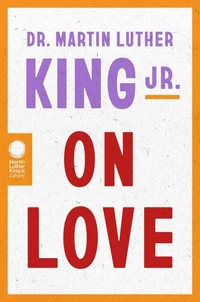
On Love
E-book
11,46 €
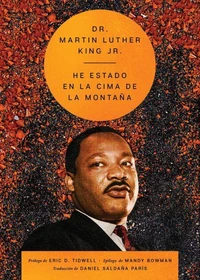
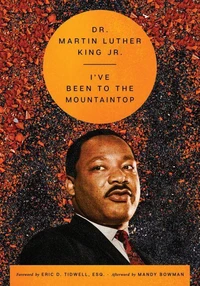
12,99 €
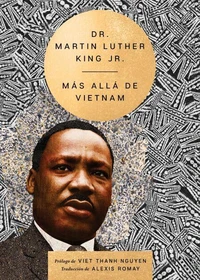
9,65 €
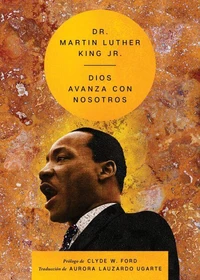
9,65 €
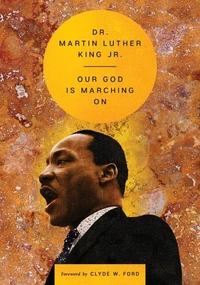
Our God Is Marching On
E-book
12,99 €
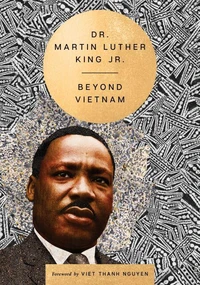
Beyond Vietnam
E-book
12,99 €
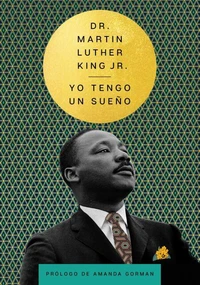
12,06 €
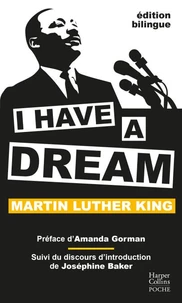
I Have A Dream
E-book
11,99 €
1,99 €

6,99 €

500 citations de grands esprits
Audiobook
4,99 €