SOLDES
Jusqu'à -70% sur une sélection d'articles*

Nouveauté
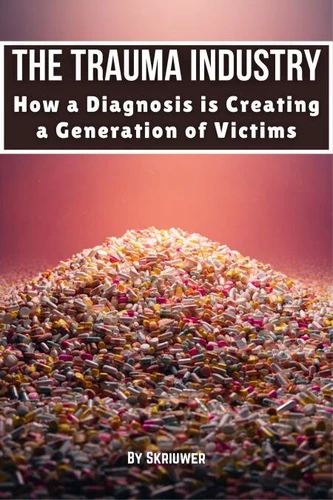
The Trauma Industry: How a Diagnosis is Creating a Generation of Victims
Par :Formats :
Disponible dans votre compte client Decitre ou Furet du Nord dès validation de votre commande. Le format ePub est :
- Compatible avec une lecture sur My Vivlio (smartphone, tablette, ordinateur)
- Compatible avec une lecture sur liseuses Vivlio
- Pour les liseuses autres que Vivlio, vous devez utiliser le logiciel Adobe Digital Edition. Non compatible avec la lecture sur les liseuses Kindle, Remarkable et Sony
 , qui est-ce ?
Notre partenaire de plateforme de lecture numérique où vous retrouverez l'ensemble de vos ebooks gratuitement
Pour en savoir plus sur nos ebooks, consultez notre aide en ligne ici
C'est si simple ! Lisez votre ebook avec l'app Vivlio sur votre tablette, mobile ou ordinateur :

- FormatePub
- ISBN8235309159
- EAN9798235309159
- Date de parution10/07/2026
- Protection num.pas de protection
- Infos supplémentairesepub
- ÉditeurIoakim Ioakim
Résumé
EVERYONE IS TRAUMATIZED NOW. THAT SHOULD WORRY YOU. A generation ago, "trauma" described something rare and severe. The aftermath of combat. The survivor of an assault. The child pulled from a burning house. Today the same word covers a rough breakup, a demanding job, a parent who never said "I love you" enough. The bar dropped, the diagnoses multiplied, and a multi-billion-dollar industry rose to meet the demand it helped create.
This is the investigation nobody in the wellness business wants you to read. It traces how a serious clinical term became a cultural identity, how therapy shifted from a short-term fix to an open-ended subscription, and how social platforms turned suffering into status. You will meet the researchers who quietly admit that some of the most popular treatments barely outperform doing nothing, and the clinicians who built thriving practices on clients who never seem to graduate.
Inside, you will find: How the definition of trauma expanded year after year, and exactly who profited from each expansion The trial data showing that several best-selling therapies deliver little measurable benefit, and a few leave people worse off Why resilience, the documented human capacity to recover, is rarely discussed and almost never marketed The financial machinery (insurance codes, certifications, influencer pipelines) that keeps the diagnosis growing What decades of research actually say about who recovers, how fast, and why most people heal without lifelong intervention The hidden cost of telling a healthy person that they are broken This is not a denial of real pain.
Genuine trauma exists, it is devastating, and it deserves serious care. That is precisely why the dilution of the word matters. When everything is trauma, nothing is, and the people with the deepest wounds get lost in the noise. If you have ever sat in a session and wondered whether you were getting better or just getting comfortable, if you have watched friends rebuild their whole identity around a diagnosis, or if you simply want to know what the evidence shows instead of what the industry sells, this book is for you.
Read it, and you may never hear the word "trauma" the same way again.
This is the investigation nobody in the wellness business wants you to read. It traces how a serious clinical term became a cultural identity, how therapy shifted from a short-term fix to an open-ended subscription, and how social platforms turned suffering into status. You will meet the researchers who quietly admit that some of the most popular treatments barely outperform doing nothing, and the clinicians who built thriving practices on clients who never seem to graduate.
Inside, you will find: How the definition of trauma expanded year after year, and exactly who profited from each expansion The trial data showing that several best-selling therapies deliver little measurable benefit, and a few leave people worse off Why resilience, the documented human capacity to recover, is rarely discussed and almost never marketed The financial machinery (insurance codes, certifications, influencer pipelines) that keeps the diagnosis growing What decades of research actually say about who recovers, how fast, and why most people heal without lifelong intervention The hidden cost of telling a healthy person that they are broken This is not a denial of real pain.
Genuine trauma exists, it is devastating, and it deserves serious care. That is precisely why the dilution of the word matters. When everything is trauma, nothing is, and the people with the deepest wounds get lost in the noise. If you have ever sat in a session and wondered whether you were getting better or just getting comfortable, if you have watched friends rebuild their whole identity around a diagnosis, or if you simply want to know what the evidence shows instead of what the industry sells, this book is for you.
Read it, and you may never hear the word "trauma" the same way again.
A propos de Skriuwer


6,49 €


6,49 €





6,49 €