
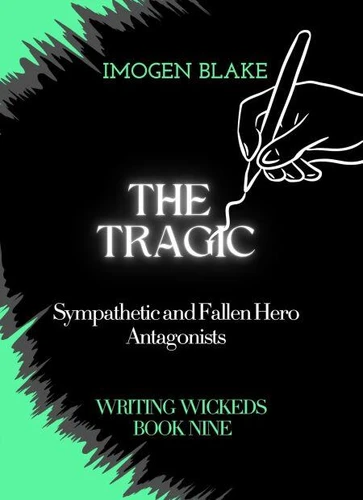
The Tragic: Sympathetic and Fallen Hero Antagonists. Writing Wicked, #9
Par :Formats :
Disponible dans votre compte client Decitre ou Furet du Nord dès validation de votre commande. Le format ePub est :
- Compatible avec une lecture sur My Vivlio (smartphone, tablette, ordinateur)
- Compatible avec une lecture sur liseuses Vivlio
- Pour les liseuses autres que Vivlio, vous devez utiliser le logiciel Adobe Digital Edition. Non compatible avec la lecture sur les liseuses Kindle, Remarkable et Sony
 , qui est-ce ?
Notre partenaire de plateforme de lecture numérique où vous retrouverez l'ensemble de vos ebooks gratuitement
Pour en savoir plus sur nos ebooks, consultez notre aide en ligne ici
C'est si simple ! Lisez votre ebook avec l'app Vivlio sur votre tablette, mobile ou ordinateur :

- FormatePub
- ISBN8235760530
- EAN9798235760530
- Date de parution21/05/2026
- Protection num.pas de protection
- Infos supplémentairesepub
- ÉditeurIoakim Ioakim
Résumé
The best tragic villains aren't "misunderstood." They're understood. Writing Wicked: The Tragic Villain is a practical craft guide for fiction writers who want antagonists the reader can follow-without being asked to forgive. It's built around a simple diagnostic that keeps the character structurally tragic (and clearly villainous): what they wanted, what they lost, what they chose, and what it cost. This book shows you how to write villains whose backstory produces their present-tense choices, whose arguments create moral pressure on the protagonist (not just physical danger), and whose downfall lands as a betrayal of someone or something that mattered. Inside, you'll learn how to: ·Separate legibility from justification so sympathy doesn't become an alibi·Build a coherent chain from wound ? goal ? choice ? harm that holds up scene by scene·Choose the right tragic-villain type (fallen hero, extremist, victim-turned-villain, tragic monster, misguided idealist, anti-villain) and write to its strengths·Pace "the fall" so the turn is visible on the page, not softened in the author's notes·Balance sympathy with accountability and avoid the woobification problem·Write dialogue, relationships, and endings (redemption, damnation, ambiguity) that satisfy the genre while preserving the tragedy. For any genre where the antagonist must feel real-and the harm must stay real-this is the toolkit. .
Writing Wicked Book Nine
Writing Wicked Book Nine
A propos de Imogen Blake
8,99 €
11,49 €
17,99 €
8,99 €
8,99 €
6,99 €
8,99 €
8,99 €
6,99 €
6,99 €
8,99 €