
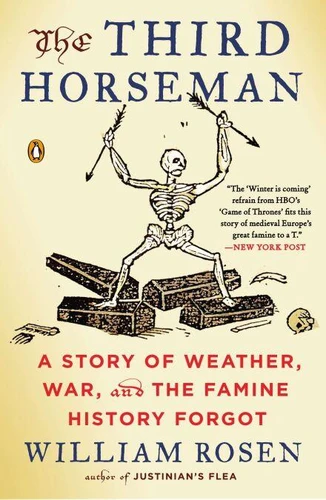
The Third Horseman. Climate Change and the Great Famine of the 14th Century
Par :Formats :
Disponible dans votre compte client Decitre ou Furet du Nord dès validation de votre commande. Le format ePub protégé est :
- Compatible avec une lecture sur My Vivlio (smartphone, tablette, ordinateur)
- Compatible avec une lecture sur liseuses Vivlio
- Pour les liseuses autres que Vivlio, vous devez utiliser le logiciel Adobe Digital Edition. Non compatible avec la lecture sur les liseuses Kindle, Remarkable et Sony
- Non compatible avec un achat hors France métropolitaine
 , qui est-ce ?
Notre partenaire de plateforme de lecture numérique où vous retrouverez l'ensemble de vos ebooks gratuitement
Pour en savoir plus sur nos ebooks, consultez notre aide en ligne ici
C'est si simple ! Lisez votre ebook avec l'app Vivlio sur votre tablette, mobile ou ordinateur :

- Nombre de pages320
- FormatePub
- ISBN978-0-698-16349-2
- EAN9780698163492
- Date de parution15/05/2014
- Protection num.Adobe DRM
- Taille8 Mo
- Infos supplémentairesepub
- ÉditeurPenguin Books
Résumé
The incredible true story of how a cycle of rain, cold, disease, and warfare created the worst famine in European history-years before the Black Death, from the author of Justinian's Flea and the forthcoming Miracle CureIn May 1315, it started to rain. For the seven disastrous years that followed, Europeans would be visited by a series of curses unseen since the third book of Exodus: floods, ice, failures of crops and cattle, and epidemics not just of disease, but of pike, sword, and spear.
All told, six million lives-one-eighth of Europe's total population-would be lost. With a category-defying knowledge of science and history, William Rosen tells the stunning story of the oft-overlooked Great Famine with wit and drama and demonstrates what it all means for today's discussions of climate change.
All told, six million lives-one-eighth of Europe's total population-would be lost. With a category-defying knowledge of science and history, William Rosen tells the stunning story of the oft-overlooked Great Famine with wit and drama and demonstrates what it all means for today's discussions of climate change.
A propos de William Rosen
Julius Caesar
E-book
6,82 €