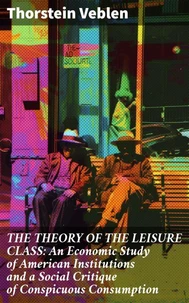
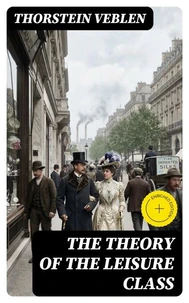
The Theory of the Leisure Class
Par :Formats :
Disponible dans votre compte client Decitre ou Furet du Nord dès validation de votre commande. Le format ePub est :
- Compatible avec une lecture sur My Vivlio (smartphone, tablette, ordinateur)
- Compatible avec une lecture sur liseuses Vivlio
- Pour les liseuses autres que Vivlio, vous devez utiliser le logiciel Adobe Digital Edition. Non compatible avec la lecture sur les liseuses Kindle, Remarkable et Sony
 , qui est-ce ?
Notre partenaire de plateforme de lecture numérique où vous retrouverez l'ensemble de vos ebooks gratuitement
Pour en savoir plus sur nos ebooks, consultez notre aide en ligne ici
C'est si simple ! Lisez votre ebook avec l'app Vivlio sur votre tablette, mobile ou ordinateur :

- Nombre de pages377
- FormatePub
- ISBN978-3-98647-441-6
- EAN9783986474416
- Date de parution20/10/2021
- Protection num.Digital Watermarking
- Taille834 Ko
- Infos supplémentairesepub
- ÉditeurMario Huehne
Résumé
The Theory of the Leisure Class Thorstein Veblen - The Theory of the Leisure Class: An Economic Study of Institutions (1899), by Thorstein Veblen, is a treatise on economics and a detailed, social critique of conspicuous consumption, as a function of social class and of consumerism, derived from the social stratification of people and the division of labour, which are social institutions of the feudal period (9th15th c.) that have continued to the modern era.
Veblen asserts that the contemporary lords of the manor, the businessmen who own the means of production, have employed themselves in the economically unproductive practices of conspicuous consumption and conspicuous leisure, which are useless activities that contribute neither to the economy nor to the material production of the useful goods and services required for the functioning of society, while it is the middle class and the working class who are usefully employed in the industrialised, productive occupations that support the whole of society.
Veblen asserts that the contemporary lords of the manor, the businessmen who own the means of production, have employed themselves in the economically unproductive practices of conspicuous consumption and conspicuous leisure, which are useless activities that contribute neither to the economy nor to the material production of the useful goods and services required for the functioning of society, while it is the middle class and the working class who are usefully employed in the industrialised, productive occupations that support the whole of society.
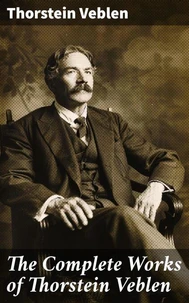
A propos de Thorstein Veblen


0,99 €
0,99 €