SOLDES
Jusqu'à -70% sur une sélection d'articles*


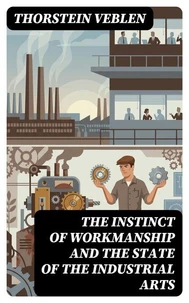
The instinct of workmanship, and the state of industrial arts. Exploring the societal forces behind industrial arts and workmanship
Par :Formats :
Disponible dans votre compte client Decitre ou Furet du Nord dès validation de votre commande. Le format ePub est :
- Compatible avec une lecture sur My Vivlio (smartphone, tablette, ordinateur)
- Compatible avec une lecture sur liseuses Vivlio
- Pour les liseuses autres que Vivlio, vous devez utiliser le logiciel Adobe Digital Edition. Non compatible avec la lecture sur les liseuses Kindle, Remarkable et Sony
 , qui est-ce ?
Notre partenaire de plateforme de lecture numérique où vous retrouverez l'ensemble de vos ebooks gratuitement
Pour en savoir plus sur nos ebooks, consultez notre aide en ligne ici
C'est si simple ! Lisez votre ebook avec l'app Vivlio sur votre tablette, mobile ou ordinateur :

- Nombre de pages275
- FormatePub
- ISBN406-633--953195-6
- EAN4066339531956
- Date de parution10/07/2023
- Protection num.Digital Watermarking
- Taille801 Ko
- Infos supplémentairesepub
- ÉditeurGOOD PRESS
Résumé
In "The Instinct of Workmanship and the State of Industrial Arts, " Thorstein Veblen explores the intricate relationship between human instinct and industrial productivity, challenging the prevailing economic theories of his time. With a keen analytical lens, Veblen critiques the capitalist framework and its impact on the art of craftsmanship, arguing for the inherent human desire to create and improve.
The book employs a rich, analytical style, blending sociology and economics to underscore the significance of workmanship in the industrial age while advocating for a return to a more creative approach to work, rather than viewing it merely as a means of subsistence or profit. Thorstein Veblen, a prominent American economist and social theorist, emerged in a time marked by rapid industrialization and profound social change.
His own experiences within the capitalist society and profound interest in social behavior led him to examine how these institutions affected the human capacity for craftsmanship. Veblen's background in both sociology and economics fundamentally shaped his critiques of economic practices, making him a significant figure in the development of institutional economics. This book is a must-read for anyone interested in understanding the sociocultural implications of industrial practices today.
Veblen's insights resonate with contemporary discussions about the role of creativity and craftsmanship in a technology-driven economy, making this work both timely and relevant.
The book employs a rich, analytical style, blending sociology and economics to underscore the significance of workmanship in the industrial age while advocating for a return to a more creative approach to work, rather than viewing it merely as a means of subsistence or profit. Thorstein Veblen, a prominent American economist and social theorist, emerged in a time marked by rapid industrialization and profound social change.
His own experiences within the capitalist society and profound interest in social behavior led him to examine how these institutions affected the human capacity for craftsmanship. Veblen's background in both sociology and economics fundamentally shaped his critiques of economic practices, making him a significant figure in the development of institutional economics. This book is a must-read for anyone interested in understanding the sociocultural implications of industrial practices today.
Veblen's insights resonate with contemporary discussions about the role of creativity and craftsmanship in a technology-driven economy, making this work both timely and relevant.
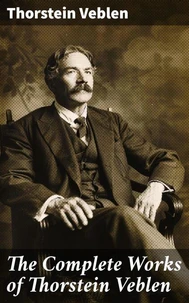
A propos de Thorstein Veblen






1,99 €
1,99 €