SOLDES
Jusqu'à -70% sur une sélection d'articles*

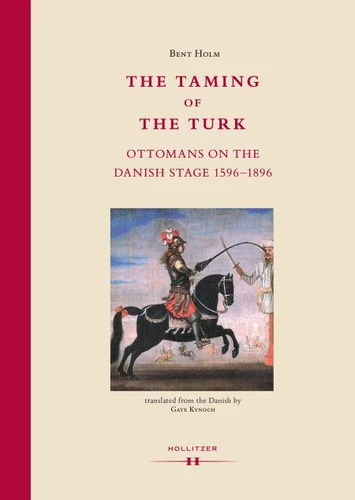
The Taming of the Turk. Ottomans on the Danish Stage 1596-1896
Par : ,Formats :
Disponible dans votre compte client Decitre ou Furet du Nord dès validation de votre commande. Le format ePub est :
- Compatible avec une lecture sur My Vivlio (smartphone, tablette, ordinateur)
- Compatible avec une lecture sur liseuses Vivlio
- Pour les liseuses autres que Vivlio, vous devez utiliser le logiciel Adobe Digital Edition. Non compatible avec la lecture sur les liseuses Kindle, Remarkable et Sony
 , qui est-ce ?
Notre partenaire de plateforme de lecture numérique où vous retrouverez l'ensemble de vos ebooks gratuitement
Pour en savoir plus sur nos ebooks, consultez notre aide en ligne ici
C'est si simple ! Lisez votre ebook avec l'app Vivlio sur votre tablette, mobile ou ordinateur :

- Nombre de pages348
- FormatePub
- ISBN978-3-99012-120-7
- EAN9783990121207
- Date de parution03/07/2013
- Protection num.Digital Watermarking
- Taille14 Mo
- Infos supplémentairesepub
- ÉditeurHollitzer Wissenschaftsverlag
Résumé
For centuries the figure of 'the Turk' spread fascination and fear - in the theatre of war and on the theatrical stage. On the one hand, 'the Turk' represented a spectacular dimension, an imaginary world of pirates, sultans and odalisques; on the other hand, he stood for the actual Ottoman Empire, engaged in long-lasting confrontations and exchanges with Occidental powers. When confronted with historical circumstances - military, commercial and religious - the cliché image of 'the Turk' dissolves in complex combinations of potential references.
The Taming of the Turk: Ottomans on the Danish Stage 1596-1896 elucidates, for the first time, three centuries of cultural history as articulated in dealings between the Kingdom of Denmark and the Ottoman Empire seen in a general European context.
From the staging of 'the Turk' as a diabolical player in royal ceremonies of early modern times, to the appearance of harmless 'Turkish' entertainment figures in the late nineteenth century. Artistic, theatrical and theological conceptions co-act in paradoxical ways against a backdrop of pragmatic connections with the Ottomans. The story of this long-forgotten connection between a small northern-European nation and a mighty Oriental empire is based on a source material - plays, paintings, treaties, travelogues etc.
- that has hitherto chiefly been neglected, although it played a significant role in earlier times. The images of 'exotic' figures sometimes even turn out to be self-images. The documents hold the keys to a number of mental and fundamental (pre)conditions, and thus even to imagery constructions of our day.
From the staging of 'the Turk' as a diabolical player in royal ceremonies of early modern times, to the appearance of harmless 'Turkish' entertainment figures in the late nineteenth century. Artistic, theatrical and theological conceptions co-act in paradoxical ways against a backdrop of pragmatic connections with the Ottomans. The story of this long-forgotten connection between a small northern-European nation and a mighty Oriental empire is based on a source material - plays, paintings, treaties, travelogues etc.
- that has hitherto chiefly been neglected, although it played a significant role in earlier times. The images of 'exotic' figures sometimes even turn out to be self-images. The documents hold the keys to a number of mental and fundamental (pre)conditions, and thus even to imagery constructions of our day.