SOLDES
Jusqu'à -70% sur une sélection d'articles*

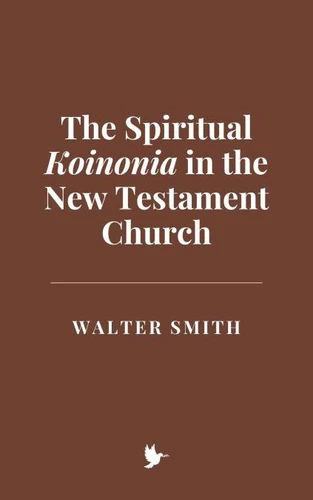
The Spiritual Koinonia in the New Testament Church
Par :Formats :
Disponible dans votre compte client Decitre ou Furet du Nord dès validation de votre commande. Le format ePub est :
- Compatible avec une lecture sur My Vivlio (smartphone, tablette, ordinateur)
- Compatible avec une lecture sur liseuses Vivlio
- Pour les liseuses autres que Vivlio, vous devez utiliser le logiciel Adobe Digital Edition. Non compatible avec la lecture sur les liseuses Kindle, Remarkable et Sony
 , qui est-ce ?
Notre partenaire de plateforme de lecture numérique où vous retrouverez l'ensemble de vos ebooks gratuitement
Pour en savoir plus sur nos ebooks, consultez notre aide en ligne ici
C'est si simple ! Lisez votre ebook avec l'app Vivlio sur votre tablette, mobile ou ordinateur :

- FormatePub
- ISBN8230897408
- EAN9798230897408
- Date de parution14/02/2025
- Protection num.pas de protection
- Infos supplémentairesepub
- ÉditeurIndependently Published
Résumé
The concept of koinonia is central to the New Testament Church and provides a window into understanding Christian fellowship in its most profound sense. The Greek word koinonia is often translated as "fellowship, " "partnership, " or "communion, " but its meaning goes beyond mere social interaction or mutual support. It is a theological term that speaks to the shared life of believers, rooted in the relationship between the members of the body of Christ and, ultimately, with God Himself.
The term appears in various forms throughout the New Testament, and its depth and richness continue to offer insights for understanding the nature of Christian community. The roots of koinonia stretch back to the early Jewish understanding of communal life. In the Old Testament, the Hebrew concept of fellowship is often associated with the covenantal relationship between God and Israel, where God's people were called to live in harmonious community with one another.
However, it is in the New Testament that koinonia reaches its fullest expression, particularly in the context of the Church. The New Testament writers, especially the Apostle Paul, use koinonia to describe the shared life of believers that is grounded in their common faith in Jesus Christ, their participation in the Holy Spirit, and their mutual love and care for one another.
The term appears in various forms throughout the New Testament, and its depth and richness continue to offer insights for understanding the nature of Christian community. The roots of koinonia stretch back to the early Jewish understanding of communal life. In the Old Testament, the Hebrew concept of fellowship is often associated with the covenantal relationship between God and Israel, where God's people were called to live in harmonious community with one another.
However, it is in the New Testament that koinonia reaches its fullest expression, particularly in the context of the Church. The New Testament writers, especially the Apostle Paul, use koinonia to describe the shared life of believers that is grounded in their common faith in Jesus Christ, their participation in the Holy Spirit, and their mutual love and care for one another.
A propos de Walter Smith


2,99 €


2,99 €

2,99 €


2,99 €

2,99 €

2,99 €

2,99 €



2,99 €


2,99 €


2,99 €