SOLDES
Jusqu'à -70% sur une sélection d'articles*

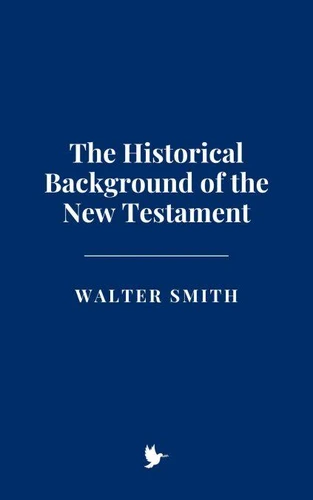
The Historical Background of the New Testament
Par :Formats :
Disponible dans votre compte client Decitre ou Furet du Nord dès validation de votre commande. Le format ePub est :
- Compatible avec une lecture sur My Vivlio (smartphone, tablette, ordinateur)
- Compatible avec une lecture sur liseuses Vivlio
- Pour les liseuses autres que Vivlio, vous devez utiliser le logiciel Adobe Digital Edition. Non compatible avec la lecture sur les liseuses Kindle, Remarkable et Sony
 , qui est-ce ?
Notre partenaire de plateforme de lecture numérique où vous retrouverez l'ensemble de vos ebooks gratuitement
Pour en savoir plus sur nos ebooks, consultez notre aide en ligne ici
C'est si simple ! Lisez votre ebook avec l'app Vivlio sur votre tablette, mobile ou ordinateur :

- FormatePub
- ISBN8230230359
- EAN9798230230359
- Date de parution25/02/2025
- Protection num.pas de protection
- Infos supplémentairesepub
- ÉditeurIndependently Published
Résumé
The New Testament is not just a collection of sacred writings, but a complex and multifaceted historical document that has shaped the religious, political, and social landscape of the Western world. Understanding its significance requires more than just reading the text-it demands a deep exploration of the historical circumstances that produced it, the diverse ideas it embodies, and the enduring legacy it has left on Christianity and beyond.
To engage with the New Testament meaningfully, one must understand the world in which it was written, the people who wrote it, and the larger cultural and religious shifts that were taking place at the time. The context of the New Testament is rooted in the ancient world, where the vast, sprawling Roman Empire ruled over much of Europe, the Near East, and North Africa. The empire, in its zenith, was a cradle of political stability and economic prosperity, known as the Pax Romana.
But beneath the outward peace, there was a complex social fabric marked by tensions between different religious and cultural groups. The Jews in Judea, for instance, were under the dominion of Roman authority, but their strong sense of identity, rooted in centuries of tradition and belief in the One God, was a source of both conflict and resilience. In this charged atmosphere, the teachings of Jesus of Nazareth emerged, challenging the existing order and eventually giving birth to what would become Christianity.
To engage with the New Testament meaningfully, one must understand the world in which it was written, the people who wrote it, and the larger cultural and religious shifts that were taking place at the time. The context of the New Testament is rooted in the ancient world, where the vast, sprawling Roman Empire ruled over much of Europe, the Near East, and North Africa. The empire, in its zenith, was a cradle of political stability and economic prosperity, known as the Pax Romana.
But beneath the outward peace, there was a complex social fabric marked by tensions between different religious and cultural groups. The Jews in Judea, for instance, were under the dominion of Roman authority, but their strong sense of identity, rooted in centuries of tradition and belief in the One God, was a source of both conflict and resilience. In this charged atmosphere, the teachings of Jesus of Nazareth emerged, challenging the existing order and eventually giving birth to what would become Christianity.
A propos de Walter Smith


2,99 €


2,99 €


2,99 €

2,99 €

2,99 €

2,99 €


2,99 €


2,99 €


2,99 €