SOLDES
Jusqu'à -70% sur une sélection d'articles*

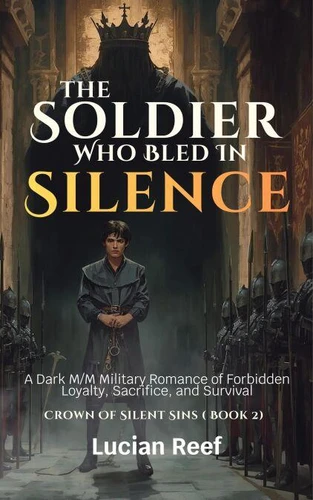
The Soldier Who Bled In Silence: A Dark M/M Military Romance of Forbidden Loyalty, Sacrifice, and Survival. Crown Of Silent Sins, #2
Par :Formats :
Disponible dans votre compte client Decitre ou Furet du Nord dès validation de votre commande. Le format ePub est :
- Compatible avec une lecture sur My Vivlio (smartphone, tablette, ordinateur)
- Compatible avec une lecture sur liseuses Vivlio
- Pour les liseuses autres que Vivlio, vous devez utiliser le logiciel Adobe Digital Edition. Non compatible avec la lecture sur les liseuses Kindle, Remarkable et Sony
 , qui est-ce ?
Notre partenaire de plateforme de lecture numérique où vous retrouverez l'ensemble de vos ebooks gratuitement
Pour en savoir plus sur nos ebooks, consultez notre aide en ligne ici
C'est si simple ! Lisez votre ebook avec l'app Vivlio sur votre tablette, mobile ou ordinateur :

- FormatePub
- ISBN8232771133
- EAN9798232771133
- Date de parution04/01/2026
- Protection num.pas de protection
- Infos supplémentairesepub
- ÉditeurDraft2Digital
Résumé
Book Two begins after silence has failed. What was once unspoken has started to leave traces-measured distances recorded, pauses counted, proximity no longer dismissed as coincidence. The palace does not accuse openly; it watches, recalibrates, and waits for bodies to reveal what language refuses to carry. Lucien Aurelian understands this too well. Survival now requires not only restraint, but constant negotiation with visibility itself.
The bond that could not be named in Book One is no longer allowed to remain formless. It is examined through duty, reframed as disorder, and pressed until intention begins to resemble evidence. Questions arrive without demanding answers. Mercy appears as omission, conditional and temporary. Every allowance carries a cost that tightens rather than loosens the space around him. Caelan Veyne remains what he has always been-disciplined, precise, bound to function-but function is no longer neutral.
Loyalty is tested not through emotion, but through procedure, and sacrifice becomes a language the system understands all too well. When order requires separation, the palace does not hesitate. When it requires an example, it chooses carefully. Book Two traces the escalation from surveillance to judgment, from implication to decree. Power here does not rush; it advances in clean stages, each justified by law, each insulated by silence.
Love is never spoken aloud, because speaking would imply consent to recognition, and recognition is the first step toward condemnation. Instead, intimacy survives only as controlled proximity, as touch disguised by necessity, as choice made without permission. As the system closes, restraint transforms. What once protected now exposes. What once preserved survival begins to demand payment. The body learns new pressures: waiting rooms without names, charges without confession, sentences delivered without emphasis.
The question is no longer whether the bond exists, but who will be made to carry its weight. Written with the same restrained, body-first prose as Book One, this second volume deepens the romance by denying it safety, pushing intimacy into its most dangerous form-sacrifice that cannot be reversed. Book Two is not a turning point toward freedom, but a descent into consequence, where love is no longer only forbidden, but officially defined as crime.
The bond that could not be named in Book One is no longer allowed to remain formless. It is examined through duty, reframed as disorder, and pressed until intention begins to resemble evidence. Questions arrive without demanding answers. Mercy appears as omission, conditional and temporary. Every allowance carries a cost that tightens rather than loosens the space around him. Caelan Veyne remains what he has always been-disciplined, precise, bound to function-but function is no longer neutral.
Loyalty is tested not through emotion, but through procedure, and sacrifice becomes a language the system understands all too well. When order requires separation, the palace does not hesitate. When it requires an example, it chooses carefully. Book Two traces the escalation from surveillance to judgment, from implication to decree. Power here does not rush; it advances in clean stages, each justified by law, each insulated by silence.
Love is never spoken aloud, because speaking would imply consent to recognition, and recognition is the first step toward condemnation. Instead, intimacy survives only as controlled proximity, as touch disguised by necessity, as choice made without permission. As the system closes, restraint transforms. What once protected now exposes. What once preserved survival begins to demand payment. The body learns new pressures: waiting rooms without names, charges without confession, sentences delivered without emphasis.
The question is no longer whether the bond exists, but who will be made to carry its weight. Written with the same restrained, body-first prose as Book One, this second volume deepens the romance by denying it safety, pushing intimacy into its most dangerous form-sacrifice that cannot be reversed. Book Two is not a turning point toward freedom, but a descent into consequence, where love is no longer only forbidden, but officially defined as crime.