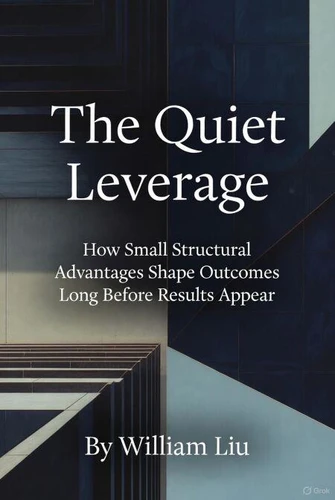
Most outcomes that change lives don't arrive with drama. They emerge quietly, after years of invisible forces have already decided the result. The Quiet Leverage examines the hidden structures that shape success and failure long before results become visible. It challenges the belief that effort, talent, and intensity are the primary drivers of outcomes, and instead shows how timing, environment, incentives, and positioning quietly determine what becomes possible.
Through a structural lens, the book explains why equally capable people experience radically different trajectories, why hard work often fails to produce proportional returns, and why success appears sudden only because the forces behind it were invisible while they accumulated. It explores how small advantages compound, how systems resist change until they abruptly transform, and why position matters more than pressure in competitive domains.
This is not a productivity guide or a collection of tactics. It is a way of seeing. By learning to recognize leverage embedded in systems-rather than chasing visible actions-readers gain the ability to position themselves where results become probable instead of forced.
Most outcomes that change lives don't arrive with drama. They emerge quietly, after years of invisible forces have already decided the result. The Quiet Leverage examines the hidden structures that shape success and failure long before results become visible. It challenges the belief that effort, talent, and intensity are the primary drivers of outcomes, and instead shows how timing, environment, incentives, and positioning quietly determine what becomes possible.
Through a structural lens, the book explains why equally capable people experience radically different trajectories, why hard work often fails to produce proportional returns, and why success appears sudden only because the forces behind it were invisible while they accumulated. It explores how small advantages compound, how systems resist change until they abruptly transform, and why position matters more than pressure in competitive domains.
This is not a productivity guide or a collection of tactics. It is a way of seeing. By learning to recognize leverage embedded in systems-rather than chasing visible actions-readers gain the ability to position themselves where results become probable instead of forced.


 , qui est-ce ?