SOLDES
Jusqu'à -70% sur une sélection d'articles*

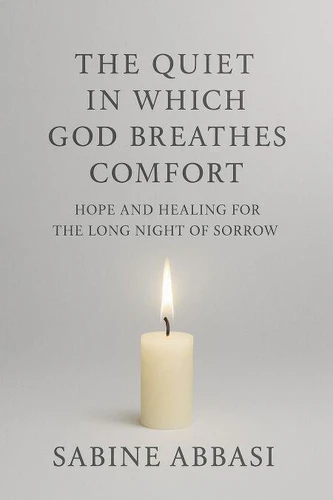
The Quiet in Which God Breathes Comfort
Par :Formats :
Disponible dans votre compte client Decitre ou Furet du Nord dès validation de votre commande. Le format ePub est :
- Compatible avec une lecture sur My Vivlio (smartphone, tablette, ordinateur)
- Compatible avec une lecture sur liseuses Vivlio
- Pour les liseuses autres que Vivlio, vous devez utiliser le logiciel Adobe Digital Edition. Non compatible avec la lecture sur les liseuses Kindle, Remarkable et Sony
 , qui est-ce ?
Notre partenaire de plateforme de lecture numérique où vous retrouverez l'ensemble de vos ebooks gratuitement
Pour en savoir plus sur nos ebooks, consultez notre aide en ligne ici
C'est si simple ! Lisez votre ebook avec l'app Vivlio sur votre tablette, mobile ou ordinateur :

- FormatePub
- ISBN8233040726
- EAN9798233040726
- Date de parution07/02/2026
- Protection num.pas de protection
- Infos supplémentairesepub
- ÉditeurLinda Balsamo
Résumé
Why does suffering belong so inseparably to being human?And what if it is not something to be overcome first, but something that must be understood?This book takes a different path. It offers no quick answers and no formulas of easy comfort. Instead, it takes suffering seriously as part of reality itself. Not all suffering is good. Not all suffering carries meaning. Yet without suffering, the human condition remains only partially understood.
The Bible neither romanticizes pain nor pushes it aside. Its stories speak of lament, loss, and grief, of lives lived at the edges of human existence. And they speak of a God who does not remain distant. In the incarnation, God enters the human condition. God suffers. God mourns. God meets life not from a safe distance, but in embodied closeness. Truth, this book argues, is not abstract. It is embodied.
Body and spirit belong together. Pain, transience, and grief become spaces of insight in which freedom, responsibility, and creativity gain depth. Freedom without mortality would not be a gift, but a privilege. Creativity without suffering would remain without consequence. This book invites readers neither to glorify suffering nor to escape it, but to encounter it. Those who do may discover a different way of understanding grief and pain and perhaps a form of comfort that does not arise from explanations, but from understanding.
The Bible neither romanticizes pain nor pushes it aside. Its stories speak of lament, loss, and grief, of lives lived at the edges of human existence. And they speak of a God who does not remain distant. In the incarnation, God enters the human condition. God suffers. God mourns. God meets life not from a safe distance, but in embodied closeness. Truth, this book argues, is not abstract. It is embodied.
Body and spirit belong together. Pain, transience, and grief become spaces of insight in which freedom, responsibility, and creativity gain depth. Freedom without mortality would not be a gift, but a privilege. Creativity without suffering would remain without consequence. This book invites readers neither to glorify suffering nor to escape it, but to encounter it. Those who do may discover a different way of understanding grief and pain and perhaps a form of comfort that does not arise from explanations, but from understanding.
A propos de Sabine Abbasi

8,99 €


8,99 €

8,49 €

8,49 €

8,49 €

8,49 €


8,99 €