Sabine Abbasi is a Christian author and Bible teacher with a passion for helping others discover the transforming power of God's Word. Her writing is shaped by years of leading women's Bible studies, extensive personal study of Scripture, academic studies in economics, business law, and psychology, and many years of professional leadership and life experience. She seeks to connect biblical truth with everyday life, encouraging readers to grow in faith, find peace, and deepen their relationship with Jesus Christ.
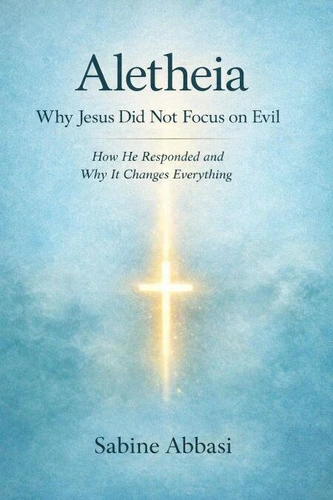
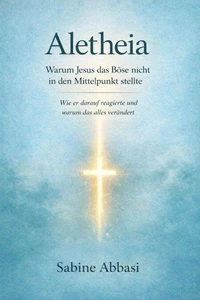
Aletheia: Why Jesus Did Not Focus on Evil
Par :Formats :
Disponible dans votre compte client Decitre ou Furet du Nord dès validation de votre commande. Le format ePub est :
- Compatible avec une lecture sur My Vivlio (smartphone, tablette, ordinateur)
- Compatible avec une lecture sur liseuses Vivlio
- Pour les liseuses autres que Vivlio, vous devez utiliser le logiciel Adobe Digital Edition. Non compatible avec la lecture sur les liseuses Kindle, Remarkable et Sony
 , qui est-ce ?
Notre partenaire de plateforme de lecture numérique où vous retrouverez l'ensemble de vos ebooks gratuitement
Pour en savoir plus sur nos ebooks, consultez notre aide en ligne ici
C'est si simple ! Lisez votre ebook avec l'app Vivlio sur votre tablette, mobile ou ordinateur :

- FormatePub
- ISBN8224656103
- EAN9798224656103
- Date de parution08/04/2026
- Protection num.pas de protection
- Infos supplémentairesepub
- ÉditeurDraft2Digital
Résumé
Aletheia explores a central question: Why did Jesus not place evil at the centre of His message, but consistently directed attention to truth, life, and God?In a world shaped by fear, constant information, and increasingly distorted perception, this question is not abstract. It touches the way people think, decide, and live. Many are overwhelmed by noise, driven by reaction, and influenced by interpretations that are not always grounded in reality.
This book offers a different approach. Drawing on Scripture and supported by insights from psychology and perception research, Aletheia shows that perception is not a passive reflection of reality, but an active construction. Thoughts, emotions, and focus shape how reality is interpreted. What a person sees is not always what is true. This has profound consequences for behaviour, relationships, and inner stability.
At the centre of the book stands the observation that Jesus did not ignore evil, but He also did not give it the central place. Instead, He consistently directed attention toward truth, toward God, and toward what restores and sustains life. This shift in focus is not a denial of reality, but a different way of engaging with it. The book explores how fear, stress, and emotional pressure influence perception, how the mind can become shaped by repeated inputs, and how unexamined thoughts can lead to distorted conclusions.
At the same time, it presents a clear biblical framework: thoughts are not fixed. They can be examined, tested, and realigned."Aletheia" invites the reader to move beyond automatic reactions. It encourages a conscious approach to thinking, a careful examination of perception, and a deliberate alignment with truth. This includes learning to pause, to question immediate interpretations, and to distinguish between what is perceived and what is real.
The book also addresses practical aspects of daily life. It shows how clarity can be regained when emotional intensity is reduced, how distance can change perspective, and how a stable inner orientation leads to more grounded decisions. It connects these insights with biblical teaching on guarding the mind, testing thoughts, and focusing on what is true, pure, and life-giving. At its core, Aletheia is not only an analysis.
It is an invitation. It calls the reader to rediscover a way of thinking that is not shaped by fear or constant reaction, but by truth. It points toward a form of inner stability that does not depend on changing circumstances, but on a different foundation. This book is written for readers who seek clarity in a complex world, who want to understand how perception works, and who are willing to examine their thinking in the light of biblical truth.
It does not require prior theological training, but it does invite careful reflection and openness to rethinking familiar patterns. In a time where information is abundant but clarity is rare, Aletheia offers a structured, thoughtful, and grounded perspective. It shows that transformation does not begin with controlling the external world, but with reorienting the inner one. Ultimately, it points to a simple but profound shift: not living from reaction, but from truth.
This book offers a different approach. Drawing on Scripture and supported by insights from psychology and perception research, Aletheia shows that perception is not a passive reflection of reality, but an active construction. Thoughts, emotions, and focus shape how reality is interpreted. What a person sees is not always what is true. This has profound consequences for behaviour, relationships, and inner stability.
At the centre of the book stands the observation that Jesus did not ignore evil, but He also did not give it the central place. Instead, He consistently directed attention toward truth, toward God, and toward what restores and sustains life. This shift in focus is not a denial of reality, but a different way of engaging with it. The book explores how fear, stress, and emotional pressure influence perception, how the mind can become shaped by repeated inputs, and how unexamined thoughts can lead to distorted conclusions.
At the same time, it presents a clear biblical framework: thoughts are not fixed. They can be examined, tested, and realigned."Aletheia" invites the reader to move beyond automatic reactions. It encourages a conscious approach to thinking, a careful examination of perception, and a deliberate alignment with truth. This includes learning to pause, to question immediate interpretations, and to distinguish between what is perceived and what is real.
The book also addresses practical aspects of daily life. It shows how clarity can be regained when emotional intensity is reduced, how distance can change perspective, and how a stable inner orientation leads to more grounded decisions. It connects these insights with biblical teaching on guarding the mind, testing thoughts, and focusing on what is true, pure, and life-giving. At its core, Aletheia is not only an analysis.
It is an invitation. It calls the reader to rediscover a way of thinking that is not shaped by fear or constant reaction, but by truth. It points toward a form of inner stability that does not depend on changing circumstances, but on a different foundation. This book is written for readers who seek clarity in a complex world, who want to understand how perception works, and who are willing to examine their thinking in the light of biblical truth.
It does not require prior theological training, but it does invite careful reflection and openness to rethinking familiar patterns. In a time where information is abundant but clarity is rare, Aletheia offers a structured, thoughtful, and grounded perspective. It shows that transformation does not begin with controlling the external world, but with reorienting the inner one. Ultimately, it points to a simple but profound shift: not living from reaction, but from truth.
A propos de Sabine Abbasi

11,49 €

8,99 €
8,99 €

8,99 €

8,99 €

8,99 €

8,99 €

8,99 €

8,99 €

8,99 €