The kitchen is the same kitchen. You are not the same person. And no one left an instruction manual on the counter. This is for the Tuesday, or Sunday, or rainy Thursday in August, when the last of your children loaded the car and drove away, and the house, for the first time in eighteen or twenty-two or twenty-six years, fell quiet. The empty-nest books tell you to take a yoga class and book a cruise.
What is actually happening is much larger, much stranger, and much more interesting than that. The Quiet House is a twelve-chapter guide to the most under-written transition in a woman's life, the slow, structural becoming that begins after the central organizing fact of adult life moves to a dorm in another state. In three parts and twelve protocols, it walks through the diagnosis (the unsanctioned grief, the decades that have to be inventoried, the casseroles that do not come), the slow work of coming back to a self shelved for twenty-five years (the Wednesday Hour, the body re-introduction, the friendships that have gone thin), and the architecture of the twenty to thirty-five years most women still get on the other side of the launch.
Inside:- Why the grief you are not supposed to be having is a real and nameable thing, what Pauline Boss called ambiguous loss - The Decades Inventory, a written exercise that recovers the selves you shelved for motherhood, still intact - The Wednesday Hour, a six-week protocol for re-learning unscheduled time without vertigo - How to come home to your marriage after the buffer of children quietly disappears - The Restraint Protocol, thirty days of not initiating contact with adult children, and why it is the hardest practice in the book with the highest return - The Solo Reckoning, a dedicated chapter for the woman arriving here widowed, divorced, never-married, or partnered in name only - How to design backward from the seventy-two-year-old you intend to be, with a sealed letter you will reopen in twenty yearsFor the mother in the quiet kitchen who is allowed, finally, to mourn the leaving, and to discover that the twenty years on the other side may be the most interesting stretch of her life.
For readers of Women Rowing North by Mary Pipher, Ambiguous Loss by Pauline Boss, and Bittersweet by Susan Cain. The kitchen is quiet. The kitchen does not get the last word.
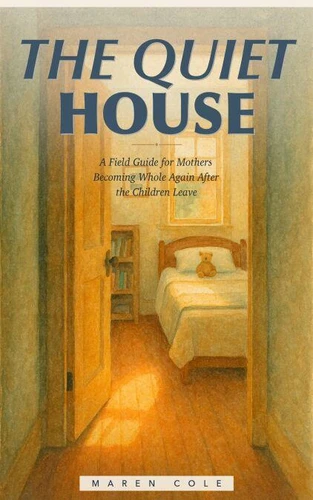
The kitchen is the same kitchen. You are not the same person. And no one left an instruction manual on the counter. This is for the Tuesday, or Sunday, or rainy Thursday in August, when the last of your children loaded the car and drove away, and the house, for the first time in eighteen or twenty-two or twenty-six years, fell quiet. The empty-nest books tell you to take a yoga class and book a cruise.
What is actually happening is much larger, much stranger, and much more interesting than that. The Quiet House is a twelve-chapter guide to the most under-written transition in a woman's life, the slow, structural becoming that begins after the central organizing fact of adult life moves to a dorm in another state. In three parts and twelve protocols, it walks through the diagnosis (the unsanctioned grief, the decades that have to be inventoried, the casseroles that do not come), the slow work of coming back to a self shelved for twenty-five years (the Wednesday Hour, the body re-introduction, the friendships that have gone thin), and the architecture of the twenty to thirty-five years most women still get on the other side of the launch.
Inside:- Why the grief you are not supposed to be having is a real and nameable thing, what Pauline Boss called ambiguous loss - The Decades Inventory, a written exercise that recovers the selves you shelved for motherhood, still intact - The Wednesday Hour, a six-week protocol for re-learning unscheduled time without vertigo - How to come home to your marriage after the buffer of children quietly disappears - The Restraint Protocol, thirty days of not initiating contact with adult children, and why it is the hardest practice in the book with the highest return - The Solo Reckoning, a dedicated chapter for the woman arriving here widowed, divorced, never-married, or partnered in name only - How to design backward from the seventy-two-year-old you intend to be, with a sealed letter you will reopen in twenty yearsFor the mother in the quiet kitchen who is allowed, finally, to mourn the leaving, and to discover that the twenty years on the other side may be the most interesting stretch of her life.
For readers of Women Rowing North by Mary Pipher, Ambiguous Loss by Pauline Boss, and Bittersweet by Susan Cain. The kitchen is quiet. The kitchen does not get the last word.


 , qui est-ce ?