SOLDES
Jusqu'à -70% sur une sélection d'articles*

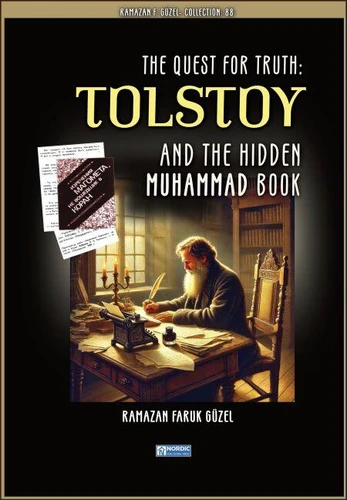
The Quest for Truth: Tolstoy and the Hidden Muhammad Book
Par : ,Formats :
Disponible dans votre compte client Decitre ou Furet du Nord dès validation de votre commande. Le format ePub protégé est :
- Compatible avec une lecture sur My Vivlio (smartphone, tablette, ordinateur)
- Compatible avec une lecture sur liseuses Vivlio
- Pour les liseuses autres que Vivlio, vous devez utiliser le logiciel Adobe Digital Edition. Non compatible avec la lecture sur les liseuses Kindle, Remarkable et Sony
- Non compatible avec un achat hors France métropolitaine
 , qui est-ce ?
Notre partenaire de plateforme de lecture numérique où vous retrouverez l'ensemble de vos ebooks gratuitement
Pour en savoir plus sur nos ebooks, consultez notre aide en ligne ici
C'est si simple ! Lisez votre ebook avec l'app Vivlio sur votre tablette, mobile ou ordinateur :

- FormatePub
- ISBN8230478089
- EAN9798230478089
- Date de parution27/12/2024
- Protection num.Adobe DRM
- Infos supplémentairesepub
- ÉditeurIndependently Published
Résumé
Tolstoy's life is distinguished not only by his great literary works but also by his deep spiritual quests and religious reflections. Alongside his thoughts on Christianity, non-violence, and morality, his interest in Islam and Prophet Muhammad (PBUH) represents perhaps one of the lesser-known yet most impactful aspects of his life.In 1908, Leo Tolstoy read The Sayings of Muhammad, a book by "Abdullah el-Sühreverdi" published in India.
Inspired by the hadiths in the book, he compiled his own selection and published it the same year in October through Russia's "Posrednik" publishing house under the title The Sayings of Muhammad Not Included in the Quran. However, the title of the booklet was methodologically inaccurate, as it seems Tolstoy did not fully grasp the distinction between Quranic verses and hadith. (Quranic verses are divine revelations, whereas hadiths consist of the sayings and actions of the Prophet Muhammad.) Nevertheless, it is evident that Tolstoy's primary intent was to compile the hadiths of the Prophet Muhammad (PBUH) that deeply resonated with his own moral and spiritual sensibilities.
In essence, Tolstoy sought to create a collection of selected hadiths, aiming to share universal ethical values with humanity. Tolstoy's publication of these narrations during a time when Christian Russia was dominant made a significant impression. However, this important work was hidden from readers for many years and prevented from reaching a broader audience. The book in your hands brings together Tolstoy's writings and anecdotes about Muslims and Islam under various headings.
While preparing this work, we deeply examined Tolstoy's thoughts on Islam, referenced his letters, and utilized official documents to preserve the authenticity of his writings. Our goal in this work is not to introduce events, thoughts, or writings that never existed but rather to uncover the existing ideas Tolstoy had regarding Islam, providing them with supporting documents and evidence. It is well-known that Tolstoy viewed Islam as a religion free from many of the errors that had befallen other faiths, considering it a purer and more perfect path for humanity.
He particularly saw the teachings of Prophet Muhammad (PBUH) as a final and complete guidance for those seeking justice and truth. Now, it is with great excitement that I invite you to begin this carefully crafted work. I wish you a meaningful and enriching reading experience. November 30, 2024Ramazan Faruk GÜZEL
Inspired by the hadiths in the book, he compiled his own selection and published it the same year in October through Russia's "Posrednik" publishing house under the title The Sayings of Muhammad Not Included in the Quran. However, the title of the booklet was methodologically inaccurate, as it seems Tolstoy did not fully grasp the distinction between Quranic verses and hadith. (Quranic verses are divine revelations, whereas hadiths consist of the sayings and actions of the Prophet Muhammad.) Nevertheless, it is evident that Tolstoy's primary intent was to compile the hadiths of the Prophet Muhammad (PBUH) that deeply resonated with his own moral and spiritual sensibilities.
In essence, Tolstoy sought to create a collection of selected hadiths, aiming to share universal ethical values with humanity. Tolstoy's publication of these narrations during a time when Christian Russia was dominant made a significant impression. However, this important work was hidden from readers for many years and prevented from reaching a broader audience. The book in your hands brings together Tolstoy's writings and anecdotes about Muslims and Islam under various headings.
While preparing this work, we deeply examined Tolstoy's thoughts on Islam, referenced his letters, and utilized official documents to preserve the authenticity of his writings. Our goal in this work is not to introduce events, thoughts, or writings that never existed but rather to uncover the existing ideas Tolstoy had regarding Islam, providing them with supporting documents and evidence. It is well-known that Tolstoy viewed Islam as a religion free from many of the errors that had befallen other faiths, considering it a purer and more perfect path for humanity.
He particularly saw the teachings of Prophet Muhammad (PBUH) as a final and complete guidance for those seeking justice and truth. Now, it is with great excitement that I invite you to begin this carefully crafted work. I wish you a meaningful and enriching reading experience. November 30, 2024Ramazan Faruk GÜZEL