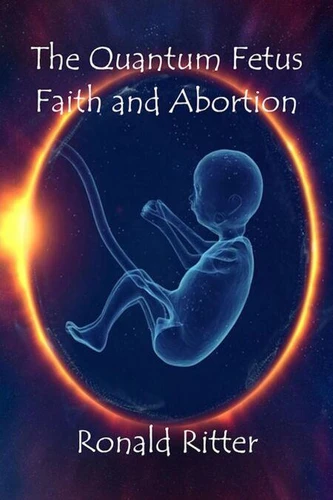
The Quantum Fetus Faith and Abortion
Par :Formats :
Disponible dans votre compte client Decitre ou Furet du Nord dès validation de votre commande. Le format ePub est :
- Compatible avec une lecture sur My Vivlio (smartphone, tablette, ordinateur)
- Compatible avec une lecture sur liseuses Vivlio
- Pour les liseuses autres que Vivlio, vous devez utiliser le logiciel Adobe Digital Edition. Non compatible avec la lecture sur les liseuses Kindle, Remarkable et Sony
 , qui est-ce ?
Notre partenaire de plateforme de lecture numérique où vous retrouverez l'ensemble de vos ebooks gratuitement
Pour en savoir plus sur nos ebooks, consultez notre aide en ligne ici
C'est si simple ! Lisez votre ebook avec l'app Vivlio sur votre tablette, mobile ou ordinateur :

- FormatePub
- ISBN8233032400
- EAN9798233032400
- Date de parution26/12/2025
- Protection num.pas de protection
- Infos supplémentairesepub
- ÉditeurLinda Balsamo
Résumé
Welcome to one of the most polarizing controversies of our times, currently debated within the United States of America. You are either defined by the Pro-life anti-abortion grouping or the abortion-rights movement, commonly referred to as Pro-choice. The controversy was shaped by the landmark 1973 legal case, Roe v. Wade, in which the United States Supreme Court ruled in favor of legal abortion to protect a pregnant woman's liberty to choose.
However, on June 24, 2022, the United States court overturned Roe v. Wade, the 1973 decision that guaranteed women in the United States a constitutionally protected right to abortion. As the United States of America becomes polarized on the human rights of women to determine their reproductive voices, there is no more appropriate time in history to challenge society's religious prejudices and falsehoods toward how we define human life and who has the right to decide.
So, how do we decide on the rights of an emancipated woman to have control over her own reproductive choices? Do we allow a majority of six Roman Catholic judges, sitting in the Supreme Court of the United States of America, to decide for the country, and if so, is the system broken?Around 62% of the population of the USA supports legal abortion, so the numbers have it. But is it morally right or wrong to terminate a zygote, embryo, and fetus in line with the wishes of the woman?Who decides the morality, and is morality just a purely subjective judgment, constructed by religious groupings or a secular society? And for the 30% of people who do not believe in a God or the words of the Bible, do we say your rights don't matter at all?How do we define morality? Is it a line in the sand agreed upon within a secular society, or is it, as the Abrahamic religion defines, a set of unquestionable commandments from God given to Moses, a Jewish prophet? Did he copy them correctly? Let's examine the evidence from the Bible and consider some relevant thought experiments before you make up your mind.
The big questions in the abortion debate are generally these: When is a zygote, embryo, or fetus a living human being-either at birth, conception, or somewhere in between? And who has the right to make this judgment?Let's consider what the Abrahamic Bible tells us about the ensoulment of a human being and abortion. Although the evangelical right Christian grouping has taken up the call of the Pro-life movement, it is the Roman Catholic Church that is the primary driver of the anti-abortion movement within the USA and elsewhere.
Unfortunately, their aggressive attitude, denying a woman's reproductive rights, was poorly decided by the sexual attitudes of Augustine of Hippo, a bishop in the fifth century, denying women control over their reproductive rights. This is a sad proposition to deliver to Catholicism. Finally, I have included an extremely poignant and extensively researched article on Christianity and abortion rights, with the kind permission of Rohini Hensman, author, writer, and independent scholar from Sri Lanka, currently living in India.
Rohini Hensman, University of Amsterdam, Doctor of Philosophy (PhD) in Sociology from 1996 to 2006. University of Oxford, BA and MA in Psychology and Physiology from 1967 to 1970.
However, on June 24, 2022, the United States court overturned Roe v. Wade, the 1973 decision that guaranteed women in the United States a constitutionally protected right to abortion. As the United States of America becomes polarized on the human rights of women to determine their reproductive voices, there is no more appropriate time in history to challenge society's religious prejudices and falsehoods toward how we define human life and who has the right to decide.
So, how do we decide on the rights of an emancipated woman to have control over her own reproductive choices? Do we allow a majority of six Roman Catholic judges, sitting in the Supreme Court of the United States of America, to decide for the country, and if so, is the system broken?Around 62% of the population of the USA supports legal abortion, so the numbers have it. But is it morally right or wrong to terminate a zygote, embryo, and fetus in line with the wishes of the woman?Who decides the morality, and is morality just a purely subjective judgment, constructed by religious groupings or a secular society? And for the 30% of people who do not believe in a God or the words of the Bible, do we say your rights don't matter at all?How do we define morality? Is it a line in the sand agreed upon within a secular society, or is it, as the Abrahamic religion defines, a set of unquestionable commandments from God given to Moses, a Jewish prophet? Did he copy them correctly? Let's examine the evidence from the Bible and consider some relevant thought experiments before you make up your mind.
The big questions in the abortion debate are generally these: When is a zygote, embryo, or fetus a living human being-either at birth, conception, or somewhere in between? And who has the right to make this judgment?Let's consider what the Abrahamic Bible tells us about the ensoulment of a human being and abortion. Although the evangelical right Christian grouping has taken up the call of the Pro-life movement, it is the Roman Catholic Church that is the primary driver of the anti-abortion movement within the USA and elsewhere.
Unfortunately, their aggressive attitude, denying a woman's reproductive rights, was poorly decided by the sexual attitudes of Augustine of Hippo, a bishop in the fifth century, denying women control over their reproductive rights. This is a sad proposition to deliver to Catholicism. Finally, I have included an extremely poignant and extensively researched article on Christianity and abortion rights, with the kind permission of Rohini Hensman, author, writer, and independent scholar from Sri Lanka, currently living in India.
Rohini Hensman, University of Amsterdam, Doctor of Philosophy (PhD) in Sociology from 1996 to 2006. University of Oxford, BA and MA in Psychology and Physiology from 1967 to 1970.
A propos de Ronald Ritter


Guardian: Do Not Harm
E-book
5,49 €
The Holy Grail of Health
E-book
5,49 €

5,49 €
5,49 €

5,49 €

5,49 €

The Hive 2100
E-book
5,49 €

Witness. AI Sci-Fi
E-book
5,49 €
5,49 €

5,49 €
5,49 €
5,49 €


5,49 €

5,49 €

5,49 €