Nouveauté
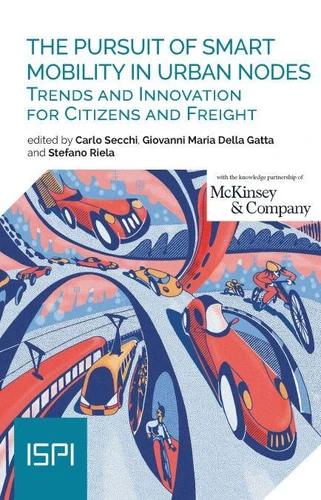
The Pursuit of Smart Mobility in Urban Nodes. Trends and Innovation for Citizens and Freight
Par : , ,Formats :
Disponible dans votre compte client Decitre ou Furet du Nord dès validation de votre commande. Le format ePub est :
- Compatible avec une lecture sur My Vivlio (smartphone, tablette, ordinateur)
- Compatible avec une lecture sur liseuses Vivlio
- Pour les liseuses autres que Vivlio, vous devez utiliser le logiciel Adobe Digital Edition. Non compatible avec la lecture sur les liseuses Kindle, Remarkable et Sony
 , qui est-ce ?
Notre partenaire de plateforme de lecture numérique où vous retrouverez l'ensemble de vos ebooks gratuitement
Pour en savoir plus sur nos ebooks, consultez notre aide en ligne ici
C'est si simple ! Lisez votre ebook avec l'app Vivlio sur votre tablette, mobile ou ordinateur :

- Nombre de pages184
- FormatePub
- ISBN1256008124
- EAN9791256008124
- Date de parution24/07/2026
- Protection num.Digital Watermarking
- Taille3 Mo
- Infos supplémentairesepub
- ÉditeurLedizioni
Résumé
Urbanisation is transforming territories at an unprecedented pace, redefining how people and goods move within, between and beyond cities. As urban areas expand and interconnect, mobility systems are called to respond with greater efficiency, sustainability and resilience. At the core of this transformation are urban nodes - strategic interfaces where local and long-distance networks converge. Here, mobility is evolving from a fragmented set of transport modes into an integrated system shaped by accessibility, seamless connectivity and user experience.
At the same time, freight mobility introduces additional complexity, requiring coordinated, multi-actor approaches and a gradual shift toward multimodal and adaptive logistics. Technological innovation is accelerating this transition. Data-driven tools, intelligent infrastructure and emerging solutions such as artificial intelligence and digital platforms are reshaping how mobility systems are planned and managed.
Yet, the challenge extends beyond technology. Environmental sustainability, territorial cohesion and the integration of peripheral regions remain critical dimensions of this evolution. Smart mobility is thus emerging as a systemic paradigm - one that links infrastructure, governance and innovation. Its success depends not only on performance and efficiency, but on the ability to create more balanced, inclusive and future-oriented mobility systems.
At the same time, freight mobility introduces additional complexity, requiring coordinated, multi-actor approaches and a gradual shift toward multimodal and adaptive logistics. Technological innovation is accelerating this transition. Data-driven tools, intelligent infrastructure and emerging solutions such as artificial intelligence and digital platforms are reshaping how mobility systems are planned and managed.
Yet, the challenge extends beyond technology. Environmental sustainability, territorial cohesion and the integration of peripheral regions remain critical dimensions of this evolution. Smart mobility is thus emerging as a systemic paradigm - one that links infrastructure, governance and innovation. Its success depends not only on performance and efficiency, but on the ability to create more balanced, inclusive and future-oriented mobility systems.