SOLDES
Jusqu'à -70% sur une sélection d'articles*

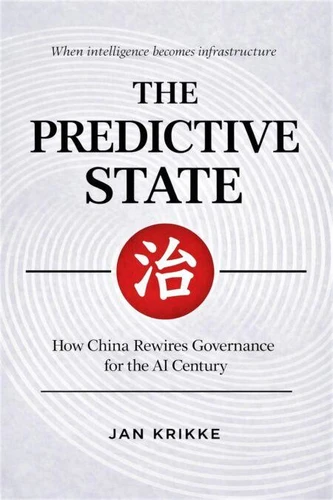
The Predictive State: How China is Rewiring Governance for the AI Century
Par :Formats :
Disponible dans votre compte client Decitre ou Furet du Nord dès validation de votre commande. Le format ePub est :
- Compatible avec une lecture sur My Vivlio (smartphone, tablette, ordinateur)
- Compatible avec une lecture sur liseuses Vivlio
- Pour les liseuses autres que Vivlio, vous devez utiliser le logiciel Adobe Digital Edition. Non compatible avec la lecture sur les liseuses Kindle, Remarkable et Sony
 , qui est-ce ?
Notre partenaire de plateforme de lecture numérique où vous retrouverez l'ensemble de vos ebooks gratuitement
Pour en savoir plus sur nos ebooks, consultez notre aide en ligne ici
C'est si simple ! Lisez votre ebook avec l'app Vivlio sur votre tablette, mobile ou ordinateur :

- FormatePub
- ISBN978-616-456-092-5
- EAN9786164560925
- Date de parution24/04/2026
- Protection num.pas de protection
- Infos supplémentairesepub
- ÉditeurDCO Books
Résumé
The Predictive State shows how China is turning artificial intelligence into governance infrastructure-and redefining how power works in the AI century. While much of the world debates artificial intelligence as a tool, China is building something far more consequential: a system in which intelligence is embedded directly into the infrastructure of society. In The Predictive State, Jan Krikke reveals how data, algorithms, and institutions are being integrated into continuous feedback loops that allow governments to act not only on events, but on the conditions that produce them.
The result is a new model of state capacity-one that anticipates, adapts, and intervenes in real time. This book moves beyond the familiar narrative of an "AI race." It shows that the real competition is not just about technological superiority, but about how intelligence itself is organized. As AI becomes infrastructure, the stakes change. Power will no longer depend only on who builds the best models, but on who designs the systems that govern their use.
The result is a new model of state capacity-one that anticipates, adapts, and intervenes in real time. This book moves beyond the familiar narrative of an "AI race." It shows that the real competition is not just about technological superiority, but about how intelligence itself is organized. As AI becomes infrastructure, the stakes change. Power will no longer depend only on who builds the best models, but on who designs the systems that govern their use.