SOLDES
Jusqu'à -70% sur une sélection d'articles*

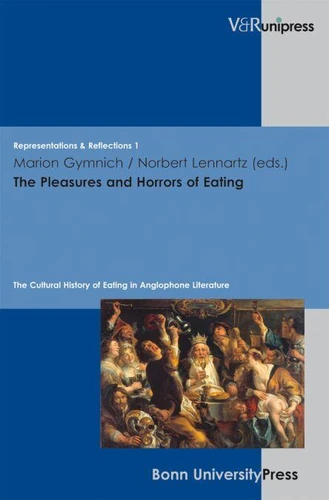
The Pleasures and Horrors of Eating. The Cultural History of Eating in Anglophone Literature
Par : , ,Formats :
Disponible dans votre compte client Decitre ou Furet du Nord dès validation de votre commande. Le format PDF est :
- Compatible avec une lecture sur My Vivlio (smartphone, tablette, ordinateur)
- Compatible avec une lecture sur liseuses Vivlio
- Pour les liseuses autres que Vivlio, vous devez utiliser le logiciel Adobe Digital Edition. Non compatible avec la lecture sur les liseuses Kindle, Remarkable et Sony
 , qui est-ce ?
Notre partenaire de plateforme de lecture numérique où vous retrouverez l'ensemble de vos ebooks gratuitement
Pour en savoir plus sur nos ebooks, consultez notre aide en ligne ici
C'est si simple ! Lisez votre ebook avec l'app Vivlio sur votre tablette, mobile ou ordinateur :

- Nombre de pages464
- FormatPDF
- ISBN978-3-86234-775-9
- EAN9783862347759
- Date de parution15/09/2010
- Protection num.pas de protection
- Taille2 Mo
- Infos supplémentairespdf
- ÉditeurV&R Unipress
Résumé
Browsing through books and TV channels we find people pre-occupied with eating, cooking and competing with chefs. Eating and food in today's media have become a form of entertainment and art. A survey of literary history and culture shows to what extent eating used to be closely related to all areas of human life, to religion, eroticism and even to death. In this volume, early modern ideas of feasting, banqueting and culinary pleasures are juxtaposed with post-18th- and 19th-century concepts in which the intake of food is increasingly subjected to moral, theological and economic reservations.
In a wide range of essays, various images, rhetorics and poetics of plenty are not only contrasted with the horrors of gluttony, they are also seen in the context of modern phenomena such as the anorexic body or the gourmandizing bête humaine. It is this vexing binary approach to eating and food which this volume traces within a wide chronological framework and which is at the core not only of literature, art and film, but also of a flourishing popular culture.
In a wide range of essays, various images, rhetorics and poetics of plenty are not only contrasted with the horrors of gluttony, they are also seen in the context of modern phenomena such as the anorexic body or the gourmandizing bête humaine. It is this vexing binary approach to eating and food which this volume traces within a wide chronological framework and which is at the core not only of literature, art and film, but also of a flourishing popular culture.