
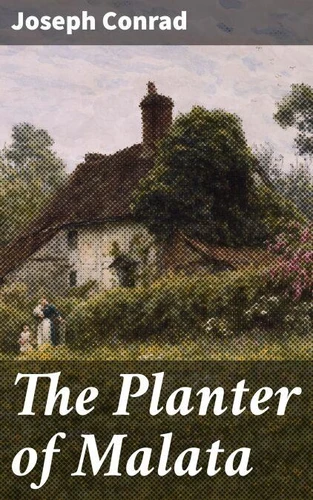
The Planter of Malata. Exploring Colonial Morality in Conrad's Malata
Par :Formats :
Disponible dans votre compte client Decitre ou Furet du Nord dès validation de votre commande. Le format ePub est :
- Compatible avec une lecture sur My Vivlio (smartphone, tablette, ordinateur)
- Compatible avec une lecture sur liseuses Vivlio
- Pour les liseuses autres que Vivlio, vous devez utiliser le logiciel Adobe Digital Edition. Non compatible avec la lecture sur les liseuses Kindle, Remarkable et Sony
 , qui est-ce ?
Notre partenaire de plateforme de lecture numérique où vous retrouverez l'ensemble de vos ebooks gratuitement
Pour en savoir plus sur nos ebooks, consultez notre aide en ligne ici
C'est si simple ! Lisez votre ebook avec l'app Vivlio sur votre tablette, mobile ou ordinateur :

- Nombre de pages57
- FormatePub
- ISBN406-4-06-642667-5
- EAN4064066426675
- Date de parution08/12/2020
- Protection num.Digital Watermarking
- Taille622 Ko
- Infos supplémentairesepub
- ÉditeurGOOD PRESS
Résumé
In "The Planter of Malata, " Joseph Conrad explores the complexities of colonialism and the intricate dance of power dynamics between the colonizer and the colonized. Set against the backdrop of a fictional African island, the narrative unfolds through rich, evocative prose that reflects Conrad's mastery of psychological depth and moral ambiguity. The story grapples with themes of greed, exploitation, and the conflicting aspirations of its characters, echoing the broader literary movement of Modernism, characterized by its fragmented structures and deep psychological realism, which was contemporaneous with Conrad's oeuvre.
Joseph Conrad, born J??zef Teodor Konrad Korzeniowski in 1857 in Ukraine, experienced the tumultuous effects of colonialism first-hand. His diverse experiences as a sailor and navigator influenced his writing, immersing him in the spiritual and ethical quandaries that marked the interface between European imperialism and indigenous cultures. Conrad's contemplative nature and strong aversion to the destructive forces of colonial ambition informed the compelling narrative in "The Planter of Malata." This novel is a profound examination of moral imperatives in a colonial landscape, making it essential reading for anyone interested in the intricacies of colonial relationships and their enduring impacts.
Readers will find Conrad's intricate characters and potent themes offer a timeless lens through which to reflect on the complexities of human ambition and ethical responsibility.
Joseph Conrad, born J??zef Teodor Konrad Korzeniowski in 1857 in Ukraine, experienced the tumultuous effects of colonialism first-hand. His diverse experiences as a sailor and navigator influenced his writing, immersing him in the spiritual and ethical quandaries that marked the interface between European imperialism and indigenous cultures. Conrad's contemplative nature and strong aversion to the destructive forces of colonial ambition informed the compelling narrative in "The Planter of Malata." This novel is a profound examination of moral imperatives in a colonial landscape, making it essential reading for anyone interested in the intricacies of colonial relationships and their enduring impacts.
Readers will find Conrad's intricate characters and potent themes offer a timeless lens through which to reflect on the complexities of human ambition and ethical responsibility.
A propos de JOSEPH CONRAD
Tales of Unrest
E-book
2,99 €
0,99 €

13,99 €

Lord Jim
E-book
0,99 €
0,99 €

Entre terre et mer
E-book
1,99 €

En marge des marées
E-book
1,99 €
Heart of Darkness
E-book
0,99 €

Das Herz der Finsternis
E-book
0,49 €

0,49 €



4,99 €
0,49 €
Romance
E-book
0,49 €

Chance
E-book
0,49 €
The Nature Of A Crime
E-book
0,49 €