
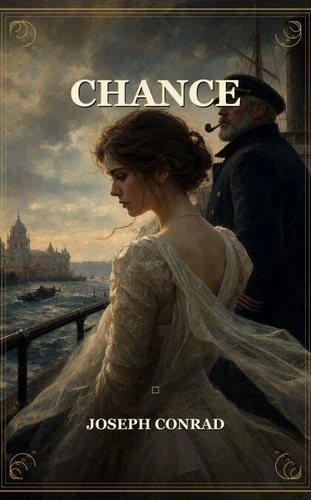
Chance
Par :Formats :
Disponible dans votre compte client Decitre ou Furet du Nord dès validation de votre commande. Le format ePub est :
- Compatible avec une lecture sur My Vivlio (smartphone, tablette, ordinateur)
- Compatible avec une lecture sur liseuses Vivlio
- Pour les liseuses autres que Vivlio, vous devez utiliser le logiciel Adobe Digital Edition. Non compatible avec la lecture sur les liseuses Kindle, Remarkable et Sony
 , qui est-ce ?
Notre partenaire de plateforme de lecture numérique où vous retrouverez l'ensemble de vos ebooks gratuitement
Pour en savoir plus sur nos ebooks, consultez notre aide en ligne ici
C'est si simple ! Lisez votre ebook avec l'app Vivlio sur votre tablette, mobile ou ordinateur :

- Nombre de pages480
- FormatePub
- ISBN978-2-606-47468-3
- EAN9782606474683
- Date de parution19/05/2026
- Protection num.Digital Watermarking
- Taille1 Mo
- Infos supplémentairesepub
- ÉditeurLEP, Loisirs et pédagogie SA
Résumé
We rely on your support to help us keep producing beautiful, free, and unrestricted editions of literature for the digital age. Will you support our efforts with a donation ? Flora de Barral is the daughter of a successful banker. When he's tried and convicted of fraud, her prosperous life turns miserable. While on the brink of suicide, she meets an older sea captain and marries him as a means of escape.
Her dramatic life is recounted by several characters, but mainly by Marlow, Conrad's favorite recurring narrator. Chance , serialized in 1912 and published as a book the following year, is Conrad's only novel with a female protagonist. It was also his first commercially successful novel, despite its complex narrative structure. Joseph Conrad (died 1924) was a major literary figure of the early 20th century.
Their work has endured across generations and continues to be read and studied worldwide. As a work of classic literary fiction, Chance exemplifies the narrative craft and social insight that defined great storytelling of its era. Literary fiction of this period was characterized by careful attention to character psychology, social milieu, and the moral questions that animated public discourse.
Her dramatic life is recounted by several characters, but mainly by Marlow, Conrad's favorite recurring narrator. Chance , serialized in 1912 and published as a book the following year, is Conrad's only novel with a female protagonist. It was also his first commercially successful novel, despite its complex narrative structure. Joseph Conrad (died 1924) was a major literary figure of the early 20th century.
Their work has endured across generations and continues to be read and studied worldwide. As a work of classic literary fiction, Chance exemplifies the narrative craft and social insight that defined great storytelling of its era. Literary fiction of this period was characterized by careful attention to character psychology, social milieu, and the moral questions that animated public discourse.
A propos de JOSEPH CONRAD
Tales of Unrest
E-book
2,99 €
0,99 €
13,99 €

Lord Jim
E-book
0,99 €
0,99 €
Entre terre et mer
E-book
1,99 €
En marge des marées
E-book
1,99 €
Heart of Darkness
E-book
0,99 €
Das Herz der Finsternis
E-book
0,49 €
0,49 €



4,99 €
0,49 €
Romance
E-book
0,49 €
The Nature Of A Crime
E-book
0,49 €