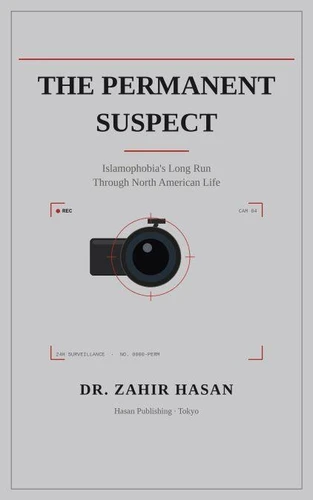
A caricature does not survive contact with a person. For more than two decades, North American news, film, and policy have taughtmillions of people to recognize Muslims as a threat before recognizing them asneighbors. The Permanent Suspect traces how that habit of mind was built -and how it endures. The story begins before September 11, 2001, in the older Orientalist imagerythat primed audiences to see the Muslim world as backward and threatening.
Itfollows the post-9/11 security state as it hardened that imagery into policy:watchlists, secondary screening, surveillance programs, and travel bans thatfell disproportionately on Muslim citizens and immigrants. It tracks howHollywood convention, and later streaming-era algorithms, kept the caricaturein circulation long after the headlines moved on. And it follows the samepattern north of the border, through Quebec's Bill 21, the Quebec City mosqueshooting, and Canada's own security and immigration apparatus. Grounded in court filings, government reports, peer-reviewed research, andnamed, dated events rather than appeals to feeling alone, The PermanentSuspect insists throughout on a rigorous, checkable standard of evidence.
It does not ask readers to take fear or grievance on faith - it shows itssources, and lets the record speak. The book argues for a simple, exacting standard: that belonging in ademocratic society is not a feeling extended by the goodwill of a majority, but a public practice, sustained or withheld by specific, nameableinstitutional choices - in newsrooms, in writers' rooms, in legislatures, and in security agencies. Written for readers of history, media criticism, and civil rights - and foranyone who has ever been asked to prove, once again, that they belong -The Permanent Suspect is a documented account of how a community was madepermanently suspect, and what it would take to undo it.
A caricature does not survive contact with a person. For more than two decades, North American news, film, and policy have taughtmillions of people to recognize Muslims as a threat before recognizing them asneighbors. The Permanent Suspect traces how that habit of mind was built -and how it endures. The story begins before September 11, 2001, in the older Orientalist imagerythat primed audiences to see the Muslim world as backward and threatening.
Itfollows the post-9/11 security state as it hardened that imagery into policy:watchlists, secondary screening, surveillance programs, and travel bans thatfell disproportionately on Muslim citizens and immigrants. It tracks howHollywood convention, and later streaming-era algorithms, kept the caricaturein circulation long after the headlines moved on. And it follows the samepattern north of the border, through Quebec's Bill 21, the Quebec City mosqueshooting, and Canada's own security and immigration apparatus. Grounded in court filings, government reports, peer-reviewed research, andnamed, dated events rather than appeals to feeling alone, The PermanentSuspect insists throughout on a rigorous, checkable standard of evidence.
It does not ask readers to take fear or grievance on faith - it shows itssources, and lets the record speak. The book argues for a simple, exacting standard: that belonging in ademocratic society is not a feeling extended by the goodwill of a majority, but a public practice, sustained or withheld by specific, nameableinstitutional choices - in newsrooms, in writers' rooms, in legislatures, and in security agencies. Written for readers of history, media criticism, and civil rights - and foranyone who has ever been asked to prove, once again, that they belong -The Permanent Suspect is a documented account of how a community was madepermanently suspect, and what it would take to undo it.

 , qui est-ce ?