Lebt und arbeitet in Freiburg / Deutschland
1982 - 1987 Studium der Bildhauerei an der Akademie der Bildenden Künste, Nürnberg. Diverse Kunstpreise und Stipendien.
2013 Artur-Fischer-Erfinderpreis. Auseinandersetzung mit der Grundlagenphysik.
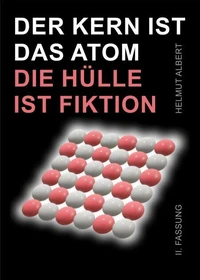
the nucleus is the atom, the electron shells fiction. Checkerboard-like Atoms
Par :Formats :
Disponible dans votre compte client Decitre ou Furet du Nord dès validation de votre commande. Le format ePub est :
- Compatible avec une lecture sur My Vivlio (smartphone, tablette, ordinateur)
- Compatible avec une lecture sur liseuses Vivlio
- Pour les liseuses autres que Vivlio, vous devez utiliser le logiciel Adobe Digital Edition. Non compatible avec la lecture sur les liseuses Kindle, Remarkable et Sony
 , qui est-ce ?
Notre partenaire de plateforme de lecture numérique où vous retrouverez l'ensemble de vos ebooks gratuitement
Pour en savoir plus sur nos ebooks, consultez notre aide en ligne ici
C'est si simple ! Lisez votre ebook avec l'app Vivlio sur votre tablette, mobile ou ordinateur :

- Nombre de pages14
- FormatePub
- ISBN978-3-7541-6130-2
- EAN9783754161302
- Date de parution05/09/2021
- Protection num.pas de protection
- Taille2 Mo
- Infos supplémentairesepub
- ÉditeurBespoke Books
Résumé
With the first nuclear-shell atomic model in history in 1911, Ernest Rutherford postulated a large atomic shell with electrically negative electrons and a small electrically positive atomic nucleus. He considered the atomic nucleus to be a single positive charge around which electrons orbit, or linger, at a great distance. He did not yet know that the atomic nucleus is composed of protons and neutrons.
Thus the often quoted comparison of the atom with a planetary system is comprehensible. (The construction principle is still valid for today's atomic model of particle physics). However, this idea quickly becomes nonsensical if one takes into account the later discoveries of the atomic building blocks proton (1919) and neutron (1932). And this in two respects: If one assumes that proton and electron have the same opposite electric charge, then the laws of nature would have to work here as well, as they apply to cations and anions in the structure of the ion crystals.
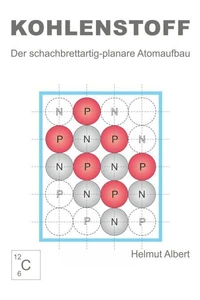
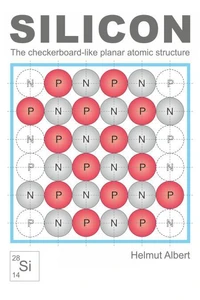
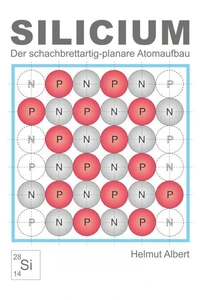
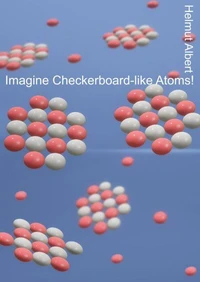
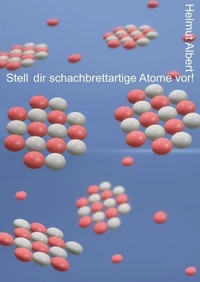
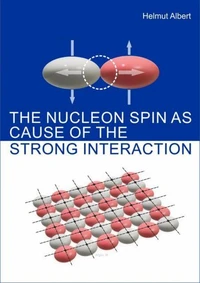
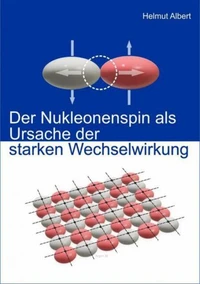
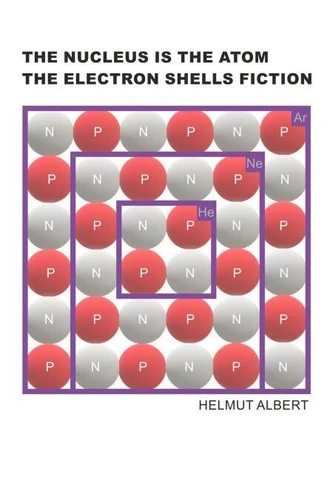
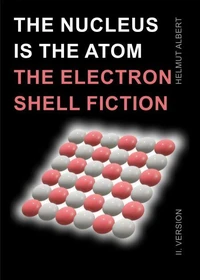
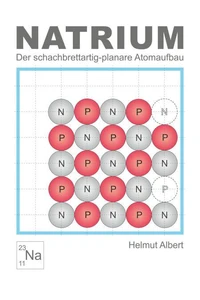
However, the same applies also to the so-called atomic nucleus and its protons and neutrons, whose nuclear force is unexplained by science until today. In the 3rd chapter, the treatise refers to this by dealing with the rotational properties and the kinetic energies of the nucleons. Also for this particle system of the so-called nucleus only one possibility of a structure exists: That of a chessboard-like structure! This e-book edition is a translated and modified treatise, of the e-book published in German in 2019: "Der Kern ist das Atom, die Hülle ist Fiction".
The shown theory refers to the atom model with chessboard-like structure (Albert 2017)
Thus the often quoted comparison of the atom with a planetary system is comprehensible. (The construction principle is still valid for today's atomic model of particle physics). However, this idea quickly becomes nonsensical if one takes into account the later discoveries of the atomic building blocks proton (1919) and neutron (1932). And this in two respects: If one assumes that proton and electron have the same opposite electric charge, then the laws of nature would have to work here as well, as they apply to cations and anions in the structure of the ion crystals.
However, the same applies also to the so-called atomic nucleus and its protons and neutrons, whose nuclear force is unexplained by science until today. In the 3rd chapter, the treatise refers to this by dealing with the rotational properties and the kinetic energies of the nucleons. Also for this particle system of the so-called nucleus only one possibility of a structure exists: That of a chessboard-like structure! This e-book edition is a translated and modified treatise, of the e-book published in German in 2019: "Der Kern ist das Atom, die Hülle ist Fiction".
The shown theory refers to the atom model with chessboard-like structure (Albert 2017)
A propos de Helmut Albert
4,49 €