Nouveauté
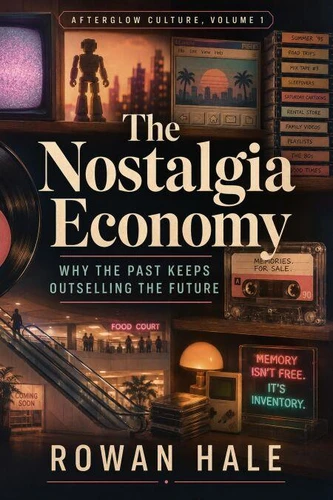
The Nostalgia Economy: Why the Past Keeps Outselling the Future. Afterglow Culture, #1
Par :Formats :
Disponible dans votre compte client Decitre ou Furet du Nord dès validation de votre commande. Le format ePub est :
- Compatible avec une lecture sur My Vivlio (smartphone, tablette, ordinateur)
- Compatible avec une lecture sur liseuses Vivlio
- Pour les liseuses autres que Vivlio, vous devez utiliser le logiciel Adobe Digital Edition. Non compatible avec la lecture sur les liseuses Kindle, Remarkable et Sony
 , qui est-ce ?
Notre partenaire de plateforme de lecture numérique où vous retrouverez l'ensemble de vos ebooks gratuitement
Pour en savoir plus sur nos ebooks, consultez notre aide en ligne ici
C'est si simple ! Lisez votre ebook avec l'app Vivlio sur votre tablette, mobile ou ordinateur :

- FormatePub
- ISBN8235838109
- EAN9798235838109
- Date de parution11/06/2026
- Protection num.pas de protection
- Infos supplémentairesepub
- ÉditeurIoakim Ioakim
Résumé
The past is not only remembered. It is packaged, streamed, reissued, collected, licensed, displayed, resold and sold back to us. In The Nostalgia Economy: Why the Past Keeps Outselling the Future, Rowan Hale explores one of the defining forces in modern consumer culture: the transformation of memory into market power. From vinyl records and streaming catalogues to adult toy collectors, resale fashion, dead malls, old internet aesthetics, franchise reboots, heritage branding and physical media, nostalgia has become more than a feeling.
It has become a commercial system. This is not a trivia book, a decade scrapbook or a simple celebration of everything retro. It is a serious but readable guide to why familiar culture has become so valuable in a crowded marketplace. Nostalgia helps consumers feel continuity in a fast-changing world, while giving companies safer bets, recognisable assets and emotionally charged products that are easier to explain, promote and sell.
Inside, you'll discover: Why the past increasingly behaves like inventory How memory changes what people notice, trust, buy and keep Why companies prefer familiar titles, brands and formats How streaming turned back catalogues into active competitors Why physical media still matters in an age of access How toys, collectibles and "kidult" culture became serious business Why malls and old internet spaces remain powerful cultural memories How franchises, reboots and heritage brands use continuity as strategy Why nostalgia can comfort, manipulate, preserve and exploit at the same time What it takes for new culture to become worth remembering Written for general readers interested in pop culture, media, brands, nostalgia, consumer behaviour and the business of everyday life, The Nostalgia Economy explains why yesterday keeps returning with a new price tag.
The future has not disappeared. But in today's marketplace, the past already knows how to sell.
It has become a commercial system. This is not a trivia book, a decade scrapbook or a simple celebration of everything retro. It is a serious but readable guide to why familiar culture has become so valuable in a crowded marketplace. Nostalgia helps consumers feel continuity in a fast-changing world, while giving companies safer bets, recognisable assets and emotionally charged products that are easier to explain, promote and sell.
Inside, you'll discover: Why the past increasingly behaves like inventory How memory changes what people notice, trust, buy and keep Why companies prefer familiar titles, brands and formats How streaming turned back catalogues into active competitors Why physical media still matters in an age of access How toys, collectibles and "kidult" culture became serious business Why malls and old internet spaces remain powerful cultural memories How franchises, reboots and heritage brands use continuity as strategy Why nostalgia can comfort, manipulate, preserve and exploit at the same time What it takes for new culture to become worth remembering Written for general readers interested in pop culture, media, brands, nostalgia, consumer behaviour and the business of everyday life, The Nostalgia Economy explains why yesterday keeps returning with a new price tag.
The future has not disappeared. But in today's marketplace, the past already knows how to sell.