SOLDES
Jusqu'à -70% sur une sélection d'articles*

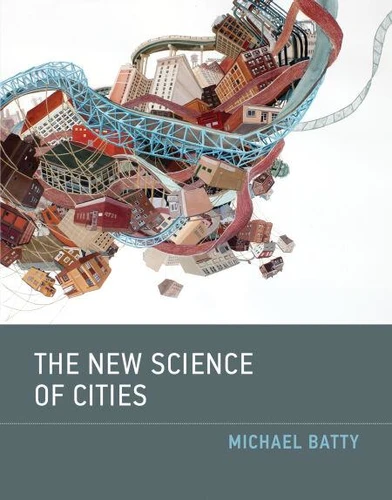
The New Science of Cities
Par :Formats :
Disponible dans votre compte client Decitre ou Furet du Nord dès validation de votre commande. Le format ePub protégé est :
- Compatible avec une lecture sur My Vivlio (smartphone, tablette, ordinateur)
- Compatible avec une lecture sur liseuses Vivlio
- Pour les liseuses autres que Vivlio, vous devez utiliser le logiciel Adobe Digital Edition. Non compatible avec la lecture sur les liseuses Kindle, Remarkable et Sony
- Non compatible avec un achat hors France métropolitaine
 , qui est-ce ?
Notre partenaire de plateforme de lecture numérique où vous retrouverez l'ensemble de vos ebooks gratuitement
Pour en savoir plus sur nos ebooks, consultez notre aide en ligne ici
C'est si simple ! Lisez votre ebook avec l'app Vivlio sur votre tablette, mobile ou ordinateur :

- Nombre de pages520
- FormatePub
- ISBN978-0-262-31824-2
- EAN9780262318242
- Date de parution01/11/2013
- Protection num.Adobe DRM
- Taille18 Mo
- Infos supplémentairesepub
- ÉditeurThe MIT Press
Résumé
A proposal for a new way to understand cities and their design not as artifacts but as systems composed of flows and networks. In The New Science of Cities, Michael Batty suggests that to understand cities we must view them not simply as places in space but as systems of networks and flows. To understand space, he argues, we must understand flows, and to understand flows, we must understand networks-the relations between objects that compose the system of the city.
Drawing on the complexity sciences, social physics, urban economics, transportation theory, regional science, and urban geography, and building on his own previous work, Batty introduces theories and methods that reveal the deep structure of how cities function. Batty presents the foundations of a new science of cities, defining flows and their networks and introducing tools that can be applied to understanding different aspects of city structure.
He examines the size of cities, their internal order, the transport routes that define them, and the locations that fix these networks. He introduces methods of simulation that range from simple stochastic models to bottom-up evolutionary models to aggregate land-use transportation models. Then, using largely the same tools, he presents design and decision-making models that predict interactions and flows in future cities.
These networks emphasize a notion with relevance for future research and planning: that design of cities is collective action.
Drawing on the complexity sciences, social physics, urban economics, transportation theory, regional science, and urban geography, and building on his own previous work, Batty introduces theories and methods that reveal the deep structure of how cities function. Batty presents the foundations of a new science of cities, defining flows and their networks and introducing tools that can be applied to understanding different aspects of city structure.
He examines the size of cities, their internal order, the transport routes that define them, and the locations that fix these networks. He introduces methods of simulation that range from simple stochastic models to bottom-up evolutionary models to aggregate land-use transportation models. Then, using largely the same tools, he presents design and decision-making models that predict interactions and flows in future cities.
These networks emphasize a notion with relevance for future research and planning: that design of cities is collective action.
A propos de Michael Batty


Inventing Future Cities
E-book
26,44 €