SOLDES
Jusqu'à -70% sur une sélection d'articles*

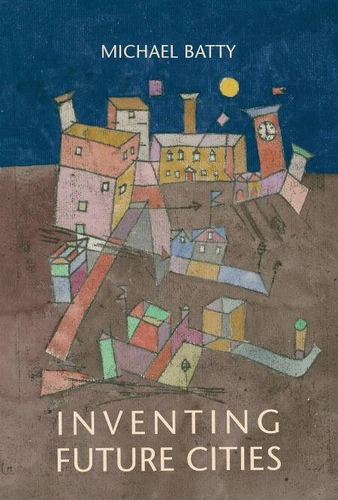
Inventing Future Cities
Par :Formats :
Disponible dans votre compte client Decitre ou Furet du Nord dès validation de votre commande. Le format ePub protégé est :
- Compatible avec une lecture sur My Vivlio (smartphone, tablette, ordinateur)
- Compatible avec une lecture sur liseuses Vivlio
- Pour les liseuses autres que Vivlio, vous devez utiliser le logiciel Adobe Digital Edition. Non compatible avec la lecture sur les liseuses Kindle, Remarkable et Sony
- Non compatible avec un achat hors France métropolitaine
 , qui est-ce ?
Notre partenaire de plateforme de lecture numérique où vous retrouverez l'ensemble de vos ebooks gratuitement
Pour en savoir plus sur nos ebooks, consultez notre aide en ligne ici
C'est si simple ! Lisez votre ebook avec l'app Vivlio sur votre tablette, mobile ou ordinateur :

- Nombre de pages304
- FormatePub
- ISBN978-0-262-34990-1
- EAN9780262349901
- Date de parution11/12/2018
- Protection num.Adobe DRM
- Taille62 Mo
- Infos supplémentairesepub
- ÉditeurThe MIT Press
Résumé
How we can invent-but not predict-the future of cities. We cannot predict future cities, but we can invent them. Cities are largely unpredictable because they are complex systems that are more like organisms than machines. Neither the laws of economics nor the laws of mechanics apply; cities are the product of countless individual and collective decisions that do not conform to any grand plan. They are the product of our inventions; they evolve.
In Inventing Future Cities, Michael Batty explores what we need to understand about cities in order to invent their future. Batty outlines certain themes-principles-that apply to all cities. He investigates not the invention of artifacts but inventive processes. Today form is becoming ever more divorced from function; information networks now shape the traditional functions of cities as places of exchange and innovation.
By the end of this century, most of the world's population will live in cities, large or small, sometimes contiguous, and always connected; in an urbanized world, it will be increasingly difficult to define a city by its physical boundaries. Batty discusses the coming great transition from a world with few cities to a world of all cities; argues that future cities will be defined as clusters in a hierarchy; describes the future "high-frequency, " real-time streaming city; considers urban sprawl and urban renewal; and maps the waves of technological change, which grow ever more intense and lead to continuous innovation-an unending process of creative destruction out of which future cities will emerge.
In Inventing Future Cities, Michael Batty explores what we need to understand about cities in order to invent their future. Batty outlines certain themes-principles-that apply to all cities. He investigates not the invention of artifacts but inventive processes. Today form is becoming ever more divorced from function; information networks now shape the traditional functions of cities as places of exchange and innovation.
By the end of this century, most of the world's population will live in cities, large or small, sometimes contiguous, and always connected; in an urbanized world, it will be increasingly difficult to define a city by its physical boundaries. Batty discusses the coming great transition from a world with few cities to a world of all cities; argues that future cities will be defined as clusters in a hierarchy; describes the future "high-frequency, " real-time streaming city; considers urban sprawl and urban renewal; and maps the waves of technological change, which grow ever more intense and lead to continuous innovation-an unending process of creative destruction out of which future cities will emerge.
A propos de Michael Batty
39,24 €