Mae Collinsworth is a nonfiction author known for writing thoughtful books on relationships, emotional healing, and personal transformation. Her warm and approachable style blends psychological insight with everyday reflection, helping readers navigate change with greater confidence and self-understanding.
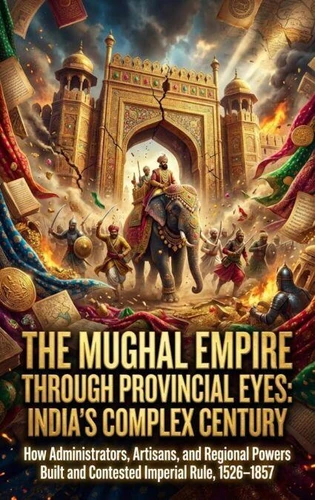
The Mughal Empire Through Provincial Eyes: India's Complex Century. How Administrators, Artisans, and Regional Powers Built and Contested Imperial Rule, 1526–1857
Par :Formats :
Disponible dans votre compte client Decitre ou Furet du Nord dès validation de votre commande. Le format ePub est :
- Compatible avec une lecture sur My Vivlio (smartphone, tablette, ordinateur)
- Compatible avec une lecture sur liseuses Vivlio
- Pour les liseuses autres que Vivlio, vous devez utiliser le logiciel Adobe Digital Edition. Non compatible avec la lecture sur les liseuses Kindle, Remarkable et Sony
 , qui est-ce ?
Notre partenaire de plateforme de lecture numérique où vous retrouverez l'ensemble de vos ebooks gratuitement
Pour en savoir plus sur nos ebooks, consultez notre aide en ligne ici
C'est si simple ! Lisez votre ebook avec l'app Vivlio sur votre tablette, mobile ou ordinateur :

- Nombre de pages175
- FormatePub
- ISBN978-3-565-21462-4
- EAN9783565214624
- Date de parution31/01/2026
- Protection num.pas de protection
- Taille2 Mo
- Infos supplémentairesepub
- ÉditeurEmphaloz Publishing House
Résumé
The Mughal Empire is remembered for Taj Mahal splendor and Akbar's tolerance, but its real story lies in how provincial governors, revenue collectors, textile merchants, and regional nobles negotiated power across a subcontinent for over three centuries. This book traces how the empire functioned beyond Delhi's court, examining the administrative systems, economic networks, and cultural exchanges that made Mughal rule possible-and the local resistances that eventually unmade it.
Drawing on Persian chronicles, regional archives, European trading company records, and archaeological evidence, the narrative follows the empire's evolution from Babur's 1526 conquest through Aurangzeb's overextension to the 1857 collapse.
It explores how Akbar's mansabdari system transformed Central Asian military traditions into bureaucratic governance, how Gujarati and Bengali merchants financed imperial expansion through textile trade, and how Rajput, Maratha, and Sikh communities maintained autonomy while participating in Mughal institutions. The book reexamines familiar monuments through the lens of those who built them: the stonecutters who carved Fatehpur Sikri, the miniature painters who documented court life in multiple artistic traditions, and the farmers whose surplus funded architectural ambitions.
It traces how Mughal syncretism emerged not from imperial decree but from daily interactions between Persian officials, Hindu revenue administrators, and local power brokers managing diverse populations. Relevant for readers interested in how empires govern multicultural territories, how economic systems enable political control, and how regional forces shape and ultimately outlast centralized authority.
It explores how Akbar's mansabdari system transformed Central Asian military traditions into bureaucratic governance, how Gujarati and Bengali merchants financed imperial expansion through textile trade, and how Rajput, Maratha, and Sikh communities maintained autonomy while participating in Mughal institutions. The book reexamines familiar monuments through the lens of those who built them: the stonecutters who carved Fatehpur Sikri, the miniature painters who documented court life in multiple artistic traditions, and the farmers whose surplus funded architectural ambitions.
It traces how Mughal syncretism emerged not from imperial decree but from daily interactions between Persian officials, Hindu revenue administrators, and local power brokers managing diverse populations. Relevant for readers interested in how empires govern multicultural territories, how economic systems enable political control, and how regional forces shape and ultimately outlast centralized authority.