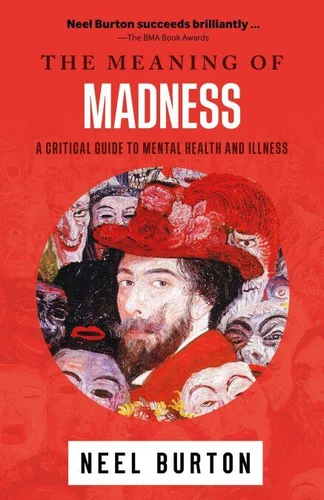
The Meaning of Madness. Ataraxia, #1
Par :Formats :
Disponible dans votre compte client Decitre ou Furet du Nord dès validation de votre commande. Le format ePub est :
- Compatible avec une lecture sur My Vivlio (smartphone, tablette, ordinateur)
- Compatible avec une lecture sur liseuses Vivlio
- Pour les liseuses autres que Vivlio, vous devez utiliser le logiciel Adobe Digital Edition. Non compatible avec la lecture sur les liseuses Kindle, Remarkable et Sony
 , qui est-ce ?
Notre partenaire de plateforme de lecture numérique où vous retrouverez l'ensemble de vos ebooks gratuitement
Pour en savoir plus sur nos ebooks, consultez notre aide en ligne ici
C'est si simple ! Lisez votre ebook avec l'app Vivlio sur votre tablette, mobile ou ordinateur :

- FormatePub
- ISBN978-1-913260-10-1
- EAN9781913260101
- Date de parution06/09/2015
- Protection num.pas de protection
- Infos supplémentairesepub
- ÉditeurAcheron Press
Résumé
How Sane Are You?The boundary between sanity and madness is not as clear as we like to think. The traits we admire in artists, visionaries, leaders, and innovators often overlap with those that, in their extreme forms, can lead to mental disorder. Creativity and bipolar disorder. Inspiration and psychosis. Charisma and psychopathy. Where exactly do we draw the line-and why?In this award-winning book, psychiatrist and philosopher Neel Burton explores some of the deepest questions about the human mind.
Why do other animals not seem to suffer from schizophrenia? Why do mental disorders appear to be becoming more common? What is the relationship between madness and genius? And what can depression, anxiety, and mental anguish reveal about the human condition?Drawing on psychiatry, psychology, philosophy, history, literature, and evolutionary theory, The Meaning of Madness challenges assumptions about mental illness and normality, showing how mental disorders illuminate some of our most distinctive human capacities-from language and creativity to religion, imagination, and self-awareness.
Inside, you'll discover: The links between bipolar disorder and creativity. How depression may serve an important psychological function. The difference between successful and unsuccessful psychopaths. Why schizophrenia may hold clues to the origins of language. What the history of psychiatry reveals about its limits. Why mental disorders appear to be becoming more common. The differences between psychiatry, antipsychiatry, and critical psychiatry.
How Western ideas about mental illness have shaped the rest of the world. Covering schizophrenia and other psychotic disorders, depression, bipolar disorder, anxiety disorders, personality disorders, self-harm, and suicide, The Meaning of Madness is both an accessible introduction to mental disorders and a thought-provoking exploration of what it means to be human. Because the boundary between sanity and madness may not be a boundary at all.
About the authorDr Neel Burton FRSA is a psychiatrist and philosopher. He is a Fellow of Green-Templeton College in the University of Oxford, and the recipient of multiple literary awards. His work has appeared in Aeon and Psychology Today, and has been translated into several languages. Editorial reviewsShows the deep connections between madness and some of our most important attributes as human beings. -Prof Bill Fulford, editor of the Oxford Textbook of Philosophy of PsychiatryA work of contradictions, an undemanding read that could challenge your view of the world. -Medical Journalists' AssociationA really accessible and thorough approach to a complex and often impenetrable subject. -British Neuroscience AssociationNeel Burton succeeds brilliantly, not only in explaining different types of mental illness in simple terms, but also in the breadth of understanding he brings to aspects of life outside the mental straitjacket. -British Medical Association Book Awards (Winner, Young Authors' Award)
Why do other animals not seem to suffer from schizophrenia? Why do mental disorders appear to be becoming more common? What is the relationship between madness and genius? And what can depression, anxiety, and mental anguish reveal about the human condition?Drawing on psychiatry, psychology, philosophy, history, literature, and evolutionary theory, The Meaning of Madness challenges assumptions about mental illness and normality, showing how mental disorders illuminate some of our most distinctive human capacities-from language and creativity to religion, imagination, and self-awareness.
Inside, you'll discover: The links between bipolar disorder and creativity. How depression may serve an important psychological function. The difference between successful and unsuccessful psychopaths. Why schizophrenia may hold clues to the origins of language. What the history of psychiatry reveals about its limits. Why mental disorders appear to be becoming more common. The differences between psychiatry, antipsychiatry, and critical psychiatry.
How Western ideas about mental illness have shaped the rest of the world. Covering schizophrenia and other psychotic disorders, depression, bipolar disorder, anxiety disorders, personality disorders, self-harm, and suicide, The Meaning of Madness is both an accessible introduction to mental disorders and a thought-provoking exploration of what it means to be human. Because the boundary between sanity and madness may not be a boundary at all.
About the authorDr Neel Burton FRSA is a psychiatrist and philosopher. He is a Fellow of Green-Templeton College in the University of Oxford, and the recipient of multiple literary awards. His work has appeared in Aeon and Psychology Today, and has been translated into several languages. Editorial reviewsShows the deep connections between madness and some of our most important attributes as human beings. -Prof Bill Fulford, editor of the Oxford Textbook of Philosophy of PsychiatryA work of contradictions, an undemanding read that could challenge your view of the world. -Medical Journalists' AssociationA really accessible and thorough approach to a complex and often impenetrable subject. -British Neuroscience AssociationNeel Burton succeeds brilliantly, not only in explaining different types of mental illness in simple terms, but also in the breadth of understanding he brings to aspects of life outside the mental straitjacket. -British Medical Association Book Awards (Winner, Young Authors' Award)