
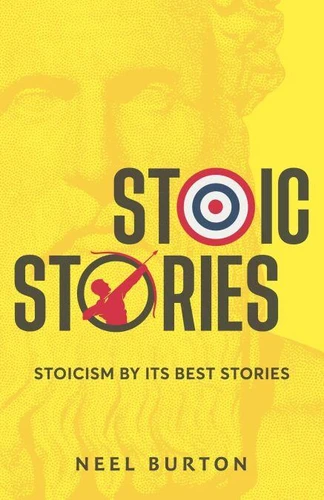
Stoic Stories: Stoicism by Its Best Stories. Ancient Wisdom, #3
Par :Formats :
Disponible dans votre compte client Decitre ou Furet du Nord dès validation de votre commande. Le format ePub est :
- Compatible avec une lecture sur My Vivlio (smartphone, tablette, ordinateur)
- Compatible avec une lecture sur liseuses Vivlio
- Pour les liseuses autres que Vivlio, vous devez utiliser le logiciel Adobe Digital Edition. Non compatible avec la lecture sur les liseuses Kindle, Remarkable et Sony
 , qui est-ce ?
Notre partenaire de plateforme de lecture numérique où vous retrouverez l'ensemble de vos ebooks gratuitement
Pour en savoir plus sur nos ebooks, consultez notre aide en ligne ici
C'est si simple ! Lisez votre ebook avec l'app Vivlio sur votre tablette, mobile ou ordinateur :

- FormatePub
- ISBN978-1-913260-51-4
- EAN9781913260514
- Date de parution25/04/2024
- Protection num.pas de protection
- Infos supplémentairesepub
- ÉditeurAcheron Press
Résumé
Stoicism through its best storiesReaders' Favorite Book Award WinnerBooks can be entertaining, or informative, or useful, but this one is all three at the same time. -Charles Mauleverer, composerZeno's shipwreck. Cato's final act. Cicero's murder. Stoicism has always been a philosophy of vivid lives and decisive moments. This book introduces the ideas of Stoicism through the people who lived them-its founders, its adherents, and those shaped by its influence.
This is a book of Stoic stories: stories about Stoics, stories told by Stoics, and stories that illuminate Stoic ideas. Interwoven with these narratives are the core tenets of Stoic philosophy, presented in clear, accessible form. In the ancient world, religion often centred on ritual and tradition, while philosophy offered guidance on how to live. In the Roman imperial period, Stoicism became one of the most influential schools of thought, particularly among the elite, and counted figures such as Seneca and the emperor Marcus Aurelius among its adherents.
Stoicism has often been described as a practical philosophy of resilience. While ancient in origin, its central concerns-how to respond to anger, loss, fear, desire, and uncertainty-remain recognisably human. It does not promise to remove difficulty from life, but to help us meet it with greater clarity, steadiness, and perspective. In this sense, Stoicism can be understood as a form of applied philosophy: a way of training attention, judgement, and response in the face of events we do not fully control.
Most people, through experience, gradually develop a more Stoic outlook over time; this book aims to make that process more deliberate, and perhaps a little quicker. While retracing the history of Stoicism, you will learn: Three cognitive strategies for responding to bad news How to cope with grief, loss, and bereavement How to deal with insults and put-downs How anger arises-and how to work with it Why conventional success won't make you happy Ten unexpected benefits of hardship How to develop a wider perspective on events How Stoic thinkers understood power and character How reflections on mortality shape Stoic practice And much more.
About the authorDr Neel Burton FRSA is a philosopher and psychiatrist who lives and teaches in Oxford, England. His other books include The Meaning Myth and The Gang of Three: Socrates, Plato, Aristotle. His work has appeared in publications such as Aeon and Psychology Today, and has been translated into several languages. Editorial reviewsA wonderful read. Full of thought-provoking stories and anecdotes that stuck with me long after I had put the book down. -Phil Stark, screenwriter (South Park, That '70s Show.), writer, and therapistNeel Burton taught me more in this book than I learned in my years of study. -Philip Van Heusen for Readers' Favorite (5/5 stars)Uses a slew of intriguing narratives to provide a pathway to the inner mind.
Nothing short of unique. -The US Review of Books (Recommended)Neel is an incredibly insightful and elegant writer, with a deep knowledge of all he surveys. -Dr James Davies, writer and psychotherapistExplore Stoicism through its best stories-and the lives that shaped it.
This is a book of Stoic stories: stories about Stoics, stories told by Stoics, and stories that illuminate Stoic ideas. Interwoven with these narratives are the core tenets of Stoic philosophy, presented in clear, accessible form. In the ancient world, religion often centred on ritual and tradition, while philosophy offered guidance on how to live. In the Roman imperial period, Stoicism became one of the most influential schools of thought, particularly among the elite, and counted figures such as Seneca and the emperor Marcus Aurelius among its adherents.
Stoicism has often been described as a practical philosophy of resilience. While ancient in origin, its central concerns-how to respond to anger, loss, fear, desire, and uncertainty-remain recognisably human. It does not promise to remove difficulty from life, but to help us meet it with greater clarity, steadiness, and perspective. In this sense, Stoicism can be understood as a form of applied philosophy: a way of training attention, judgement, and response in the face of events we do not fully control.
Most people, through experience, gradually develop a more Stoic outlook over time; this book aims to make that process more deliberate, and perhaps a little quicker. While retracing the history of Stoicism, you will learn: Three cognitive strategies for responding to bad news How to cope with grief, loss, and bereavement How to deal with insults and put-downs How anger arises-and how to work with it Why conventional success won't make you happy Ten unexpected benefits of hardship How to develop a wider perspective on events How Stoic thinkers understood power and character How reflections on mortality shape Stoic practice And much more.
About the authorDr Neel Burton FRSA is a philosopher and psychiatrist who lives and teaches in Oxford, England. His other books include The Meaning Myth and The Gang of Three: Socrates, Plato, Aristotle. His work has appeared in publications such as Aeon and Psychology Today, and has been translated into several languages. Editorial reviewsA wonderful read. Full of thought-provoking stories and anecdotes that stuck with me long after I had put the book down. -Phil Stark, screenwriter (South Park, That '70s Show.), writer, and therapistNeel Burton taught me more in this book than I learned in my years of study. -Philip Van Heusen for Readers' Favorite (5/5 stars)Uses a slew of intriguing narratives to provide a pathway to the inner mind.
Nothing short of unique. -The US Review of Books (Recommended)Neel is an incredibly insightful and elegant writer, with a deep knowledge of all he surveys. -Dr James Davies, writer and psychotherapistExplore Stoicism through its best stories-and the lives that shaped it.
A propos de Neel Burton







9,99 €