What if a tiny mark on a wall could open the door to an entire world of thought?
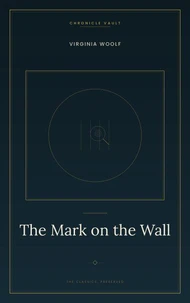
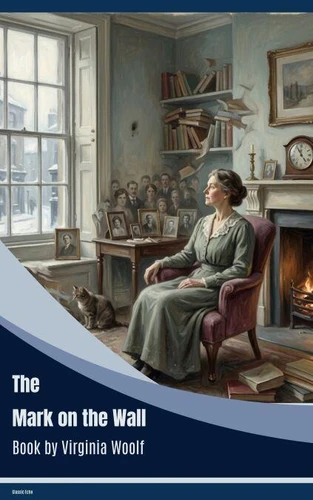
In The Mark on the Wall, Virginia Woolf transforms an ordinary moment into a fascinating exploration of the human mind. A seemingly insignificant mark on a wall becomes the starting point for a flowing series of thoughts, memories, questions, and imagined possibilities.
Rather than following a conventional plot, Woolf takes readers into the narrator's stream of consciousness, moving freely between perception, memory, imagination, uncertainty, and philosophical reflection.
Everyday details become opportunities to question how we understand reality and how easily our thoughts can drift beyond the immediate world.
The story challenges traditional narrative structure and demonstrates Woolf's emerging modernist approach to fiction. Beneath its simple premise are deeper reflections on knowledge, identity, gender roles, authority, war, society, and the limits of certainty.
First published in 1917, The Mark on the Wall is considered an important early example of literary modernism and a key work in the development of Woolf's distinctive narrative style.
For readers interested in Virginia Woolf, modernist literature, stream of consciousness, philosophical fiction, experimental short stories, British literature, and psychological fiction, this short story offers a uniquely immersive experience.
Follow a wandering mind as an ordinary mark becomes a doorway to extraordinary thoughts.
Read The Mark on the Wall today and experience Virginia Woolf's groundbreaking exploration of perception, imagination, and reality.
What if a tiny mark on a wall could open the door to an entire world of thought?
In The Mark on the Wall, Virginia Woolf transforms an ordinary moment into a fascinating exploration of the human mind. A seemingly insignificant mark on a wall becomes the starting point for a flowing series of thoughts, memories, questions, and imagined possibilities.
Rather than following a conventional plot, Woolf takes readers into the narrator's stream of consciousness, moving freely between perception, memory, imagination, uncertainty, and philosophical reflection.
Everyday details become opportunities to question how we understand reality and how easily our thoughts can drift beyond the immediate world.
The story challenges traditional narrative structure and demonstrates Woolf's emerging modernist approach to fiction. Beneath its simple premise are deeper reflections on knowledge, identity, gender roles, authority, war, society, and the limits of certainty.
First published in 1917, The Mark on the Wall is considered an important early example of literary modernism and a key work in the development of Woolf's distinctive narrative style.
For readers interested in Virginia Woolf, modernist literature, stream of consciousness, philosophical fiction, experimental short stories, British literature, and psychological fiction, this short story offers a uniquely immersive experience.
Follow a wandering mind as an ordinary mark becomes a doorway to extraordinary thoughts.
Read The Mark on the Wall today and experience Virginia Woolf's groundbreaking exploration of perception, imagination, and reality.

 , qui est-ce ?