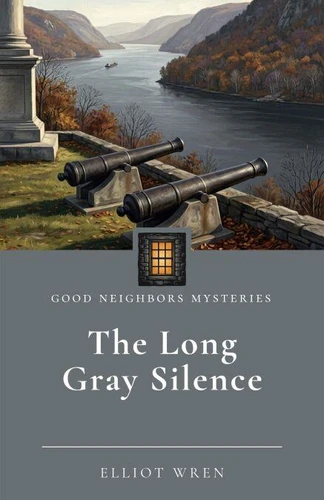
Sylvie Moran has spent fifteen years in Highland Falls, New York, settling the affairs of the dead. As an estate executor in the small village that sits in the shadow of West Point, she's built a quiet life around tidy resolutions - every document filed, every account closed, every loose end put to rest. Since her husband David's death three years ago, that tidiness has become something closer to a necessity: if everything is in order, nothing can fall apart.
When she learns that a young German researcher named Renata Holz had been asking questions around the village about a long-dead West Point professor - a man whose estate Sylvie settled a decade ago - she notices the way she always notices: a second name in the record that doesn't match. A gap in a file she thought was closed. Then Renata's death, ruled a hiking accident at Bear Mountain, is reclassified as suspicious, and Sylvie's tidy professional inquiry becomes something far more urgent.
As Sylvie follows the trail Renata left behind - from the café on Main Street to the Gothic corridors of the Academy, from a retired professor's study full of books to an old soldier's room in a care facility up the river - she discovers that the professor's carefully closed file conceals a history that has been quietly carried, and quietly avoided, by more people than she ever imagined. The closer she gets to the truth about Renata's death, the closer she gets to understanding that her own instinct to keep things filed and finished may be less a virtue than a wall - and that some files were never meant to close.
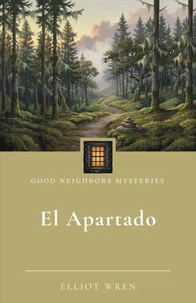
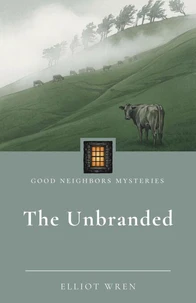
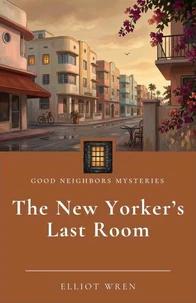
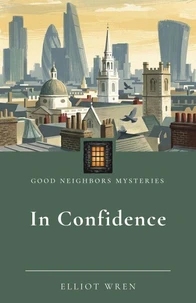
The Long Gray Silence is part of the Good Neighbors Mysteries, a cozy mystery series set in real towns where ordinary lives, close-knit communities, and well-kept local histories lead to mysteries with more beneath the surface than first meets the eye. Warm, thoughtful, and gently surprising, these are stories about place, connection, and the neighbors who make a town what it is.
Sylvie Moran has spent fifteen years in Highland Falls, New York, settling the affairs of the dead. As an estate executor in the small village that sits in the shadow of West Point, she's built a quiet life around tidy resolutions - every document filed, every account closed, every loose end put to rest. Since her husband David's death three years ago, that tidiness has become something closer to a necessity: if everything is in order, nothing can fall apart.
When she learns that a young German researcher named Renata Holz had been asking questions around the village about a long-dead West Point professor - a man whose estate Sylvie settled a decade ago - she notices the way she always notices: a second name in the record that doesn't match. A gap in a file she thought was closed. Then Renata's death, ruled a hiking accident at Bear Mountain, is reclassified as suspicious, and Sylvie's tidy professional inquiry becomes something far more urgent.
As Sylvie follows the trail Renata left behind - from the café on Main Street to the Gothic corridors of the Academy, from a retired professor's study full of books to an old soldier's room in a care facility up the river - she discovers that the professor's carefully closed file conceals a history that has been quietly carried, and quietly avoided, by more people than she ever imagined. The closer she gets to the truth about Renata's death, the closer she gets to understanding that her own instinct to keep things filed and finished may be less a virtue than a wall - and that some files were never meant to close.
The Long Gray Silence is part of the Good Neighbors Mysteries, a cozy mystery series set in real towns where ordinary lives, close-knit communities, and well-kept local histories lead to mysteries with more beneath the surface than first meets the eye. Warm, thoughtful, and gently surprising, these are stories about place, connection, and the neighbors who make a town what it is.

 , qui est-ce ?