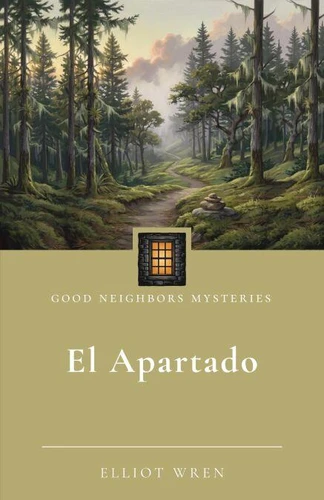
Adela Vargas Quintero came to Oaxaca to not write. After nine months of professional silence in Washington, she gave herself a sabbatical, a rented casita in the Jalatlaco neighborhood, and a quiet table at a café on the Andador. Seven months later she has favorite bells, a favorite café, and a routine that is beginning to look like a life - except that she still has not started the article she came here to write.
When a federal cartographer named Tomás Olvera dies on a mountain trail above San Pablo Macuiltianguis, the state calls it an accident. Adela had spoken with him twice for the article she was supposed to be writing about a community-managed forest in the Sierra Norte. She knew him only a little, and she liked him. The official story doesn't sit right, and the magazine editor she's been avoiding for nine months thinks there might be a piece in it.
So Adela, who is good at being in rooms, begins to be in rooms around Oaxaca - at a rezo at the Olvera home, in a quiet INEGI cubicle, at a kitchen table in the Sierra with an old man who has been making mezcal for forty years. What she finds is a city older and more layered than she has understood it to be: an Oaxacan confraternity that has been doing the same quiet work since 1612, a chapel above Ixtlán that keeps two cabinets, a Proceso article from 2007 with three names in it, and a pair of boots she has seen before.
The closer she gets to the truth about Olvera's death, the more she understands that the city she has been walking through for seven months is not, in some specific way, the city she thought she had been walking through - and that the question is not whether to write what she has found, but how much of it to leave on the mountain where it has always belonged. El Apartado is part of the Good Neighbors Mysteries, a cozy mystery series set in real towns where ordinary lives, close-knit communities, and well-kept local histories lead to mysteries with more beneath the surface than first meets the eye.
Warm, thoughtful, and gently surprising, these are stories about place, connection, and the neighbors who make a town what it is.
Adela Vargas Quintero came to Oaxaca to not write. After nine months of professional silence in Washington, she gave herself a sabbatical, a rented casita in the Jalatlaco neighborhood, and a quiet table at a café on the Andador. Seven months later she has favorite bells, a favorite café, and a routine that is beginning to look like a life - except that she still has not started the article she came here to write.
When a federal cartographer named Tomás Olvera dies on a mountain trail above San Pablo Macuiltianguis, the state calls it an accident. Adela had spoken with him twice for the article she was supposed to be writing about a community-managed forest in the Sierra Norte. She knew him only a little, and she liked him. The official story doesn't sit right, and the magazine editor she's been avoiding for nine months thinks there might be a piece in it.
So Adela, who is good at being in rooms, begins to be in rooms around Oaxaca - at a rezo at the Olvera home, in a quiet INEGI cubicle, at a kitchen table in the Sierra with an old man who has been making mezcal for forty years. What she finds is a city older and more layered than she has understood it to be: an Oaxacan confraternity that has been doing the same quiet work since 1612, a chapel above Ixtlán that keeps two cabinets, a Proceso article from 2007 with three names in it, and a pair of boots she has seen before.
The closer she gets to the truth about Olvera's death, the more she understands that the city she has been walking through for seven months is not, in some specific way, the city she thought she had been walking through - and that the question is not whether to write what she has found, but how much of it to leave on the mountain where it has always belonged. El Apartado is part of the Good Neighbors Mysteries, a cozy mystery series set in real towns where ordinary lives, close-knit communities, and well-kept local histories lead to mysteries with more beneath the surface than first meets the eye.
Warm, thoughtful, and gently surprising, these are stories about place, connection, and the neighbors who make a town what it is.

 , qui est-ce ?