
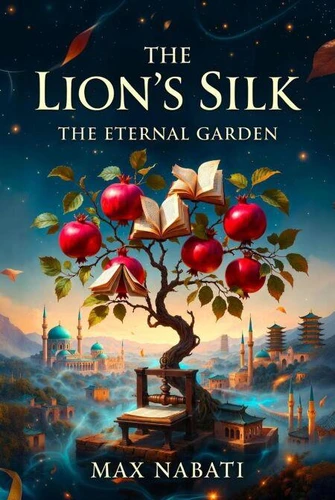
The Lion's Silk: The Eternal Garden. The Lion's Silk, #2
Par :Formats :
Disponible dans votre compte client Decitre ou Furet du Nord dès validation de votre commande. Le format ePub est :
- Compatible avec une lecture sur My Vivlio (smartphone, tablette, ordinateur)
- Compatible avec une lecture sur liseuses Vivlio
- Pour les liseuses autres que Vivlio, vous devez utiliser le logiciel Adobe Digital Edition. Non compatible avec la lecture sur les liseuses Kindle, Remarkable et Sony
 , qui est-ce ?
Notre partenaire de plateforme de lecture numérique où vous retrouverez l'ensemble de vos ebooks gratuitement
Pour en savoir plus sur nos ebooks, consultez notre aide en ligne ici
C'est si simple ! Lisez votre ebook avec l'app Vivlio sur votre tablette, mobile ou ordinateur :

- FormatePub
- ISBN8232738280
- EAN9798232738280
- Date de parution11/11/2025
- Protection num.pas de protection
- Infos supplémentairesepub
- ÉditeurDraft2Digital
Résumé
In "The Lion's Silk: The Eternal Garden, " Max Nabati invites readers into a mesmerizing continuation of his acclaimed series, where the boundaries between history, myth, and imagination dissolve like ink in water. Building on the rich tapestry of cultural fusion and hidden legacies introduced in the first volume, this sequel transports us to a dreamlike realm-a braided city that echoes the grandeur of Isfahan's turquoise domes, Venice's winding canals, and the mystical valleys of Qalamdar.
Here, everyday objects take on profound symbolism: a humble printing press becomes a vessel for timeless truths, pomegranates ripen into bound manuscripts, and silk threads weave the fabric of eternity itself. Nabati's prose is a poetic symphony, blending lyrical introspection with vivid sensory details-the scent of cardamom mingling with salt air, the rustle of leaves that whisper forgotten stories.
Themes of memory, creation, and transcendence pulse through every page, exploring how our narratives endure beyond the physical world. What begins as a tale rooted in earthly journeys evolves into a philosophical meditation on legacy: Do stories fade into echoes, or do they root deeper, birthing new worlds? The narrative structure, with its cyclical rhythms and ritualistic elements, mirrors ancient Persian storytelling traditions while infusing them with modern metaphysical depth. This volume stands as a bridge between the tangible and the transcendent, drawing inspiration from Nabati's own travels-from the quiet canals of Venice to the hidden groves where nightingales sing in calligraphy.
It's a book for those who savor literature that lingers, prompting reflection on the invisible threads connecting past, present, and future. Fans of magical realism in the vein of Borges or García Márquez will find familiar enchantment, yet Nabati's unique voice-steeped in Persian heritage and global wanderlust-offers something profoundly original. As the second thread in the "The Lion's Silk" trilogy, it promises to deepen the intrigue, inviting readers to wander its eternal paths and discover the weavers within themselves.
Whether you're drawn to tales of cultural confluence, spiritual quests, or the artistry of words, this novel unfolds like an unbound manuscript, ready to be savored and shared. This book reaffirms Nabati's place as a master of evocative, boundary-pushing fiction.
Here, everyday objects take on profound symbolism: a humble printing press becomes a vessel for timeless truths, pomegranates ripen into bound manuscripts, and silk threads weave the fabric of eternity itself. Nabati's prose is a poetic symphony, blending lyrical introspection with vivid sensory details-the scent of cardamom mingling with salt air, the rustle of leaves that whisper forgotten stories.
Themes of memory, creation, and transcendence pulse through every page, exploring how our narratives endure beyond the physical world. What begins as a tale rooted in earthly journeys evolves into a philosophical meditation on legacy: Do stories fade into echoes, or do they root deeper, birthing new worlds? The narrative structure, with its cyclical rhythms and ritualistic elements, mirrors ancient Persian storytelling traditions while infusing them with modern metaphysical depth. This volume stands as a bridge between the tangible and the transcendent, drawing inspiration from Nabati's own travels-from the quiet canals of Venice to the hidden groves where nightingales sing in calligraphy.
It's a book for those who savor literature that lingers, prompting reflection on the invisible threads connecting past, present, and future. Fans of magical realism in the vein of Borges or García Márquez will find familiar enchantment, yet Nabati's unique voice-steeped in Persian heritage and global wanderlust-offers something profoundly original. As the second thread in the "The Lion's Silk" trilogy, it promises to deepen the intrigue, inviting readers to wander its eternal paths and discover the weavers within themselves.
Whether you're drawn to tales of cultural confluence, spiritual quests, or the artistry of words, this novel unfolds like an unbound manuscript, ready to be savored and shared. This book reaffirms Nabati's place as a master of evocative, boundary-pushing fiction.
A propos de Max Nabati
The Marble Winter
E-book
2,99 €


3,49 €

The Salt Wind of Khark
E-book
4,49 €
Once, Out of Venice
E-book
3,49 €

The Cube Of Wishes
E-book
8,49 €
Once, in Venice
E-book
3,49 €
8,49 €

The Forty-Minutes Sunset
E-book
3,49 €
2,99 €

3,49 €

3,49 €
The Cebu Hours
E-book
4,49 €
2,99 €
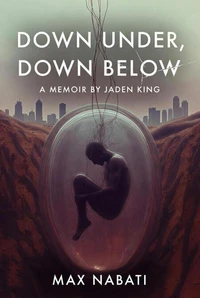
Down Under, Down Below
E-book
2,99 €

6,99 €