Brianna Lewis is an English-language author focused on culture, psychology, and modern relationships. Her books explore identity, emotional resilience, and the ways social change shapes everyday human experiences. Her writing style is thoughtful, approachable, and emotionally perceptive, combining reflective storytelling with contemporary insights into personal growth and connection.
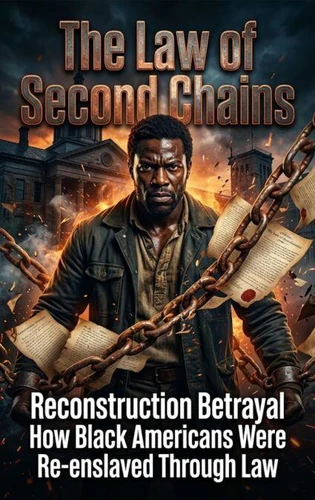
The Law of Second Chains. Reconstruction Betrayal How Black Americans Were Re-enslaved Through Law
Par :Formats :
Disponible dans votre compte client Decitre ou Furet du Nord dès validation de votre commande. Le format ePub est :
- Compatible avec une lecture sur My Vivlio (smartphone, tablette, ordinateur)
- Compatible avec une lecture sur liseuses Vivlio
- Pour les liseuses autres que Vivlio, vous devez utiliser le logiciel Adobe Digital Edition. Non compatible avec la lecture sur les liseuses Kindle, Remarkable et Sony
 , qui est-ce ?
Notre partenaire de plateforme de lecture numérique où vous retrouverez l'ensemble de vos ebooks gratuitement
Pour en savoir plus sur nos ebooks, consultez notre aide en ligne ici
C'est si simple ! Lisez votre ebook avec l'app Vivlio sur votre tablette, mobile ou ordinateur :

- Nombre de pages145
- FormatePub
- ISBN978-3-565-46499-9
- EAN9783565464999
- Date de parution28/05/2026
- Protection num.pas de protection
- Taille2 Mo
- Infos supplémentairesepub
- ÉditeurEmphaloz Publishing House
Résumé
This book examines the years after the Civil War when new constitutions and federal amendments promised emancipation, yet local statutes and Supreme-Court rulings quietly re-bound Black life in legal and economic chains. It traces how Reconstruction's fragile gains-voting rights, land claims, and citizenship-were hollowed out by Black Codes, convict-leasing statutes, and Jim Crow frameworks that turned freedom into another form of coerced labor.
The narrative follows three intertwined mechanisms: the drafting and enforcement of Black Codes that criminalized movement and poverty, the rise of convict leasing and debt-peonage systems that turned courts into slave-hunters, and the retreat of federal protection amid Supreme-Court decisions that narrowed civil-rights guarantees.
Drawing on court records, Freedmen's Bureau files, and local ordinances, the book shows how law, not only custom, re-inscribed hierarchy and kept Black families locked into a segregated, low-wage economy.
Drawing on court records, Freedmen's Bureau files, and local ordinances, the book shows how law, not only custom, re-inscribed hierarchy and kept Black families locked into a segregated, low-wage economy.