Brianna Lewis is an English-language author focused on culture, psychology, and modern relationships. Her books explore identity, emotional resilience, and the ways social change shapes everyday human experiences. Her writing style is thoughtful, approachable, and emotionally perceptive, combining reflective storytelling with contemporary insights into personal growth and connection.
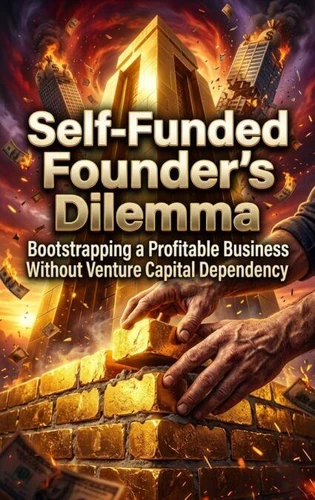
Self-Funded Founder's Dilemma. Bootstrapping a Profitable Business Without Venture Capital Dependency
Par :Formats :
Disponible dans votre compte client Decitre ou Furet du Nord dès validation de votre commande. Le format ePub est :
- Compatible avec une lecture sur My Vivlio (smartphone, tablette, ordinateur)
- Compatible avec une lecture sur liseuses Vivlio
- Pour les liseuses autres que Vivlio, vous devez utiliser le logiciel Adobe Digital Edition. Non compatible avec la lecture sur les liseuses Kindle, Remarkable et Sony
 , qui est-ce ?
Notre partenaire de plateforme de lecture numérique où vous retrouverez l'ensemble de vos ebooks gratuitement
Pour en savoir plus sur nos ebooks, consultez notre aide en ligne ici
C'est si simple ! Lisez votre ebook avec l'app Vivlio sur votre tablette, mobile ou ordinateur :

- Nombre de pages201
- FormatePub
- ISBN978-3-565-45410-5
- EAN9783565454105
- Date de parution22/05/2026
- Protection num.pas de protection
- Taille2 Mo
- Infos supplémentairesepub
- ÉditeurEmphaloz Publishing House
Résumé
This book examines how founders sustain profitability while rejecting venture capital, focusing on the tensions between limited personal resources and market demands. It investigates the self-funded founder's dilemma: how to grow a venture without external capital yet achieve lasting profit. It reveals the trade-offs founders face when every euro must earn its place before the next is spent.
The analysis centers on three interconnected systems that shape bootstrapped ventures.
First, cash-flow governance creates a tight feedback loop: founders forecast short-term inflows, earmark surplus for essential product improvements, and delay non-essential spending until reserves replenish. This mechanism forces continuous validation of each expenditure against real-time revenue, turning financial discipline into a learning tool. Second, lean product evolution relies on iterative minimum viable products tested against paying users; each iteration incorporates direct customer data to eliminate features that do not drive willingness to pay, thereby conserving effort and capital.
Third, value-based pricing structures tether profit to measurable customer outcomes, allowing founders to capture revenue that reflects delivered benefit rather than arbitrary markup. Together, these systems transform scarcity into a source of strategic insight, ensuring that growth emerges from proven market fit rather than external infusion.
First, cash-flow governance creates a tight feedback loop: founders forecast short-term inflows, earmark surplus for essential product improvements, and delay non-essential spending until reserves replenish. This mechanism forces continuous validation of each expenditure against real-time revenue, turning financial discipline into a learning tool. Second, lean product evolution relies on iterative minimum viable products tested against paying users; each iteration incorporates direct customer data to eliminate features that do not drive willingness to pay, thereby conserving effort and capital.
Third, value-based pricing structures tether profit to measurable customer outcomes, allowing founders to capture revenue that reflects delivered benefit rather than arbitrary markup. Together, these systems transform scarcity into a source of strategic insight, ensuring that growth emerges from proven market fit rather than external infusion.