
Nouveauté
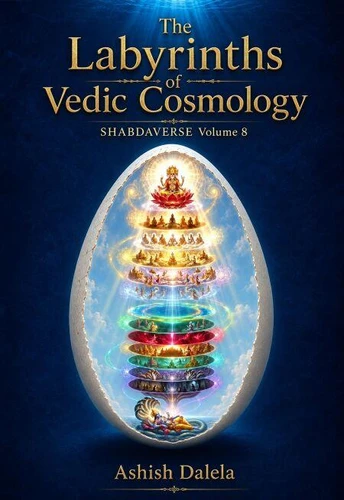
The Labyrinths of Vedic Cosmology. SHABDAVERSE, #8
Par :Formats :
Disponible dans votre compte client Decitre ou Furet du Nord dès validation de votre commande. Le format ePub est :
- Compatible avec une lecture sur My Vivlio (smartphone, tablette, ordinateur)
- Compatible avec une lecture sur liseuses Vivlio
- Pour les liseuses autres que Vivlio, vous devez utiliser le logiciel Adobe Digital Edition. Non compatible avec la lecture sur les liseuses Kindle, Remarkable et Sony
 , qui est-ce ?
Notre partenaire de plateforme de lecture numérique où vous retrouverez l'ensemble de vos ebooks gratuitement
Pour en savoir plus sur nos ebooks, consultez notre aide en ligne ici
C'est si simple ! Lisez votre ebook avec l'app Vivlio sur votre tablette, mobile ou ordinateur :

- FormatePub
- ISBN978-93-85384-59-2
- EAN9789385384592
- Date de parution22/08/2026
- Protection num.pas de protection
- Infos supplémentairesepub
- ÉditeurShabda Press
Résumé
Vedic cosmology is the map of life, meaning, and purpose. There are 8, 400, 000 species of life in the cosmos, and they differ from each other so radically that they live only with like-minded species. The Vedic cosmos is the mind-map of varied kinds of minds. Most people accustomed to modern cosmology find this shocking because they assume that the universe is uniform, and if life exists in other parts of the universe, it would be just like life on Earth.
In fact, they define a species based on the differing structures of the bodies, not based on their differing mentalities-the different ideas about what life really is. Vedic cosmology is different because bodies are developed from the mind, and a person who changes their mentality experiences a different reality right now, and enters a different kind of body after death. Modern and Vedic cosmologies thus differ in their body-centric and mind-centric worldviews.
A species in modern thinking is a different type of body and in Vedic thinking, a different kind of mind. Just as the Earth is divided into societies with different cultures, the entire Vedic cosmos is divided into places meant for different kinds of minds. By and large, all these mentalities are insular-they don't interact with other mind types-and so we remain unaware of them. Based on mentality, nature flocks the birds of the same feather together.
Going to a different part of the universe requires change of mind. Space in modern cosmology is physical, and in Vedic cosmology, ideological. Physical space is open and ideological space is closed. Physical space is flat, and ideological space is hierarchical. Physical space allows bodies to move freely but ideological space binds our minds to a finite region. A physical cosmos is created like a building and an ideological cosmos like a book.
We can perceive everything in a physical space, but our perception is limited by our mentality in ideological space. Proximity in meaning space indicates type-similarity but proximity in physical space indicates the strength of interaction. A body crosses physical barriers in physical space and a mind crosses mental barriers in mental space. Due to numerous differences, we don't expect any congruence between Vedic and modern cosmologies.
But we don't expect to understand the mind through modern science either, because mind-body dualism excluded it at the outset. We study Vedic cosmology to understand a cosmos from which the mind was not excluded. That cosmos is the hierarchical tree of life, comprising branches for different mentalities.
In fact, they define a species based on the differing structures of the bodies, not based on their differing mentalities-the different ideas about what life really is. Vedic cosmology is different because bodies are developed from the mind, and a person who changes their mentality experiences a different reality right now, and enters a different kind of body after death. Modern and Vedic cosmologies thus differ in their body-centric and mind-centric worldviews.
A species in modern thinking is a different type of body and in Vedic thinking, a different kind of mind. Just as the Earth is divided into societies with different cultures, the entire Vedic cosmos is divided into places meant for different kinds of minds. By and large, all these mentalities are insular-they don't interact with other mind types-and so we remain unaware of them. Based on mentality, nature flocks the birds of the same feather together.
Going to a different part of the universe requires change of mind. Space in modern cosmology is physical, and in Vedic cosmology, ideological. Physical space is open and ideological space is closed. Physical space is flat, and ideological space is hierarchical. Physical space allows bodies to move freely but ideological space binds our minds to a finite region. A physical cosmos is created like a building and an ideological cosmos like a book.
We can perceive everything in a physical space, but our perception is limited by our mentality in ideological space. Proximity in meaning space indicates type-similarity but proximity in physical space indicates the strength of interaction. A body crosses physical barriers in physical space and a mind crosses mental barriers in mental space. Due to numerous differences, we don't expect any congruence between Vedic and modern cosmologies.
But we don't expect to understand the mind through modern science either, because mind-body dualism excluded it at the outset. We study Vedic cosmology to understand a cosmos from which the mind was not excluded. That cosmos is the hierarchical tree of life, comprising branches for different mentalities.
A propos de Ashish Dalela

7,49 €
2,99 €

6,99 €

6,99 €
5,99 €





6,49 €
